Planning an employee health fair is a project-management job wearing a wellbeing costume. The wellbeing part, picking stations people will enjoy, is genuinely the easy half. The half that decides whether the day lands is the operational one: the date, the room, the vendor paperwork, the signup flow, and the two dozen small confirmations that all have a deadline attached.
This is the playbook we walk HR and People teams through when they host a fair with us. It works backward from event day on a 12-8-6-4-2 week cadence, so at any point you know exactly what should already be done and what is next.
In this guide, you'll learn:
- What separates an experiential health fair from a table-and-pamphlet one
- The three decisions to lock before you contact a single vendor
- The 12-8-6-4-2 week planning timeline, task by task
- What a fair actually costs, with real anchors
- How to close the loop after the event so next year's budget approves itself
First, decide what kind of fair you are running
A traditional health fair is a row of tables: benefits providers, a biometric screening line, brochures, maybe a raffle. Useful, but attendance is usually polite and brief, people do a lap, take a stress ball, and go back to their desks.
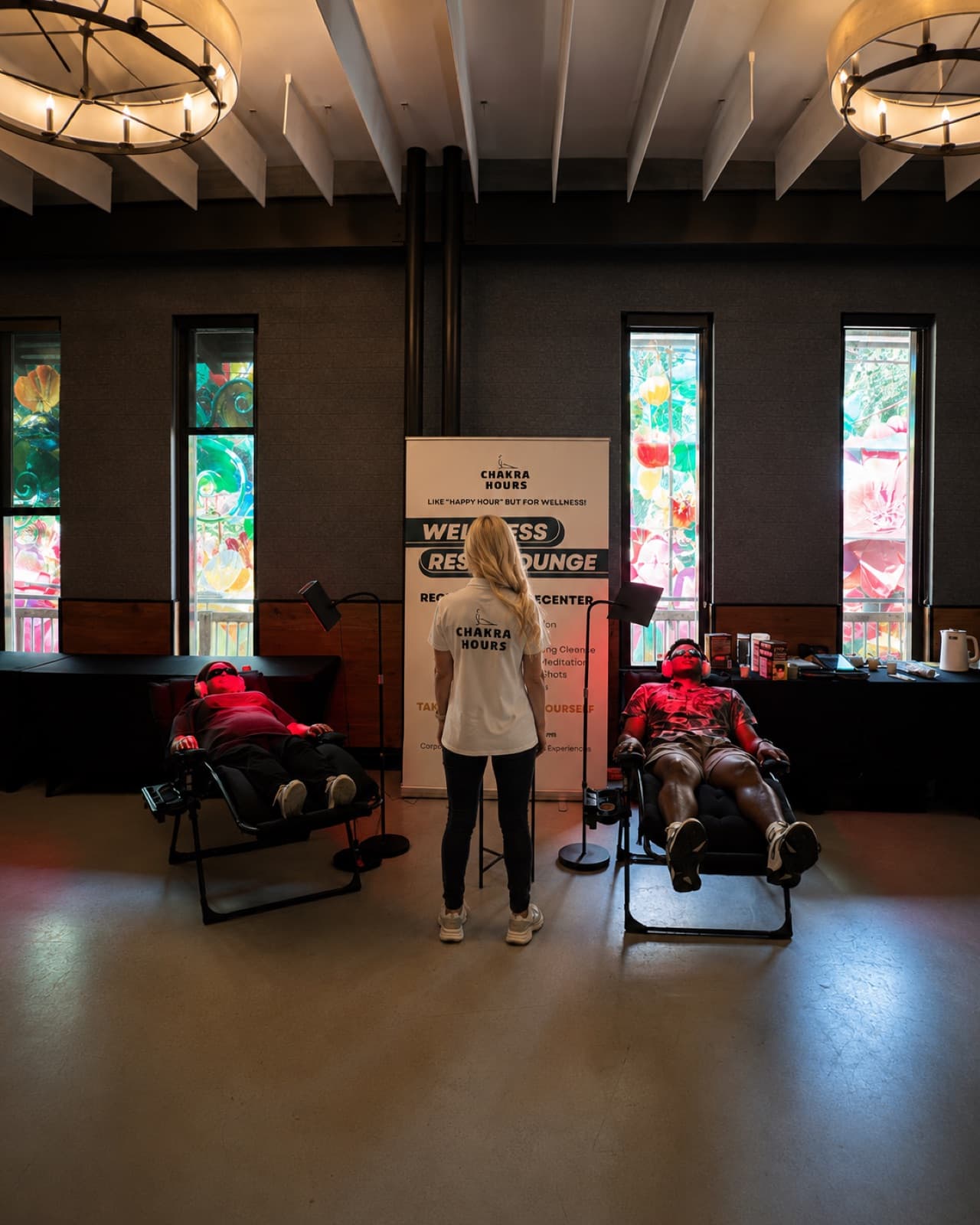
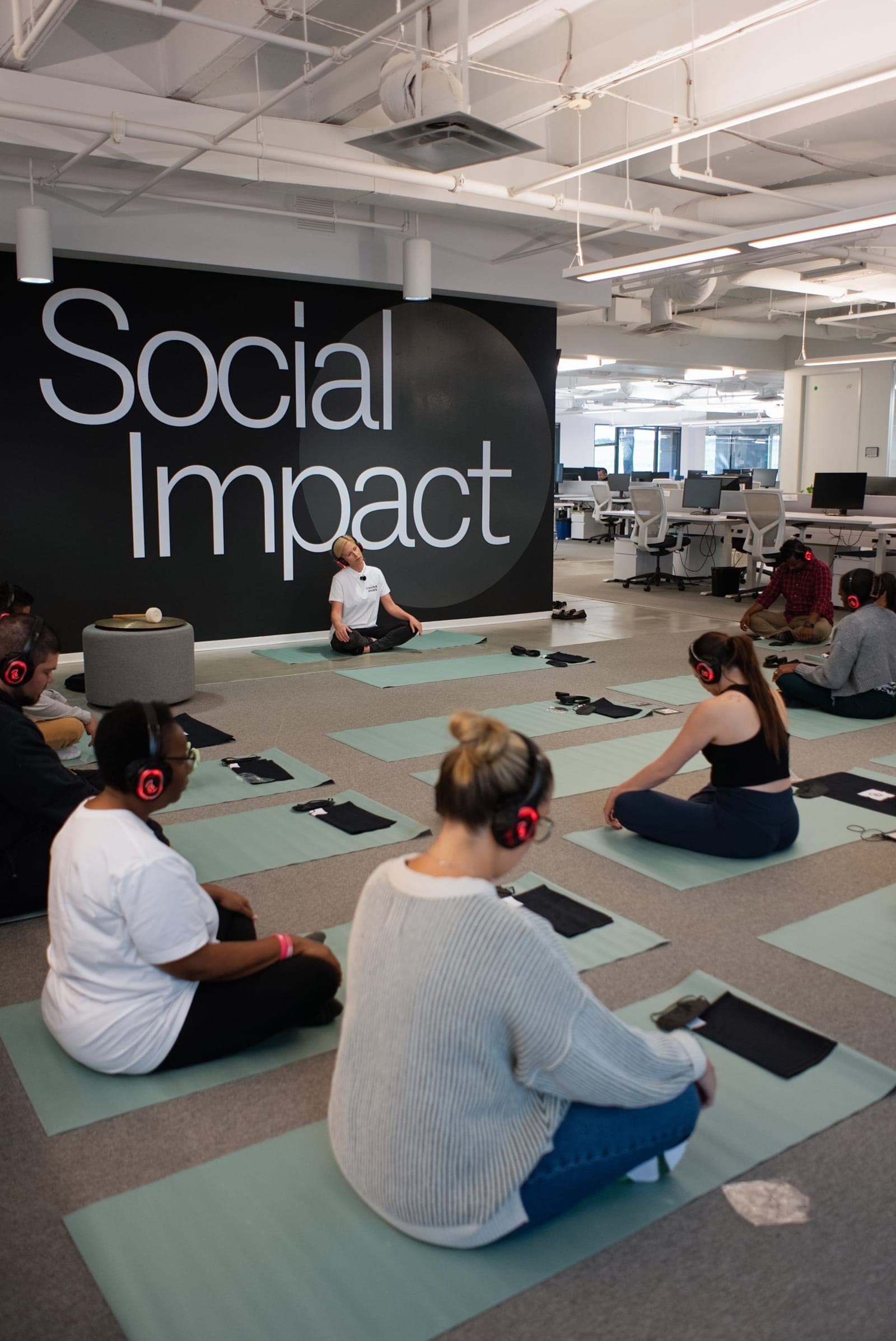
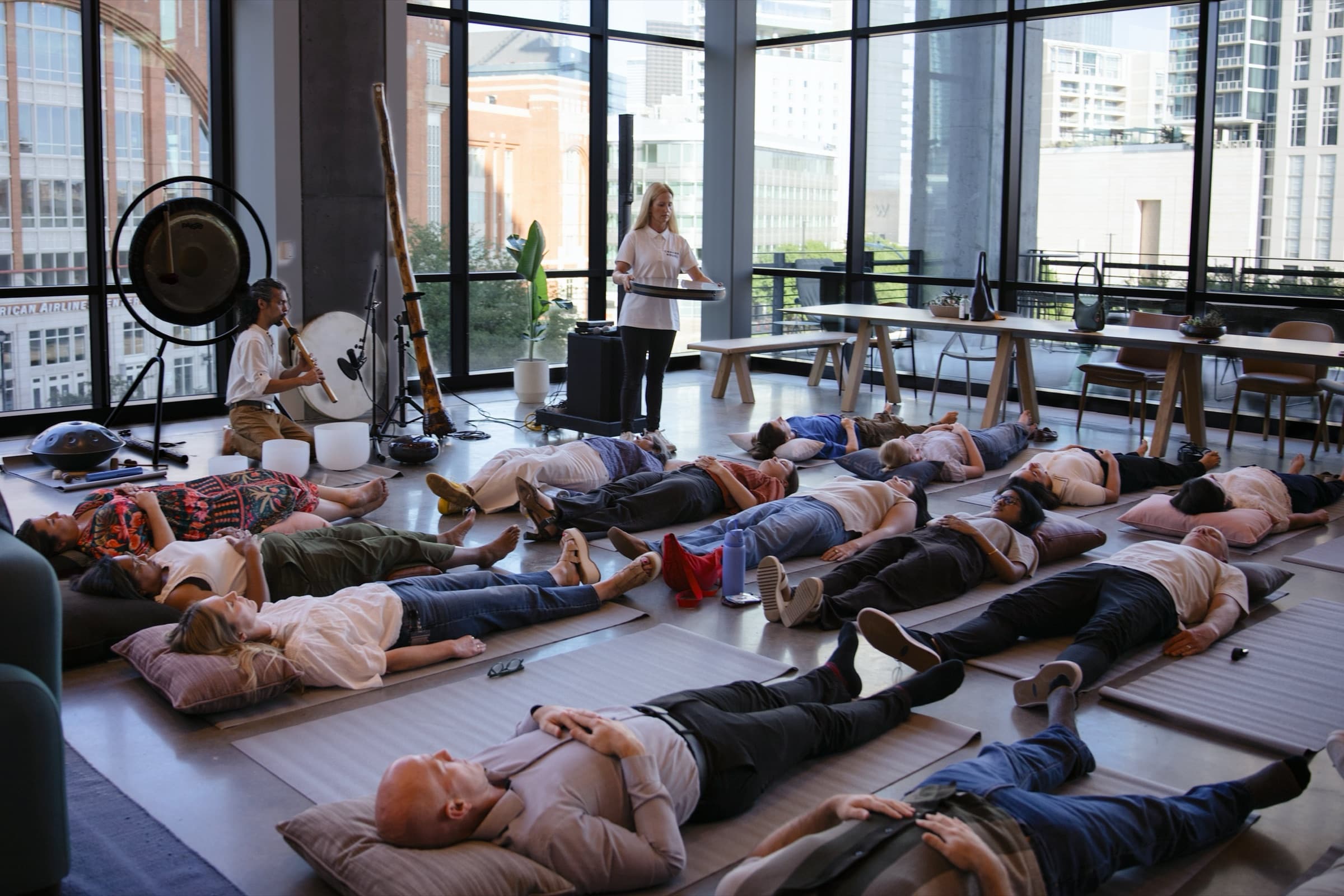
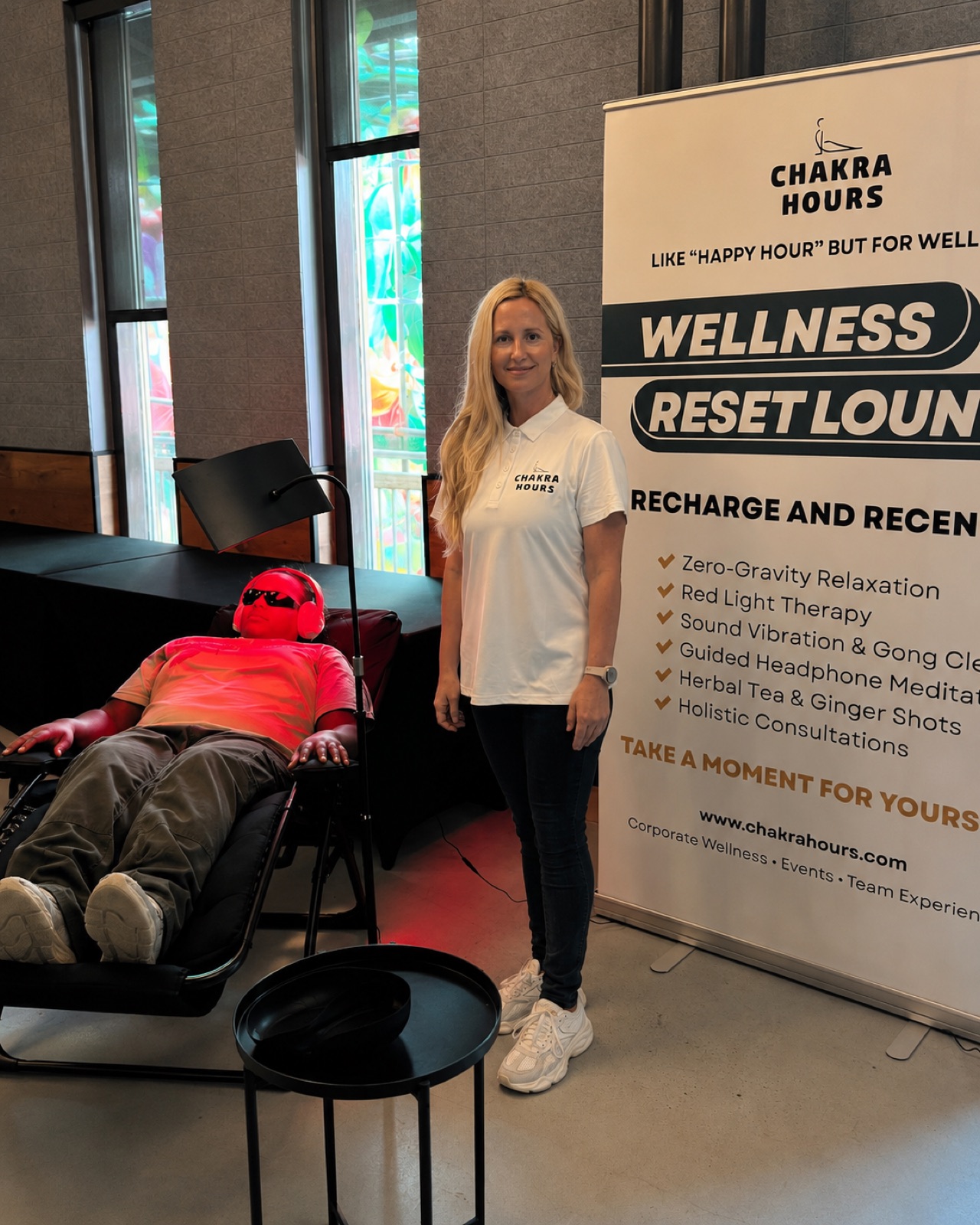
An experiential health fair changes the ratio. Alongside the informational tables, you add facilitated stations employees do rather than read: a chair yoga corner, a mini sound bath running on the half hour, a breathwork session, a recharge lounge with zero-gravity chairs. The information is still there; the experiences are why people stay for forty minutes instead of four and why they talk about it afterward. If you want the full menu of station formats and how vendors price them, our corporate health fair vendors page breaks it down.
Decide the ratio up front, because it drives everything downstream: the space you need, the schedule, and the budget split.
Before the timeline: lock three decisions
- The goal. "Raise benefits awareness before open enrollment," "give people a genuine reset after a hard half," and "improve screening participation" are three different fairs. Write one sentence and let it referee every later decision.
- The budget and where it comes from. Before you assume the wellbeing budget has to carry it, ask your benefits broker whether your plan includes carrier wellness funds; health fairs sit at the top of nearly every carrier's eligible list. Our guide to wellness dollars covers the one email that gets you the answer.
- The date. Midweek beats Monday or Friday. Late morning through early afternoon captures the most foot traffic. If the fair supports open enrollment, work backward from your enrollment window and secure the date first, fall calendars fill early.
The 12-8-6-4-2 week timeline
12 weeks out: goal, budget, date, room
- Confirm the goal sentence, budget, and funding source with whoever signs off.
- Hold the date and book the space. You need room for stations with some acoustic separation, a quiet corner matters if you want a sound bath or meditation station next to a conversation-heavy benefits table.
- Recruit two or three volunteers or committee members and split ownership: vendors, comms, day-of logistics.
- If this is an open-enrollment fair, sync the date with your benefits team now.
8 weeks out: book vendors and confirm the paperwork
- Book the anchors first: clinical vendors (screenings, flu shots, usually arranged through your broker or carrier) and experiential vendors (facilitated stations). Good experiential vendors can work on three weeks' notice, but the best fall dates go early.
- Collect procurement paperwork as you book: W-9, certificate of insurance, and whether the vendor can name your company as additional insured. Any professional vendor hands these over without being chased.
- Confirm what each vendor brings versus what they need from you: tables, power, chairs, floor space, load-in access.
- Put deposits and invoices on a single tracking sheet with your finance contact copied.
6 weeks out: build the station map and the comms plan
- Sketch the floor plan: informational tables along the walls, experiences in the middle or in adjacent rooms, screenings somewhere private. Walk the actual space if you can.
- Set the session schedule for timed stations (a mini sound bath every 30 minutes beats one long session; more people cycle through).
- Draft the comms calendar: a save-the-date now, a full announcement at four weeks, a reminder at one week, and a day-before nudge. Manager talking points raise attendance more than posters do.
- Decide on giveaways. Skip the branded stress balls; something people use at their desk, like a printable Desk Reset card, keeps working after the fair ends.
4 weeks out: open signups and confirm logistics
- Send the full announcement with the station lineup. Name the experiences specifically, "20-minute mini sound baths, chair yoga on the hour" outsells "wellness activities."
- Open signups for anything capacity-limited (screenings, lounge slots). Walk-up-friendly stations need no signup.
- Confirm building logistics: loading dock or freight elevator access, parking for vendors, security lists, and power drops.
- Reconfirm every vendor in writing with arrival time, setup window, and onsite contact.
2 weeks out: final counts and the run-of-show
- Send final headcount estimates to vendors so they staff correctly.
- Build a one-page run-of-show: setup times, station schedule, volunteer assignments, teardown, and one phone number per vendor.
- Do a final comms push and ask managers to explicitly bless attendance during work hours; "am I allowed to go?" is the quietest attendance killer there is.
- Print signage: a station map at the entrance and schedule cards at timed stations.
Fair week: run it, then close the loop
- Day before: confirm room setup, tables, and power. Day of: arrive for load-in, brief volunteers on the run-of-show, and keep one person floating as vendor point of contact.
- Capture the evidence while it happens: photos of full stations, a few one-line quotes from employees.
- Within a week: send a two-question survey (worth attending? what should we repeat?), a thank-you with attendance numbers to leadership, and reimbursement paperwork if carrier funds are involved.
That last step is the difference between a nice event and a renewable line item. Attendance count, survey scores, three photos, and two quotes make next year's approval conversation short.
What an employee health fair actually costs
Anchors, so you can budget before you collect quotes. Clinical stations, screenings and flu shots, are often funded through your carrier or broker at little or no direct cost; ask before you budget for them. On the experiential side, a single facilitated fair station runs $900 for two hours. The Reset Lounge Fair, a two-hour drop-in recharge lounge with two facilitators, is $1,250; the Signature Reset Fair, four hours with the lounge, a facilitated station of your choice, an onsite event lead, and a results recap, is $4,500. Informational tables from your existing benefits providers are typically free, they want the face time.
A mid-size company can therefore run a genuinely memorable experiential fair for roughly the cost of one conference registration, and often reimburse part of it through carrier wellness funds.
Five mistakes that sink first-year fairs
After enough fairs, the failure patterns repeat. Plan around these five and you are ahead of most first attempts:
- No manager permission. The announcement goes out, but nobody tells managers to release people. Attendance follows whatever the most cautious manager models. One line in the manager channel, "please encourage your team to go, during work hours," fixes it.
- Everything is a table. If there is nothing to do, there is no reason to stay. Even one facilitated station changes the physics of the room.
- Sound bleed. A meditation station next to a raffle wheel serves neither. Give quiet stations a corner, a divider, or a separate room.
- No capacity plan for the popular stations. The screening line and the lounge chairs will queue. Timed slots or a signup sheet keep the queue from becoming the memory of the day.
- No evidence collected. If nobody counts attendance or takes photos, the fair happened but cannot be defended at budget time. Assign the evidence job to a named person before the doors open.
None of these cost money to avoid; they only cost a line on the plan, which is exactly what the checklist below is for.
Your next step: the printable checklist
Everything above compresses into a single checklist you can pin to the project. We turned it into a printable planning checklist with every task on the 12-8-6-4-2 cadence plus the day-of run-of-show, download the health fair checklist here.
Then, when you are ready to build the station lineup, start with the corporate health fair vendors guide, or, if your team is in Dallas-Fort Worth, see how we run corporate health fairs in Dallas, station menu, all-in pricing, and a three-week lead time.