Every HR team planning a health fair hits the same wall: the list of ideas is easy to write and hard to believe in. Another row of tables, another stack of brochures, another basket of branded stress balls, and the quiet knowledge that most employees will do one polite lap and leave.
The fix is not more tables. It is changing what a station is: from something employees read to something they do. Below is the working idea list we use when we build fairs, split into the facilitated experiences that drive attendance, the classic stations that still earn a table, the giveaways people actually keep, and how to combine them into a vendor lineup.
In this guide, you'll learn:
- Six facilitated station ideas, with what each actually costs
- Which classic health fair stations still earn their table
- Health fair giveaways that keep working after the event
- How to build the vendor mix without a procurement headache
Health fair ideas for work: stations employees do, not read
These are the formats that turn a health fair from an errand into an event. Each runs as a fair station; as a single anchor, a facilitated station is $900 for two hours, the two-hour Reset Lounge Fair is $1,250, and the four-hour Signature Reset Fair is $4,500. Full menu and pricing on our corporate health fair vendors page.
1. Chair yoga and desk-stretch station. A facilitator runs short, beginner-friendly stretch rounds in regular work clothes, no mats, no changing, no fitness bar to clear. It is the most inclusive station on the floor, and booked outside a fair as a standalone session, office yoga in Dallas starts at $900, which makes the fair-station format an easy first taste.
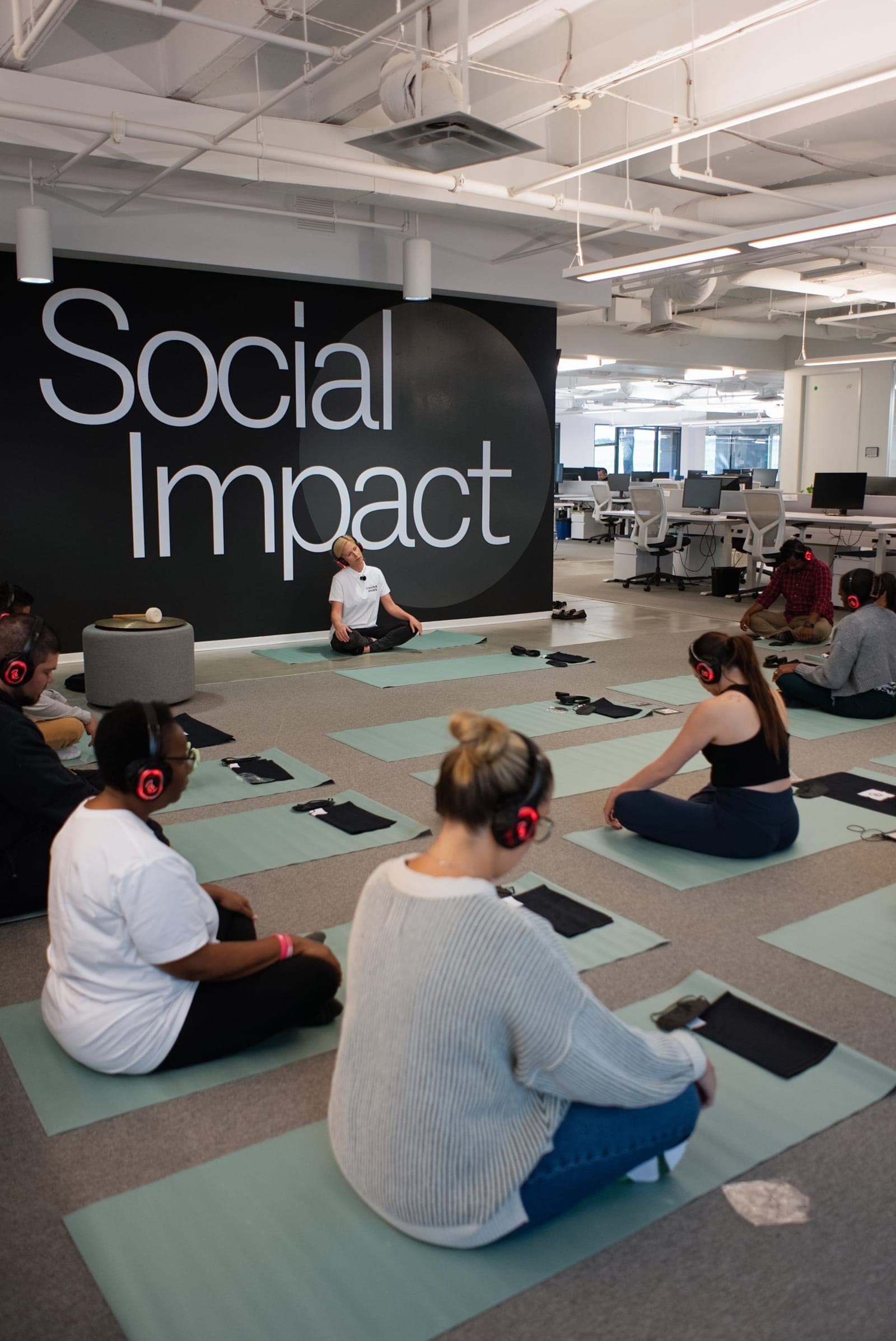
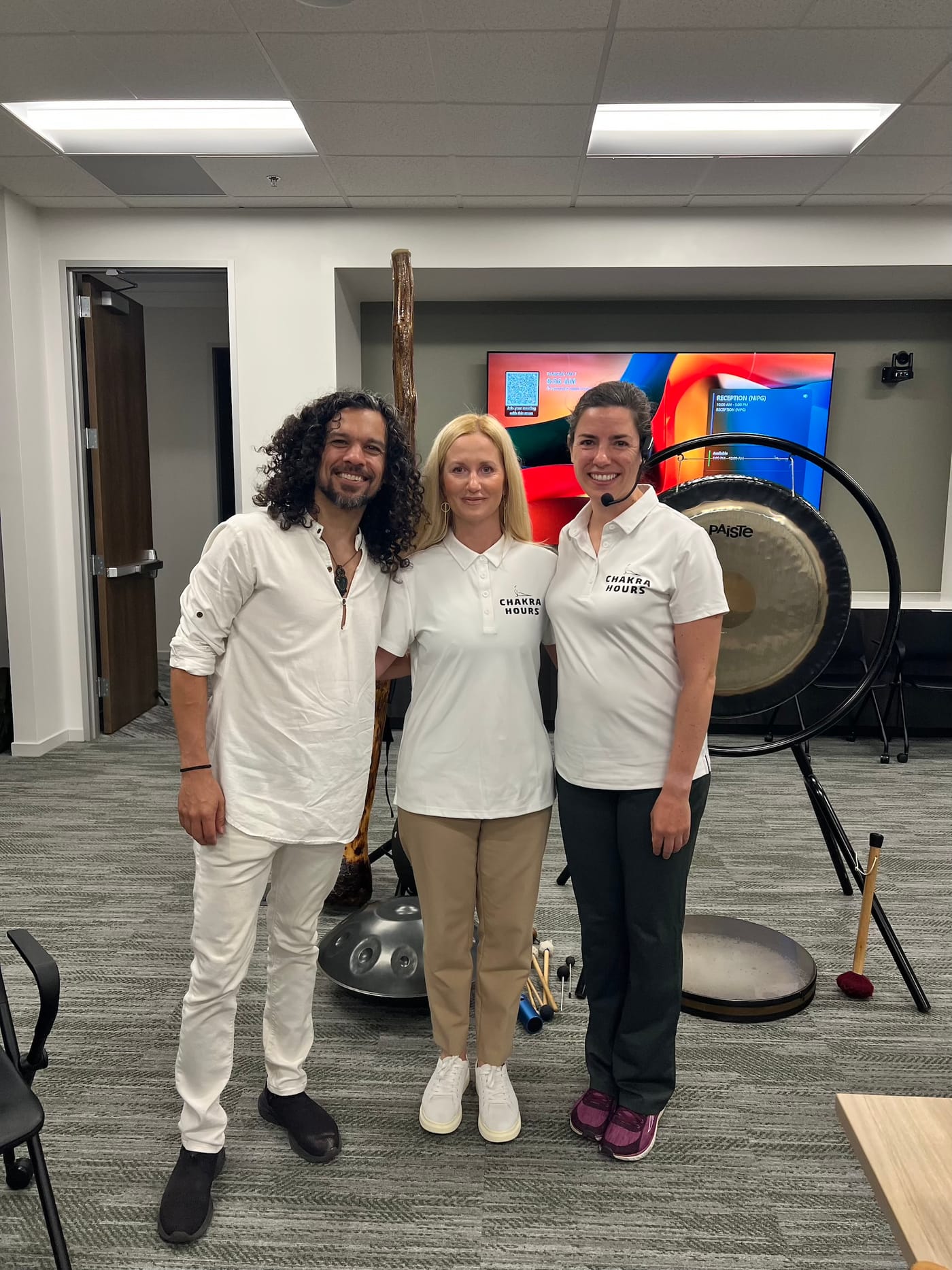
2. Mini sound bath. Fifteen to twenty minutes of live crystal bowls on a repeating schedule, so people cycle through all afternoon. It is consistently the station employees mention by name in post-fair surveys, most have never experienced one. A full standalone group sound bath starts at $1,200, so the fair version is also the cheapest way to test demand before booking one for a whole team.
3. Breathwork bar. A facilitator teaches one practical technique per ten-minute round, the kind people can redeploy at their desk the same day. Low space requirements, high repeat value, and it photographs well for the post-event recap.
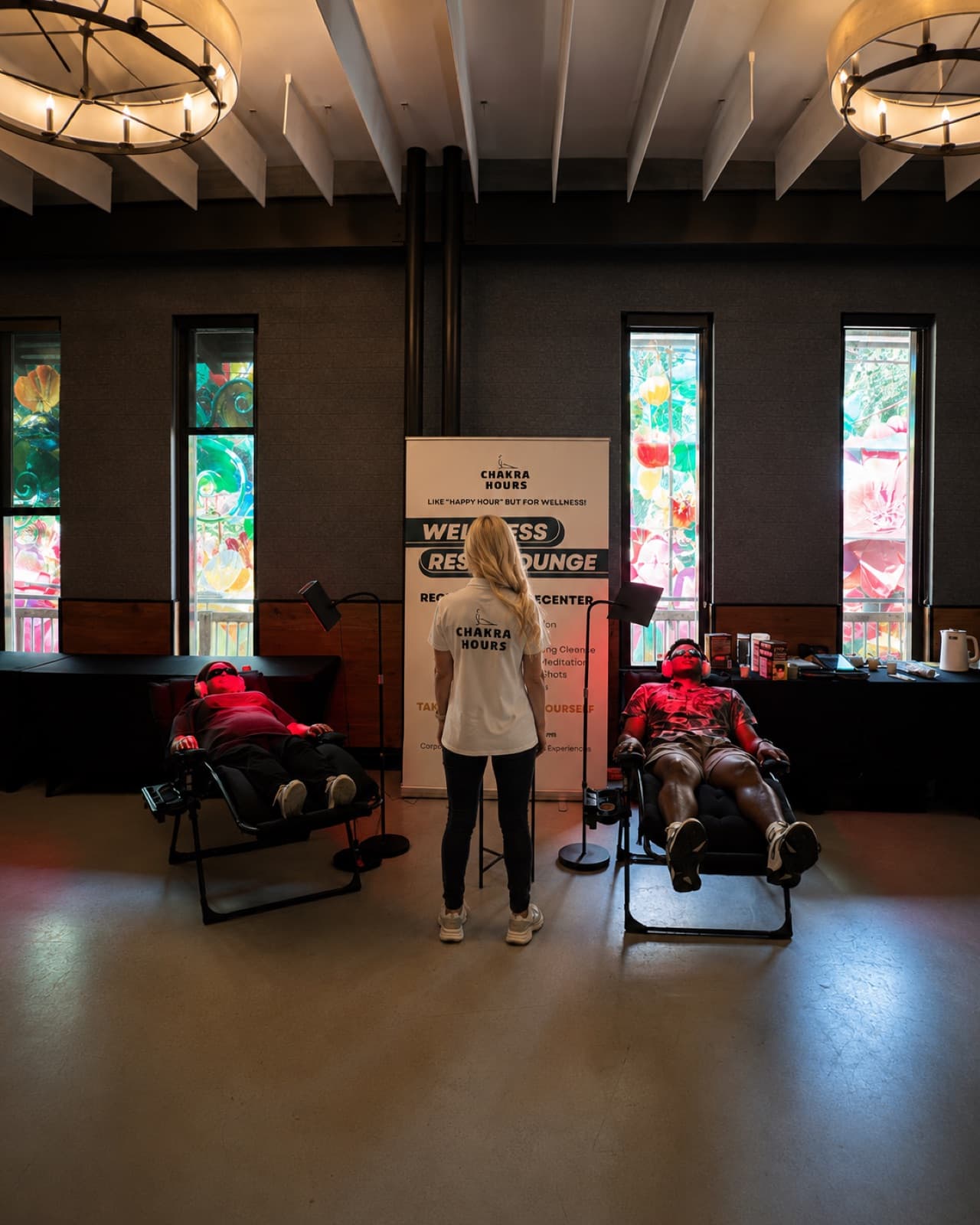
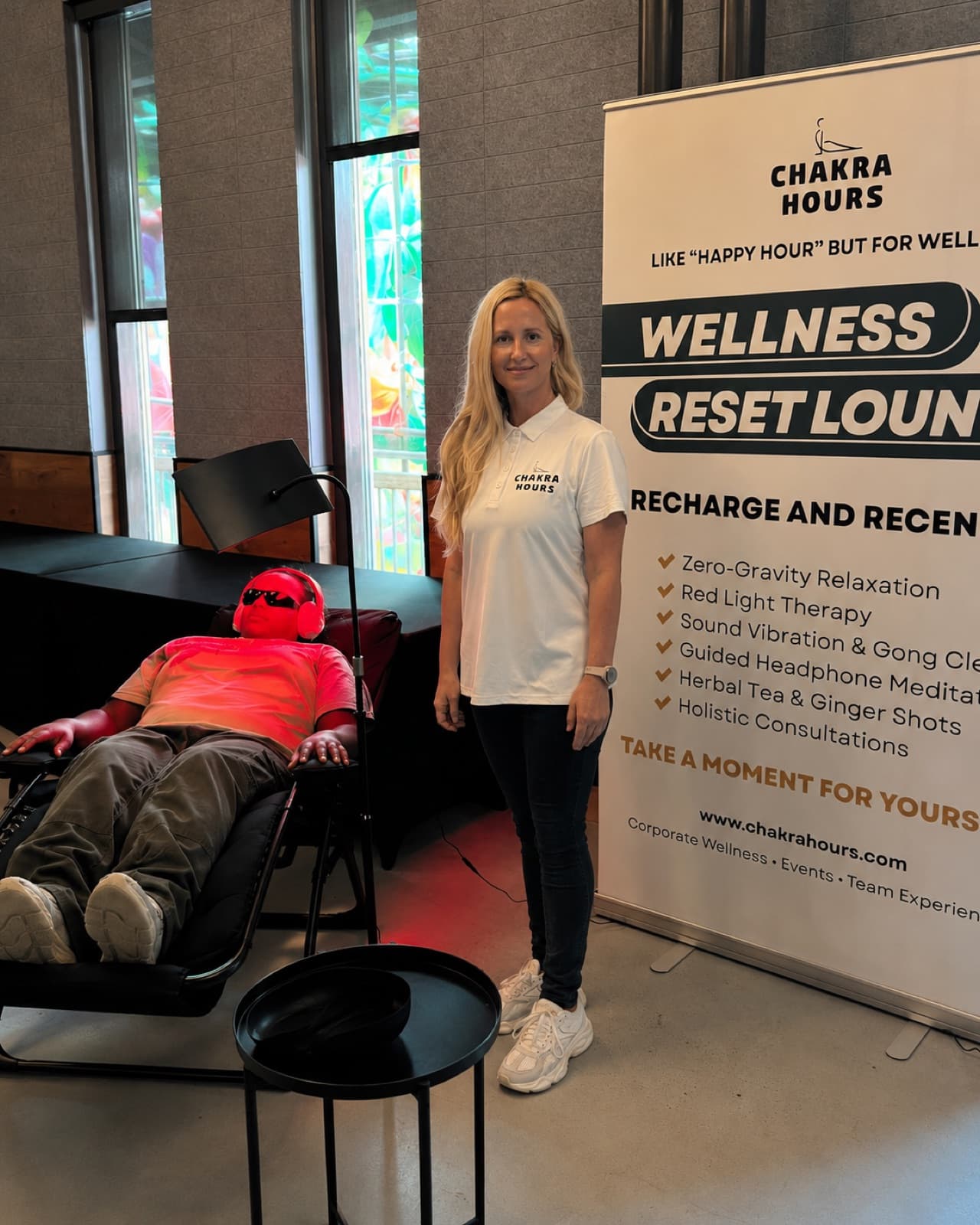
4. The recharge lounge. Zero-gravity chairs, red-light panels, headphone meditation, and herbal tea, a drop-in quiet zone that gives introverts a reason to love the fair. Our Wellness Reset Lounge runs this as a pop-up from $1,250, and at a fair it doubles as the anchor station everything else orbits.
5. Walking reset. A guided, headphone-led mindful walk that leaves from the fair every hour. It gets people moving without gym clothes and works beautifully when the fair is competing with nice weather. As a standalone session, the Walking Reset is $900.
6. Fifteen-minute mini-seminars. Short, scheduled talks, sleep, stress, desk ergonomics, delivered standing at a station rather than in a conference room. Fifteen minutes is short enough that people actually stay for all of it.
Classic health fair stations that still earn a table
The experiential stations pull people in; these give the fair its backbone.
- Biometric screenings and flu shots. Usually arranged through your benefits broker or carrier, and often funded by them, ask before you budget. Put them somewhere private, not center stage.
- Benefits and EAP tables. If the fair runs near open enrollment, this is the highest-value real estate in the room. Staff it with people who can answer plan questions, not just hand out summaries.
- Nutrition demo. A build-a-better-lunch demo or smoothie station outperforms a pamphlet about sugar every time.
- Ergonomics check. A quick posture-and-desk-setup assessment with one takeaway adjustment per person.
- Local fitness and community tables. Gyms, run clubs, farmers-market vendors, good for variety, and they typically table for free.
Health fair giveaways employees actually keep
The test for a giveaway is simple: does it still exist in two weeks? Branded stress balls and drawstring bags fail it. Things that pass:
- A printable desk-reset card. A one-page card of 60-second micro-break practices people prop against their monitor. We built ours as a free download, The Desk Reset, and hand printed copies out at fairs; it is the rare giveaway that keeps delivering the fair's message every workday after.
- Good tea. A few quality tea bags with a "take a real break" note. Cheap, consumable, on-message.
- Blue-light or posture one-pagers tied to the ergonomics station, take the assessment, keep the cheat sheet.
- A raffle with one real prize. One spa-day or reset-lounge-session prize beats fifty trinkets, and the entry form doubles as your attendance count.
Ideas for remote and hybrid employees
A health fair with a physical address quietly excludes everyone who is not in the building that day, which at many companies is now half the roster. Two fixes that keep the fair genuinely all-employee:
- Run a live-online session during fair week. A facilitated virtual sound bath, breathwork, or desk-stretch class over Zoom gives remote employees the same experience, not a recording. We run these as part of our live corporate wellbeing programs, and scheduling one in fair week costs far less than most teams expect.
- Mail the giveaway. If the in-office crowd gets a desk-reset card and tea, the remote crowd should too. A flat envelope does it.
This matters beyond fairness: if the event is funded through carrier wellness dollars, being available to all plan participants is usually a condition of the funding, and a live-online option is the cleanest way to satisfy it.
Health fair vendor ideas: building the mix
A fair that lands usually blends three vendor types, and they come from different places:
- Clinical vendors (screenings, vaccinations) — source through your benefits broker or carrier. This is also where to ask whether wellness dollars in your plan can reimburse the event.
- Experiential vendors (the facilitated stations above) — one provider covering multiple stations beats four separate contracts: one W-9, one certificate of insurance, one invoice, one load-in.
- Community tables (local gyms, healthy food, EAP) — free variety, minimal coordination.
Anchor the fair with one or two experiences, surround them with the backbone stations, and put a keepable giveaway at the exit. That combination is what moves the post-fair survey from "it was fine" to "when is the next one."
And if the budget only stretches to one paid station this year, pick the one nobody has tried before. The screening line and the benefits tables will draw their usual crowd regardless; the mini sound bath or the lounge is what makes the fair a story people tell, and a story is what gets next year's budget approved without a fight.
Put the ideas on one afternoon
If you are planning the whole event, start with our step-by-step guide on how to plan an employee health fair, it sequences everything above onto a 12-week timeline. And if your team is in Dallas-Fort Worth, we run the experiential side end to end: see corporate health fairs in Dallas for the station menu, all-in pricing, and a three-week lead time.