If you are searching for wellness fair booth ideas, the fair itself is usually already decided, the date is on the calendar, the room is booked, and you are staring at a floor plan with empty rectangles on it. So this is not a post about whether to run a fair. It is the working list we use to fill those rectangles: the booths employees genuinely line up for, the free tables that give the floor its backbone, and the space, power, and cost realities of each.
One framing before the list: the booths people remember are the ones where something happens. A table with a banner and a bowl of pens is furniture. A booth where a facilitator is running something every fifteen minutes is a destination.
In this guide, you'll learn:
- Five bookable booth ideas employees queue for, with cost anchors
- The free tables that round out the floor
- Space, power, and noise logistics for every booth
- How many booths a fair actually needs
The booths employees line up for
These are facilitated, meaning a real person runs them all afternoon. As fair stations they anchor at $900 per station for two hours; The Reset Lounge Fair runs $1,250 and the full Signature Reset Fair $4,500 — the full menu is on our corporate health fair vendors page.
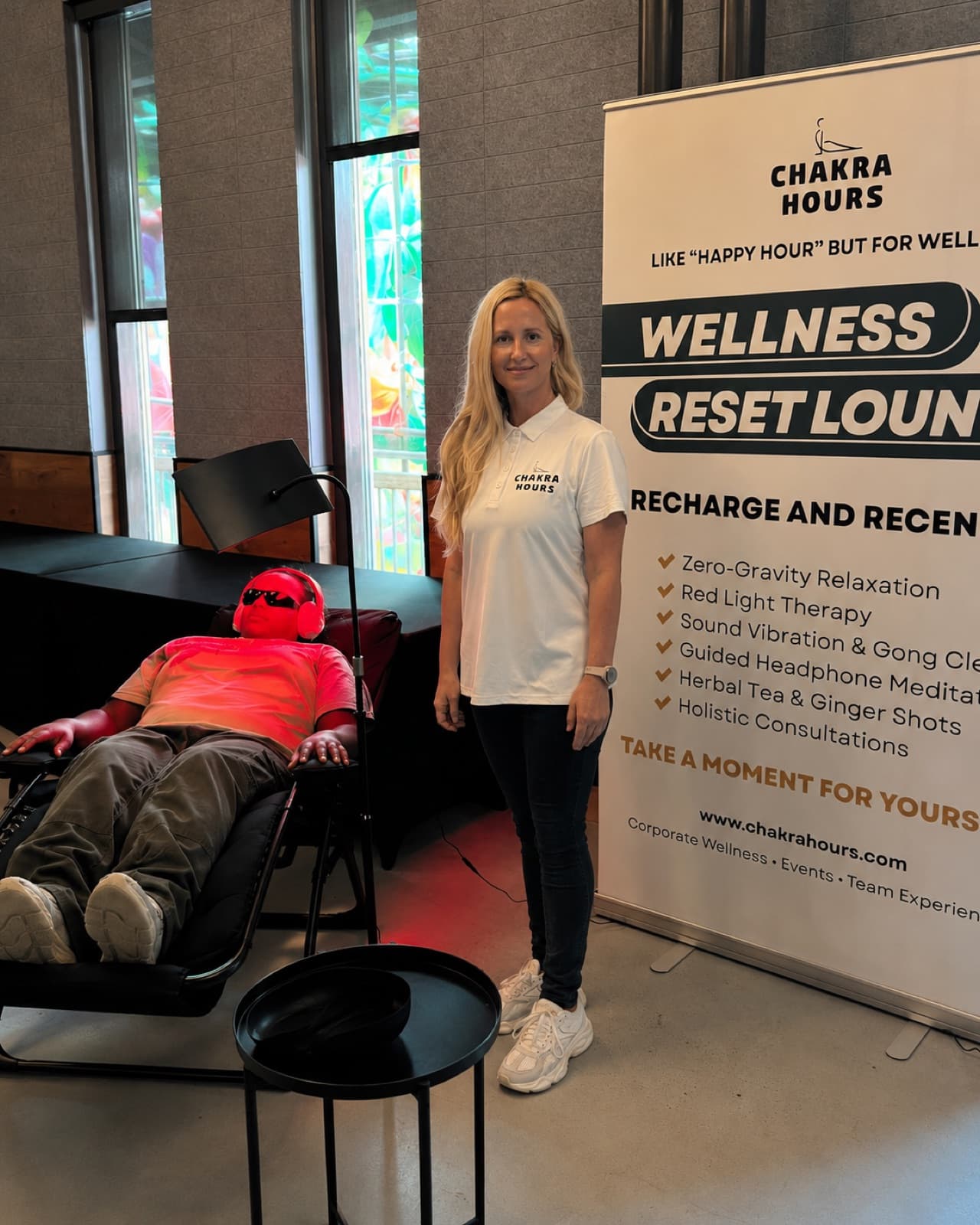
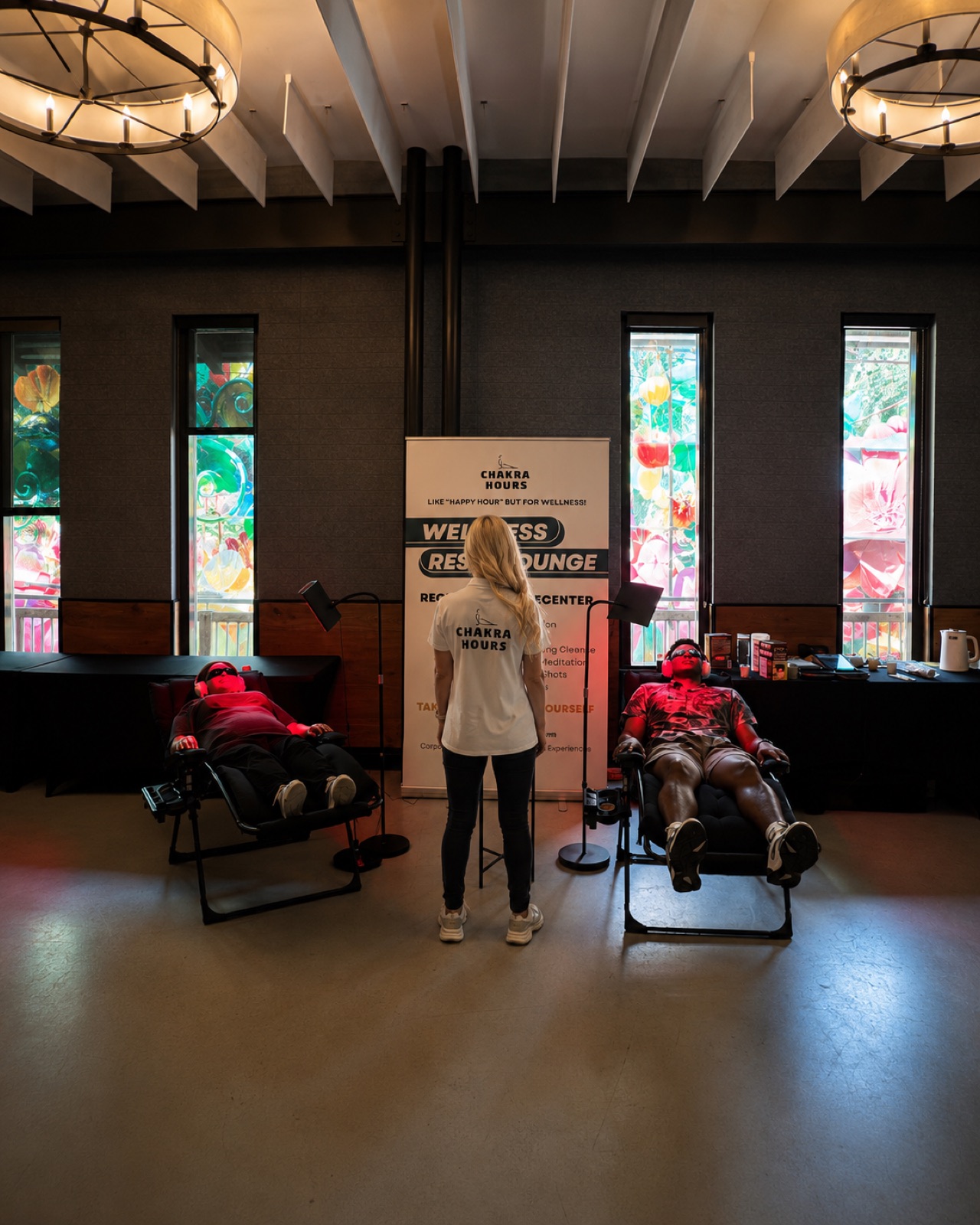
1. The recharge lounge (the turnkey booth). Zero-gravity chairs, red-light panels, headphone meditation, and herbal tea, a drop-in quiet zone that arrives, sets up, and runs itself with a host. This is the closest thing to a booth-in-a-box: our Wellness Reset Lounge runs it as a pop-up from $1,250, and at a fair it becomes the anchor everything else orbits. It is also the booth introverts will thank you for. Logistics: a 10×20 ft corner or a small side room; two standard outlets for the light panels; low noise, so keep it away from the raffle table. Drop-in, no signup needed, though a slot sheet keeps chairs turning over at big fairs.
2. The chair-yoga corner. A facilitator runs short, beginner-friendly stretch rounds in regular work clothes, no mats, no changing, nothing to be intimidated by. It is the most inclusive booth on the floor, and outside a fair the same format runs as a standalone office yoga session in Dallas, so the booth doubles as a taste test for a recurring program. Logistics: 10×10 ft of open floor and a handful of chairs; no power; medium noise tolerance, it coexists fine with a busy room.
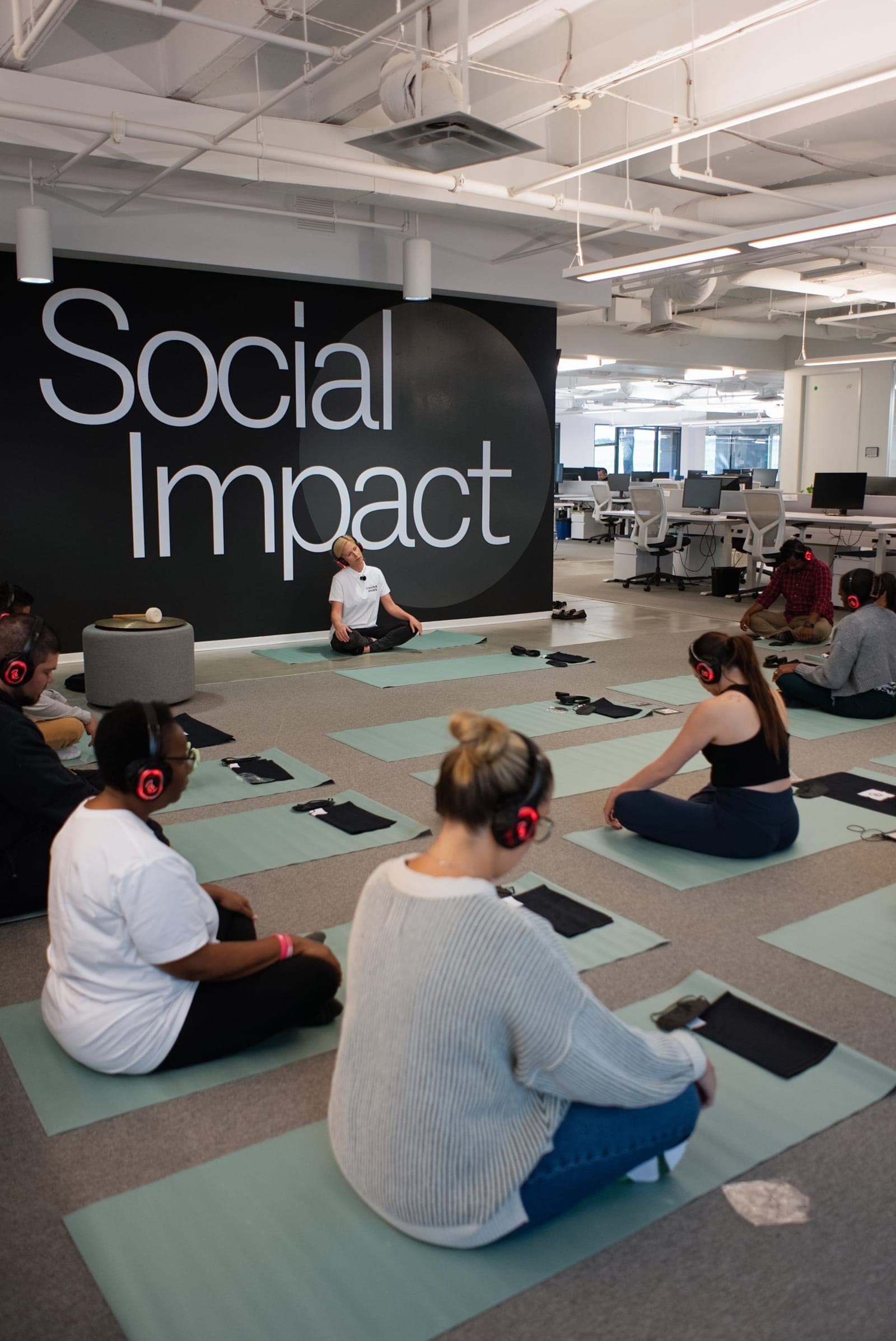
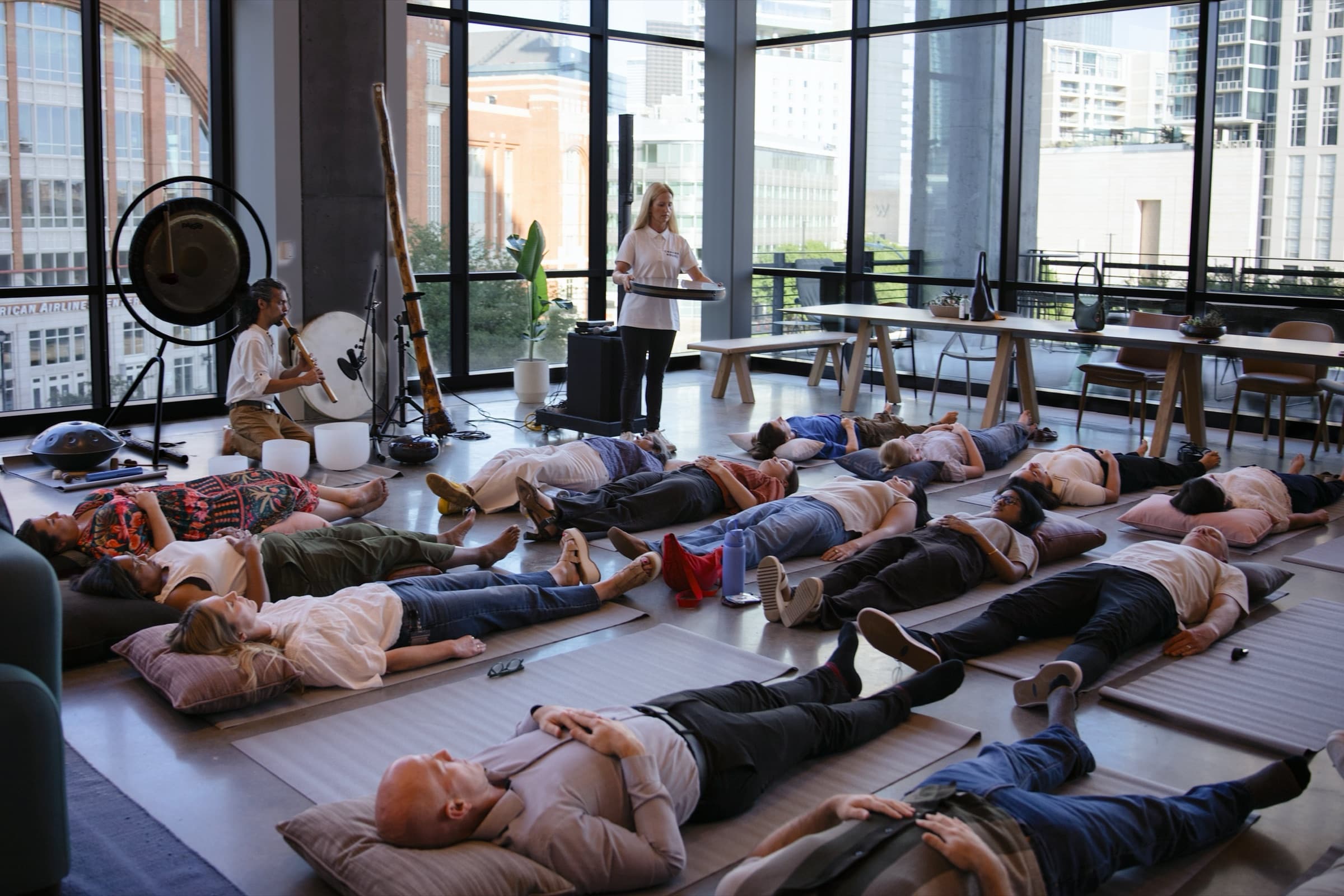
3. The mini sound bath room. Live crystal bowls in fifteen-to-twenty-minute rounds on a repeating schedule. It is consistently the booth employees name in post-fair surveys, because most have never tried one. The catch is acoustic: it needs a door, or at minimum a divider and distance from conversation-heavy tables. Logistics: a side room or genuinely quiet corner; floor space for 8–12 people on chairs or mats; no power required; run it on the half hour and post the schedule at the entrance. A full standalone group sound bath starts at $1,200, which makes the fair version the cheap way to test demand.
4. The breathwork bar. A standing, bar-height booth where a facilitator teaches one practical technique per ten-minute round, the kind people redeploy at their desk the same afternoon. Highest usefulness-per-square-foot on this list, and it photographs well for the post-event recap. Logistics: the smallest footprint here, one high table and 6×6 ft of standing room; no power; happy in a noisy room since the facilitator talks the whole time.
5. The Desk Reset giveaway booth. A booth built around a giveaway that survives the fair: a printable card of 60-second micro-break practices people prop against their monitor. Staff it with someone demonstrating one practice per visitor, thirty seconds, then hand them the card. We built ours as a free download, The Desk Reset, so the only hard cost is printing if you run the booth with your own volunteers. Logistics: one standard table; no power; pair it with the exit so it is the last thing people touch on the way out.
The free tables that round out the floor
The bookable booths pull people in; these give the fair its backbone, and they typically cost nothing:
- Benefits and carrier tables. If the fair runs anywhere near open enrollment, this is the most valuable real estate in the room. Staff with people who can answer plan questions, not just restock brochures.
- EAP table. Chronically under-visited when it sits alone; place it next to the sound bath room or lounge and traffic doubles.
- Screenings and flu shots. Your broker or carrier arranges these, and often funds them, ask before you budget. Give them privacy, not center stage.
- Ergonomics check. A two-minute desk-setup assessment with one takeaway adjustment per person.
- Local community tables. Gyms, run clubs, farmers-market vendors, free variety that makes the floor feel bigger.
Budget math for the whole floor
A realistic floor plan for a mid-size fair: one or two paid booths ($900 each, or the $4,500 Signature Reset Fair that adds the four-hour lounge, a facilitated station, and an onsite lead), three to five free tables, and clinical stations funded through your carrier. If the budget covers exactly one paid booth, pick the one nobody has tried before, the sound bath or the lounge, because the benefits tables will draw their usual crowd regardless, and the novel booth is what makes the fair a story people retell.
As a sizing rule, plan one facilitated booth per 50–75 expected attendees so the line stays a draw instead of a deterrent, and put timed rounds on anything with limited capacity.
Booking it all without a procurement headache
Sourcing five booths from five vendors means five W-9s, five insurance certificates, and five load-ins. One experiential provider covering the lounge, chair yoga, sound bath, and breathwork collapses that to a single contract, which is exactly how we run the corporate health fairs we support in Dallas, station menu, all-in pricing, three-week lead time.
From here: the health fair vendors guide covers formats and pricing in depth, the planning playbook sequences the whole build on a 12-week timeline, and the printable health fair checklist turns it into a pin-up project plan. Fill the rectangles with things that happen, and the floor plan takes care of itself.