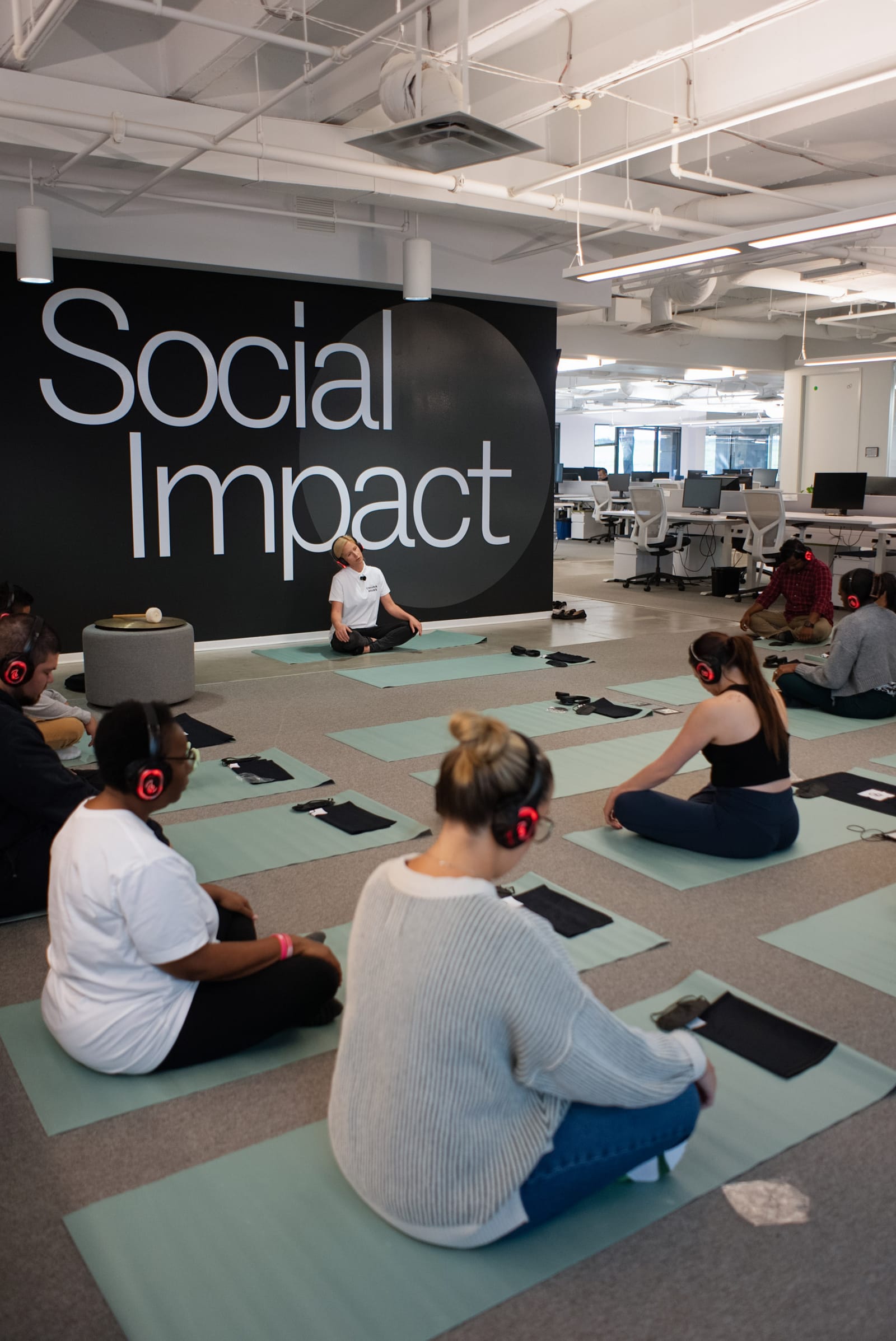
Open enrollment is the one moment on the HR calendar when every employee is supposed to show up, and the one event most of them quietly avoid. The benefits fair gets booked, the carriers send their table banners, the emails go out, and attendance is still a trickle of people grabbing a plan summary on the way to a meeting.
The problem is not the information. It is that a benefits fair, as usually run, offers employees nothing they want, only things they need. The fix HR teams are landing on: pair the needs with wants. Add facilitated wellbeing experiences to the fair, and the benefits tables inherit the foot traffic. Here is how to do it, with formats, themes, and the timing that makes fall work.
In this guide, you'll learn:
- Why turnout, not content, is the real OE fair problem
- Open enrollment ideas that give people a reason to come
- Benefits fair ideas: the station pairings that work
- Themes that give the fair a name people repeat
- The planning window (and why August is the booking deadline)
The real problem with benefits fairs is turnout
Your benefits team can answer any question, but only for the people standing in front of them. Every employee who skips the fair becomes a January support ticket: a wrong plan election, a missed FSA deadline, an HSA question that a two-minute conversation would have solved.
So the metric to design for is attendance. Not attendance-as-vanity, attendance as the cheapest benefits-communication channel you have. A person who comes for a twenty-minute reset and stays to ask one plan question is the whole strategy working.
There is a second, quieter payoff. Open enrollment is also the one week the company's investment in its people is maximally visible, and a fair that feels like a benefit, not a compliance exercise, sets the tone for how every plan document that follows gets read.
Open enrollment ideas that raise turnout
The pattern is simple: put experiences people genuinely want in the same room as the enrollment help they need.
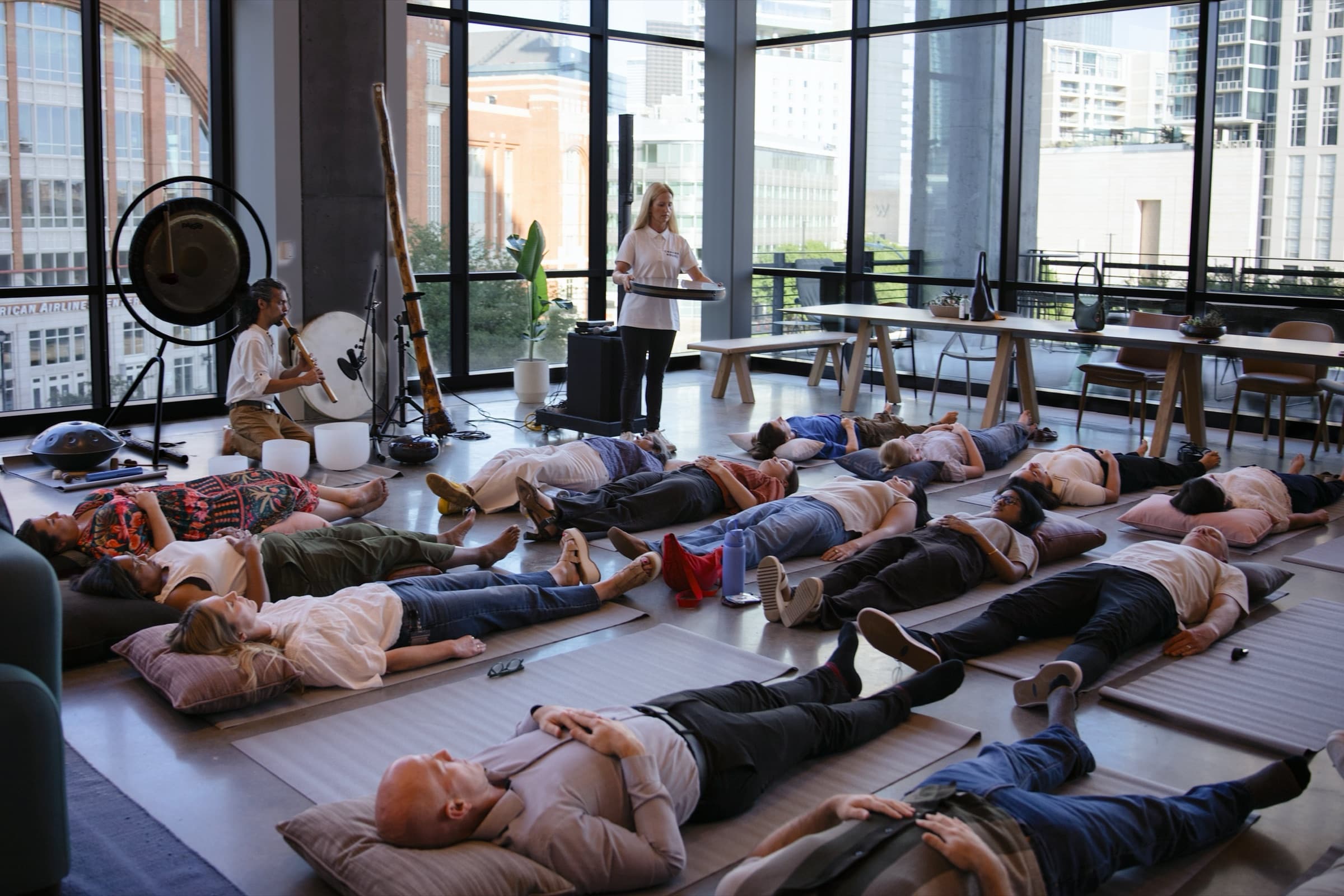
- A mini sound bath on the half hour. Twenty minutes of live crystal bowls, running on a schedule so people can plan around meetings. It is the single most talked-about station we run, and most employees have never tried one.
- A chair yoga and stretch corner. Facilitated, beginner-friendly, done in work clothes. Nobody has to opt in publicly; they just wander over.
- A breathwork station. One practical, desk-ready technique per ten-minute round. Employees leave with something they use during the actual stress of plan deadlines.
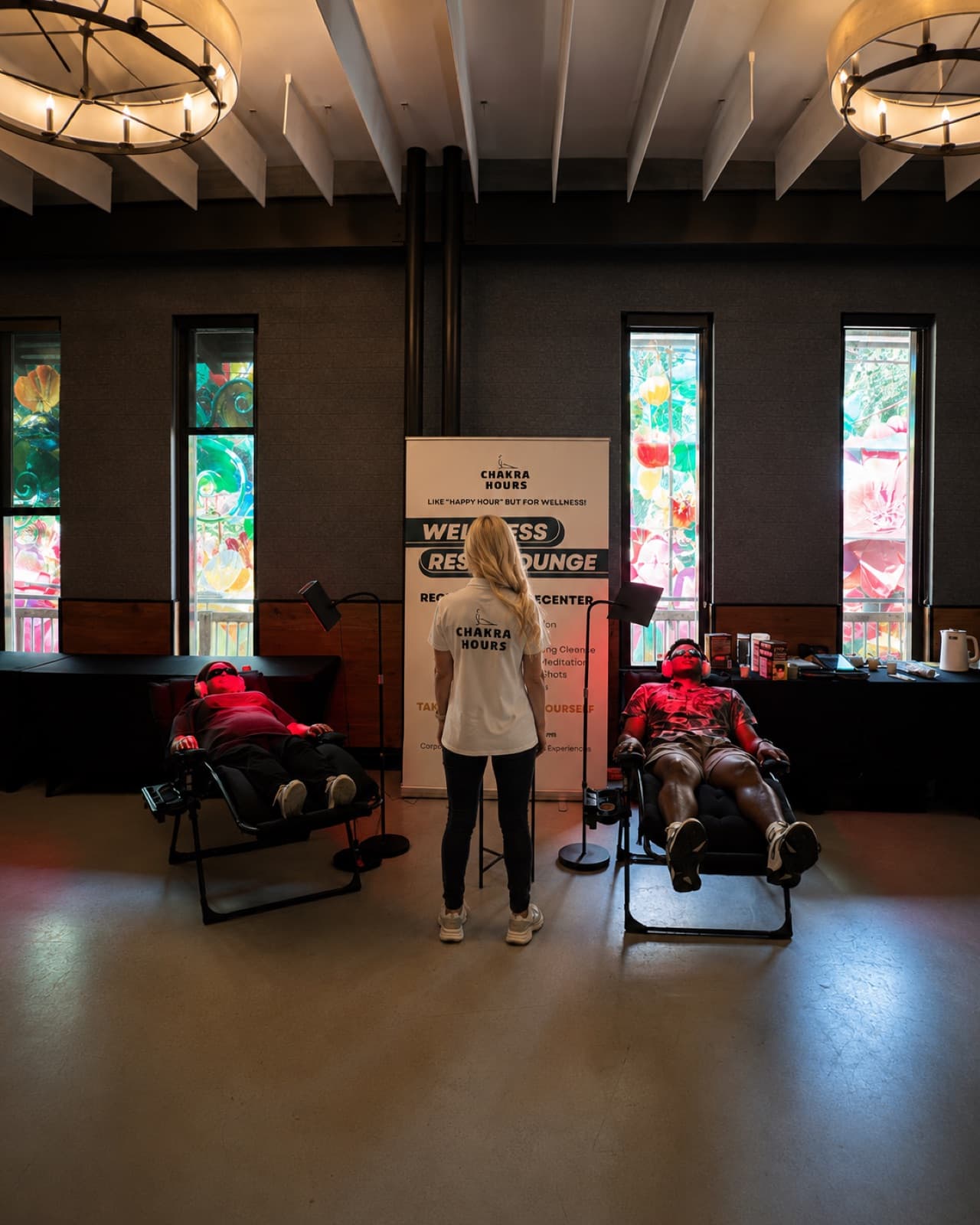
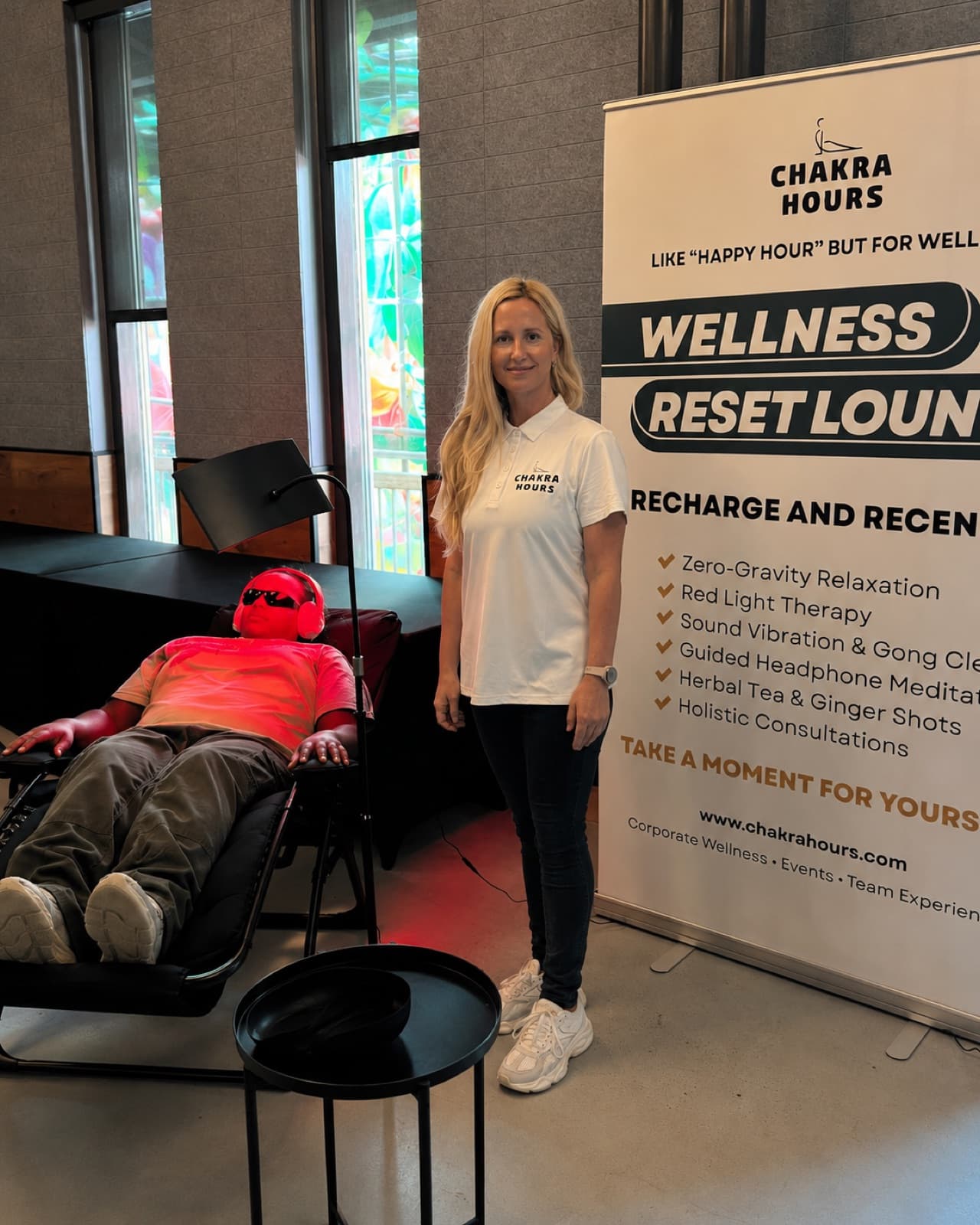
- A recharge lounge. Zero-gravity chairs, red light, headphone meditation, and tea, a quiet landing zone that makes the fair feel like a benefit in itself rather than an errand.
- Scheduled "benefits 1:1" slots next to the experiences. Put the signup sheet for fifteen-minute enrollment consultations at the lounge exit. Calm people ask better questions.
Place the experiences at the center of the room and the carrier and benefits tables along the natural walking route to them. The layout does the marketing.
Benefits fair ideas: pairings that make the tables work harder
A few combinations we have watched outperform:
- Screenings + reset. People queue for biometric screenings anyway; a stretch or breathwork station next to the line converts dead waiting time into the best part of the fair.
- HSA/FSA table + giveaway that teaches. Pair the most confusing table with the most useful handout. A printable Desk Reset card of 60-second micro-breaks gets kept, and it carries the "your employer invests in your wellbeing" message back to the desk.
- EAP table + mindfulness station. The EAP is the most underused benefit in most plans. Sitting it beside a meditation or sound station normalizes the conversation it exists for.
One more budget note: if your plan includes carrier wellness dollars, an open-enrollment fair with wellbeing stations is exactly the kind of documented, all-employee event those funds were built to reimburse, and fall is when unspent balances expire.
Open enrollment themes that give the fair a name
A theme is not decoration; it is what makes the event repeatable and easy to announce. Ones that fit the season without feeling forced:
- "The Enrollment Reset" — enroll for next year, reset from this one. Pairs naturally with the experience stations.
- "Choose Well" — one verb covering both the plan election and the wellbeing programming.
- "Benefits, In Person" — leans into the anti-portal angle: real humans, real answers, real chairs.
- "Fall Tune-Up" — screenings, elections, and a reset before the year-end sprint.
Pick one, put it on the calendar invite, and reuse it annually so the event compounds.
Communication ideas that do half the work
The fair's marketing matters as much as its lineup, and the OE version has one advantage: a hard deadline you can borrow urgency from.
- Lead with the experience, close with the deadline. "Mini sound baths every half hour, and your enrollment questions answered before the November 14 deadline" outperforms any subject line about plan documents.
- Name the stations specifically. "Chair yoga on the hour" beats "wellness activities" every time it is tested.
- Give managers one sentence. Attendance follows manager permission. Ask every manager to say, out loud, that going during work hours is encouraged.
- Include remote employees. If part of the team is not in the building, schedule a live-online session, a virtual sound bath or desk-stretch class, during fair week so the event stays genuinely all-employee. It also keeps the fair eligible for carrier funds that require availability to all plan participants.
Timing: plan in August, run in the fall
Most OE fairs land between late September and mid-November, which means the planning window is August and the vendor-booking deadline is earlier than most teams expect; fall dates for facilitated stations go first. Work backward from your enrollment window using the 12-week cadence in our guide on how to plan an employee health fair, compressed versions of it work fine at six weeks, but the date and vendors need to lock early.
For teams that want the experiential side handled as one line item, we run a seasonal campaign for exactly this: The Open Enrollment Reset, built around The Signature Reset Fair ($4,500, four hours) — September–November dates book out by late August. One invoice, one certificate of insurance, and the stations arrive staffed.
Make this the year people actually show up
If your team is in Dallas-Fort Worth, see how we run corporate health fairs in Dallas, the station menu, all-in pricing, and a three-week lead time. Tell us your enrollment window and headcount, and we will send back a scoped quote your benefits team can forward to the broker.