Somewhere in your company's health plan paperwork, there may be a line item you have never spent: a fund your insurance carrier sets aside each year specifically to reimburse wellness activities. These are wellness dollars, and in our experience most HR teams either do not know they exist or assume they are harder to use than they are. They typically expire at the end of the plan year, so every January (or whenever your plan renews), unclaimed funds quietly disappear.
This guide explains what wellness dollars are, how to find out whether your company has them, what they typically pay for, and how the reimbursement actually works, with a practical angle for teams in Dallas-Fort Worth.
In this guide, you'll learn:
- What wellness dollars are and where they come from
- The one email that tells you whether your company has them
- What carriers typically reimburse (health fairs, yoga, and mindfulness are usually on the list)
- How the reimbursement mechanics work, step by step
- The all-plan-participants rule to plan around
Have wellness dollars to use before year-end?
Tell us the amount and your headcount, and we’ll recommend a program that fits.
What are wellness dollars?
Wellness dollars are funds a health insurance carrier makes available to an employer group to spend on employee wellness. They usually show up as part of a fully insured group health plan, sometimes negotiated into the contract at renewal by your benefits broker, sometimes included as a standard feature of the plan. The size of the fund generally scales with the size of your group and your premiums; depending on headcount, it can range from a few thousand dollars to well into five figures per year.
Three properties define them:
- They come from the carrier, not your budget. Wellness dollars are a feature of the insurance relationship. Spending them does not touch your HR or benefits budget.
- They are annual. The fund is tied to your plan year. When the plan renews, the balance resets.
- They are use-it-or-lose-it. Unspent funds do not roll over, and there is no cash-out. A fund you do not claim is simply money your company paid premiums for and never got back.
That last point is why this topic belongs on an HR checklist and not just a broker's. If your company has wellness dollars and has never filed for reimbursement, you are leaving a recurring, already-paid-for wellbeing budget on the table every single year.
How to find out if you have them
One email. Send it to your benefits broker or, if you manage the carrier relationship directly, your carrier account manager:
"Does our current plan include wellness funds or wellness dollars? If so, how much is available this plan year, what categories are eligible, and what does the reimbursement process look like?"
A few practical notes:
- Carriers name these funds differently: wellness dollars, wellness funds, wellness credits, or a "wellness allowance." Your broker will know what you mean.
- The details often live in your renewal paperwork, so if you have a renewal packet from your last cycle, the answer may already be sitting in it.
- If your plan does not currently include them, they are a negotiable item at renewal. Brokers routinely ask carriers for wellness funds as part of the package, and a carrier competing for your group's business has a reason to say yes. Put it on the list for your next renewal conversation.
- Self-funded plans work differently; wellness dollars in the classic sense are mostly a fully insured feature. Self-funded groups often budget an equivalent internally instead.
What wellness dollars typically pay for
Each carrier publishes its own eligible-category list, and your broker can send you the exact one for your plan. Across the published lists, the same categories appear again and again:
- Employee health fairs and biometric screening events
- Mindfulness and meditation workshops
- Yoga and group fitness classes, onsite or virtual
- Onsite wellness events and seminars, from stress management to nutrition talks
- Flu shot clinics, wellness challenges and platform fees, and ergonomic assessments
Notice what that list rewards: organized, invoiced, employee-facing programming. A corporate health fair with facilitated stations, a monthly chair yoga series, a quarterly sound bath, these are exactly the shape of spending that carriers built the funds for. What generally does not qualify: individual gym memberships handled outside the plan, gift cards, or anything the carrier cannot tie to a group wellness activity with an invoice behind it.
How reimbursement actually works
The mechanics are simpler than most reimbursement processes HR deals with:
- You book and pay the wellness vendor directly, the same way you would for any service.
- The vendor gives you an itemized invoice, showing what was delivered, when, and for how much. (Any professional wellness vendor should also hand you a W-9 and a certificate of insurance without being chased.)
- You submit the invoice to the carrier, usually through your broker or via a simple carrier form, tagged to the eligible category.
- The carrier reimburses the company from the wellness fund, up to the annual balance.
Two habits make this painless. First, ask the vendor for an itemized invoice up front and mention it is for a wellness-fund claim; vendors who work with employer groups will know exactly what that means. Second, submit as you go rather than saving claims for year-end, when the fund's expiration date and your carrier's processing time can collide.
The all-plan-participants rule
The main compliance guardrail to know: wellness-dollar-funded activities generally need to be available to all plan participants, not reserved for one office, one department, or the executive team. Carriers word it differently, but the intent is consistent, since the fund exists to support the health of the covered group as a whole, the programming it pays for should be open to that group.
In practice this is easy to satisfy and even easier to plan around. A company-wide health fair qualifies naturally. A yoga series open to any employee qualifies. A leadership-only retreat probably does not. If your workforce is split across sites or includes remote employees, pairing an onsite event with a live-online option is a clean way to keep an activity genuinely available to everyone, and it is worth stating that availability in the invoice or claim notes.
The DFW angle: where these funds go furthest
For Dallas-Fort Worth teams, wellness dollars pair naturally with onsite programming, because onsite events produce exactly the paper trail carriers want: one vendor, one itemized invoice, one dated group event. A corporate health fair in Dallas-Fort Worth is the classic claim, health fairs sit at the top of nearly every carrier's eligible list, and a fair with facilitated wellbeing stations gives employees a reason to actually attend the event the fund paid for.
The timing works in your favor too. Most plan years end in December, which means fall is when unspent funds either get used or vanish. An open-enrollment-season fair or a fourth-quarter wellbeing event is often the difference between claiming the fund and losing it.
What your remaining balance can cover
If you just found wellness dollars and the plan year is ticking, match the program to what is left. Carriers generally reimburse activities that happen within the plan year, so for this year's funds, pick a date before your plan renews.
- About $700: one live 30-minute online session for your whole team, up to 200 people ($695).
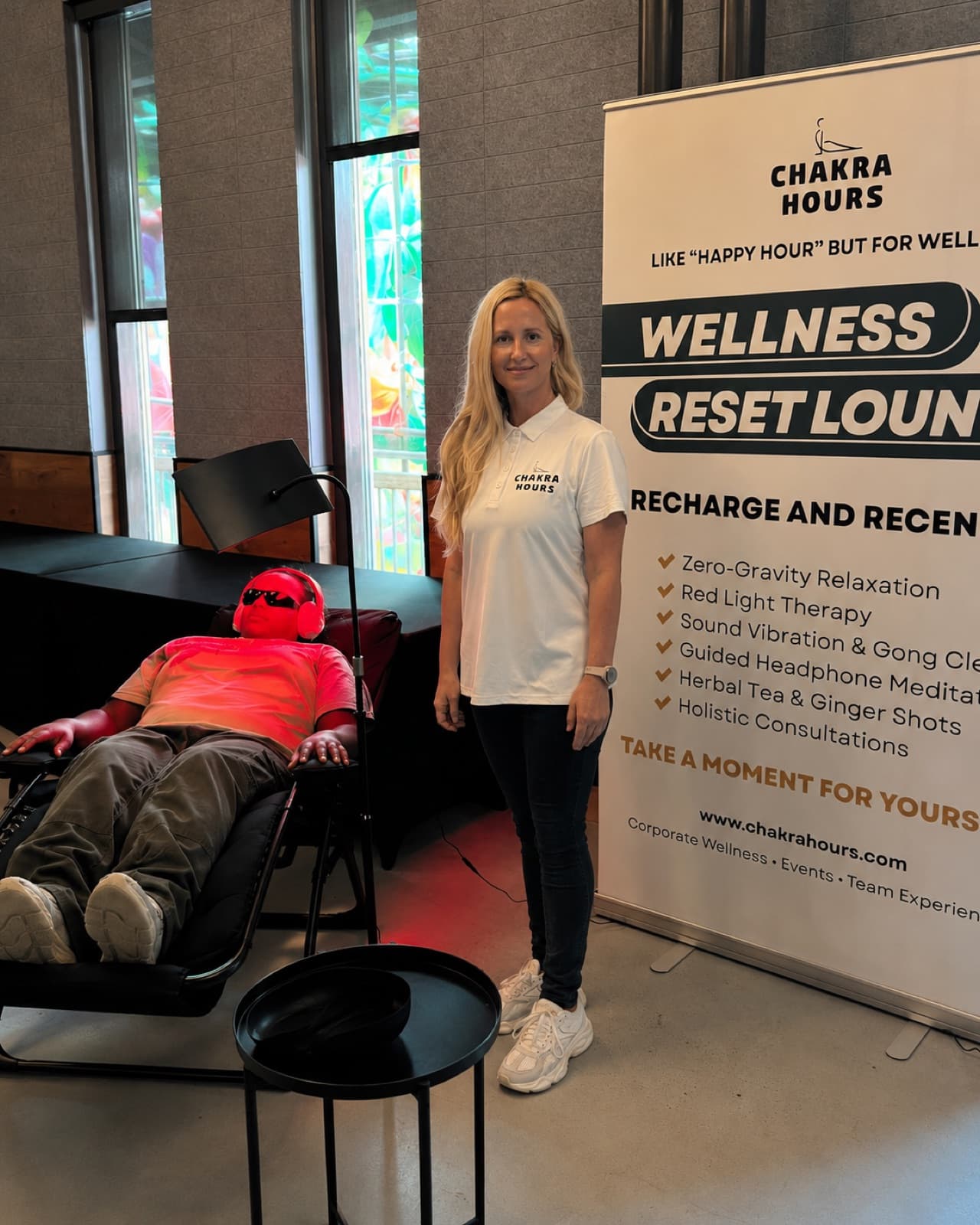
- About $900 to $1,250: an onsite Office Reset ($900), a sound bath ($1,200), or a two-hour Reset Lounge pop-up ($1,250) anywhere in Dallas-Fort Worth.
- About $2,500 to $3,600: a four-hour Reset Lounge ($2,500) or a two-room employee wellness day with eight sessions ($3,600).
- Planning next year's funds: the Quarterly Reset ($2,400 for four live sessions) or the Full Curriculum ($4,800 for all twelve).
Have wellness dollars to use before year-end?
Tell us the amount and your headcount. We’ll recommend a program that fits and send an itemized quote you can forward to your broker, within one business day.
Get a recommendationThis article is general information for HR teams, not benefits, legal, or tax advice. Fund amounts, eligible categories, and claim processes vary by carrier and by plan, so confirm the specifics of your plan with your benefits broker or carrier account manager.