If you are planning the January awareness days for HR, this is the calendar to build from, and the framing matters as much as the dates. January is the fresh-start month, anchored by Mental Wellness Month and Blue Monday. It is also when resolution culture quietly sets teams up to fail, which gives People teams a real opening: use the month to start small, sustainable habits rather than January-only heroics.
This guide lists every major January health observance in date order, explains what each one means for the workplace, and gives you one low-lift action for each. We have written it for HR and People leaders who own the planning calendar and want something they can act on without a heavy lift. For the full twelve-month view, keep our HR wellness calendar open in a second tab.
Why January matters for People teams
January lands at a specific moment in the work year. The holidays are over, budgets reset, and there is genuine appetite to start something new. That energy is real, but it is also fragile. Most New Year resolutions fade fast, and the culture around them rewards intensity over consistency, which is exactly backwards for building a healthy workplace.
There is data behind the fade. Strava, analyzing tens of millions of activities, identified the second Friday of January as the day most people abandon their resolutions, a date now widely referred to as Quitter's Day. The lesson for HR is not that habits do not work. It is that big, all-or-nothing January pushes do not last. The teams that benefit most treat January as the start of a year-round rhythm, not a one-month campaign.
That is the through-line for this whole calendar, and it maps cleanly onto the RESET pillar of The Workday Reset Method™: small, repeatable practices that compound, rather than a burst of activity that burns out by February.
The full January 2027 awareness calendar
Below are the January observances most relevant to a workplace audience, grouped into month-long campaigns first and then the specific dates.
Month-long observances
- Mental Wellness Month runs all January and is the easiest theme to build positive, low-pressure programming around. It reframes mental wellbeing as a daily practice rather than a crisis response.
- Thyroid Awareness Month raises visibility for thyroid conditions, which are common and often underdiagnosed. Treat this as a named-source educational note: point people to credible information rather than offering advice.
- National Glaucoma Awareness Month is a useful prompt for screen-heavy teams to share reminders about routine eye exams and preventive care.
- Cervical Health Awareness Month is a straightforward moment to signpost preventive screening and the benefits already in your health plan.
Key dates in January 2027
| Date | Observance | Workplace angle | |---|---|---| | January 8 | National Quitter's Day (second Friday) | Reframe resolutions as small habits; normalize starting over without guilt | | January 18 | Blue Monday (third Monday) | Run a calm shared reset; share EAP details rather than hype | | January 24 | International Day of Education | Spotlight learning and growth; share a development or wellbeing resource |
Dates are based on widely published 2027 observance calendars. Always confirm against an official source close to the date, since several of these observances move year to year.
How to handle Blue Monday at work
Blue Monday, the third Monday in January, is often called the most difficult day of the year. It is worth knowing that the idea began as a marketing campaign and has no clinical standing, so the goal is not to amplify a gloomy narrative. The goal is to use the date as a prompt for a calm, supportive touchpoint.
Keep the tone steady and resource-led. Rather than leaning into the doom framing, use the day to make existing support visible. A short, warm message that lists your Employee Assistance Program (EAP) details and access steps does more good than any awareness graphic. According to the World Health Organization, a safe and supportive working environment protects mental health, and clear access to support is part of that. Putting those details in front of people, in writing, is the highest-value thing you can do.
Offer one shared moment. A short, voluntary midday reset, even ten quiet minutes of guided breathwork, gives the team a real pause instead of a slogan. Our guide to building resilience through meditation covers how small, repeatable practices compound over time, which is the groundwork that makes a moment like Blue Monday land.
Do not overload the day. One calm message and one optional shared reset is enough. The aim is to signal care, not to stage an event.
Reframing resolution culture for the workplace
This is where January's real opportunity sits. The fresh-start instinct is genuine, and HR can channel it into something durable instead of letting it follow the Quitter's Day curve.
A few principles make that easier:
- Consistency beats intensity. A two-minute daily practice that holds for a year outperforms a thirty-day sprint that collapses. Encourage employees to pick one small thing, not five big ones.
- Make starting over normal. National Quitter's Day, the second Friday, is a useful moment to say out loud that lapsing is part of habit-building, not a failure. Removing the guilt keeps people in the game.
- Give the habit a home. The reason resolutions fade is that they have nowhere to live on the calendar. A short, recurring wellbeing touchpoint gives a new habit a reliable place to return to each week or month.
For the practical how-to on the habits themselves, our guide to Wellness Wednesday self-care practices breaks down simple, repeatable routines that fit inside a normal workday. It pairs naturally with a January reframe: pick one small practice, repeat it, and let it carry past the resolution slump.
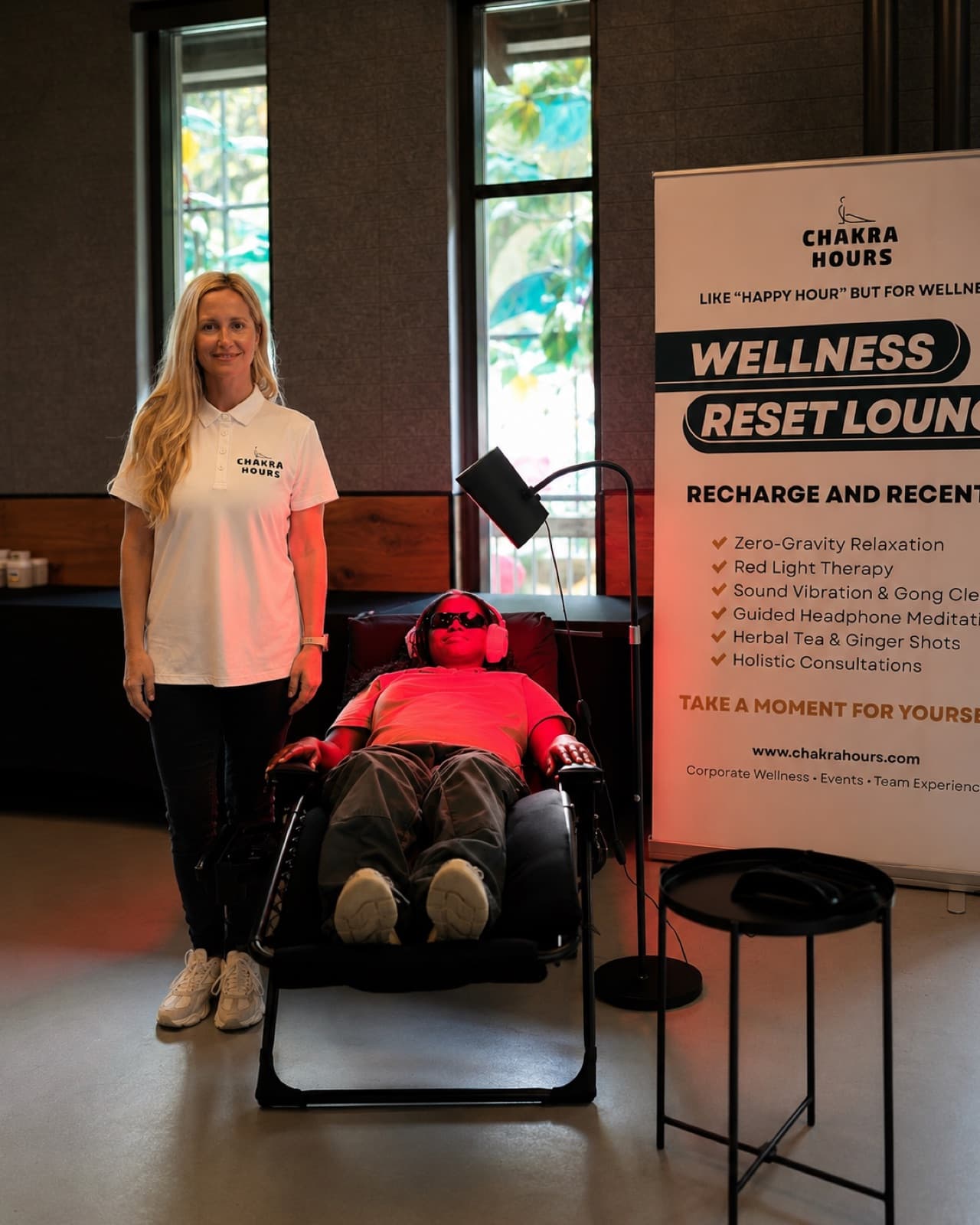
A recurring reset session is a steady, low-pressure way to keep this going. Instead of a January-only push, a short monthly touchpoint built on The Workday Reset Method™ gives teams a dependable place to pause. Our live corporate wellbeing sessions bring guided breathwork, sound baths, and reset practices on-site in Dallas-Fort Worth or virtually nationwide, so the habit outlasts any single awareness week.
Easy ways to mark the lighter January observances
These observances let January read as supportive and forward-looking. None of them require a big budget or a new policy.
Mental Wellness Month
This is the month's most flexible theme. A few low-effort options:
- Share a weekly two-minute wellbeing prompt, such as a short breathing exercise or a screen break, in your usual team channel.
- Encourage employees to take real breaks, and have leaders model it by visibly stepping away.
- Offer one calm, shared experience, like a guided breathwork or sound session, that gives the whole team a moment to slow down together at the start of the year.
Thyroid, Glaucoma, and Cervical Health Awareness
Handle these as quiet, named-source educational notes rather than advice. A single message that links to credible information and reminds people of the preventive-care benefits in their health plan is plenty. For National Glaucoma Awareness Month in particular, a short nudge about routine eye exams resonates with screen-heavy teams without overstepping into clinical territory.
International Day of Education (January 24)
This date pairs neatly with January's fresh-start energy. Use it to spotlight learning and growth, whether that is a development resource, a lunch-and-learn, or simply pointing people to a wellbeing skill they can build over the year.
Build January into a year-round rhythm
The most common mistake is treating awareness months as isolated events. January's fresh-start pull makes it tempting to go big, but the teams that benefit most connect these moments into a steady cadence rather than a burst.
A few principles make that easier:
- Plan a quarter ahead. Slot January's key dates into your calendar in December so your Blue Monday message is ready, not rushed. If you are also mapping the month before, our December awareness days for HR guide covers the close-of-year handoff into January.
- Repeat, do not reinvent. A short monthly wellbeing touchpoint means each awareness month has a ready-made home instead of requiring a fresh plan every time.
- Measure lightly. Track participation and informal feedback so you can show leadership that the program is landing.
If you want a starting framework, our roundup of wellness days to celebrate across the year pairs well with the month-by-month HR wellness calendar to help you build a full annual plan. For the bigger picture on how these moments fit a structured program, our ultimate guide to workplace wellness is the place to start.
Your January awareness days for HR checklist
- Confirm EAP and mental health benefit details are current and easy to find.
- Schedule a calm, resource-led message for Blue Monday on January 18.
- Choose one Mental Wellness Month activity you can repeat monthly.
- Use National Quitter's Day on January 8 to normalize small habits over big resolutions.
- Share preventive-care reminders for Glaucoma, Thyroid, and Cervical Health Awareness.
- Mark International Day of Education on January 24 with a learning or growth resource.
Start the year with a calm, recurring touchpoint
January asks People teams to channel a lot of fresh-start energy, and the steadiest way to meet it is to give employees a reliable place to pause rather than a single packed campaign. If you would like help building that rhythm, whether it is a one-time Mental Wellness Month session or a recurring monthly reset, we would love to put together a simple plan for your team. Request a quote or get in touch, and we will tailor something to your calendar, your headcount, and your budget.