If you are planning the December awareness days for HR, this is the calendar to start from. December is light on formal health months and heavy on lived reality: short days, holiday stress, year-end workload, and the loneliness the season can quietly amplify. There are only a handful of dated observances worth marking, and that is genuinely good news. A quieter month is a feature, not a gap, and it gives People teams permission to do less, more thoughtfully.
This guide lists every major December health observance in date order, explains what each one means for the workplace, and gives you a simple, low-pressure way to mark it. We have written it for HR and People leaders who own the planning calendar and want something they can act on without a heavy lift at the busiest time of year. For the full twelve-month view, keep our HR wellness calendar open in a second tab.
Why December matters for People teams
December lands at a specific moment in the work year. Deadlines compress before the break, headcount thins as people take leave, and the people still at their desks often carry more than their usual load. At the same time, the days are short and dark, which has a real effect on mood and energy for a meaningful share of employees.
So the December opportunity is not to run a packed campaign. It is to do two clean, dated things well, then offer calm, optional support around the harder edges of the season: Seasonal Affective Disorder and holiday stress. Throughout this article you will see the same workplace-safe pattern we use for every heavier theme. Make existing support visible, share your Employee Assistance Program (EAP) and crisis resources, cite only sources you can name, and never improvise clinical content. Your job is to be a clear signpost, not a counselor.
The full list of December awareness days for HR in 2026
Below are the December observances most relevant to a workplace audience, with the month-long themes first and then the specific dates in order.
Month-long and season-long themes
- HIV/AIDS Awareness anchors the start of the month around World AIDS Day on December 1, with a focus on stigma reduction and visible support.
- Seasonal Affective Disorder (SAD) awareness is not a formal designated month, but December is when symptoms peak for many people, making it the natural time to share resources.
- Managing holiday stress runs the whole season. This is the theme most employees will actually feel, and the one HR can support most simply.
Key dates in December 2026
| Date | Observance | Workplace angle | |---|---|---| | December 1 | World AIDS Day | Share a brief, respectful note on solidarity and stigma reduction; signpost benefits and confidential support | | December 3 | International Day of Persons with Disabilities | Reaffirm accessibility and accommodation commitments; let ERGs lead | | December 5 | International Volunteer Day | Recognize volunteers; offer a light, optional team giving-back moment | | December 10 | Human Rights Day | Connect to your values on dignity, fairness, and belonging at work | | December 21 | Winter Solstice (shortest day) | Acknowledge the dark stretch; frame a calm midday reset |
Dates are based on widely published 2026 observance calendars. Always confirm against an official source close to the date, since some observances shift year to year.
The two dated observances to act on cleanly
If you only do two things in December, make them these. Both are concrete, easy to message, and genuinely meaningful.
World AIDS Day (December 1). This is a long-standing global observance focused on solidarity with people living with HIV and on reducing stigma. For the workplace, keep it brief and respectful. A short message that acknowledges the day, reaffirms that your culture is non-judgmental, and points to confidential health benefits and EAP support is exactly right. Avoid improvising medical information; direct anyone who wants to learn more to an authoritative public-health source. Done simply, it signals that your organization takes dignity seriously.
International Volunteer Day (December 5). This one is pure upside and a welcome counterweight to year-end pressure. Connection is one of the most reliable supports for wellbeing, and December 5 gives you a natural reason to create some. Recognize employees who already volunteer, share any volunteer-time-off benefit you offer, or organize one small, optional giving-back activity. Keep it voluntary and low-pressure; the goal is warmth and belonging, not another obligation in a crowded month.
How to support Seasonal Affective Disorder at work
Shorter days affect more people than many managers realize. According to the Centers for Disease Control and Prevention, seasonal affective disorder is a type of depression that follows a seasonal pattern, most often appearing in the late fall and winter months. That makes December the right time to raise awareness, with the same light touch we use for every clinical topic: signpost, do not diagnose.
A few low-pressure moves:
- Make support visible. Re-share your EAP access details and your health plan's mental health benefits in plain language. People are far more likely to use help they can find in thirty seconds.
- Normalize the experience. A short, calm note that acknowledges winter can be harder on energy and mood, without clinical claims, helps people feel seen and lowers the bar to reaching out.
- Protect light and movement where you can. Encourage daytime breaks and walks while it is still light, and let leaders model stepping away from the desk.
- Point people to professional help. Be explicit that SAD is treatable and that employees should speak with a healthcare provider through their benefits. Our guide to managing stress at work covers the everyday manager behaviors that make a team feel safer reaching out in the first place.
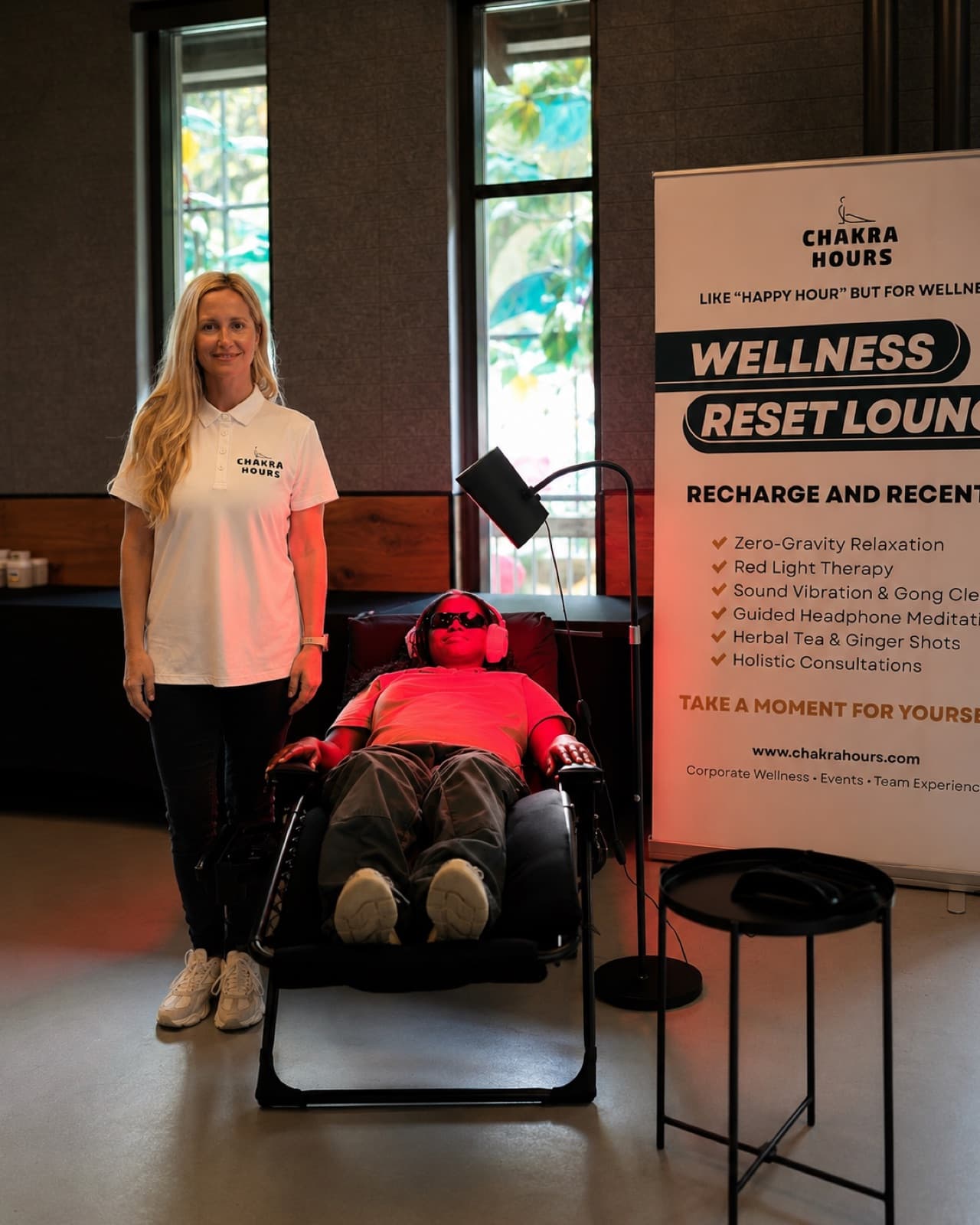
The image of a quiet, low-light wind-down at the top of this article is the right mental model for the month: less stimulation, more recovery.
Managing holiday stress without adding to it
Here is the small irony of December: a lot of wellbeing programming actually adds to the load. The most useful thing HR can do is reduce friction rather than create new activities.
The pressure is real and well documented. The American Psychological Association has reported that a notable share of adults feel their stress increases during the holiday season. Translate that into practical, permission-giving support:
- Protect time off. Encourage people to actually use their leave, and have leaders model it by being offline when they say they will be. Time genuinely away is the single best stress intervention you can offer.
- Ease deadlines where you can. A clear, calm note about what can wait until January removes a surprising amount of pressure. Year-end does not have to mean everything-at-once.
- Keep events optional and inclusive. Not everyone celebrates, and not everyone has capacity for a party. Make social moments genuinely voluntary, and offer at least one quiet alternative.
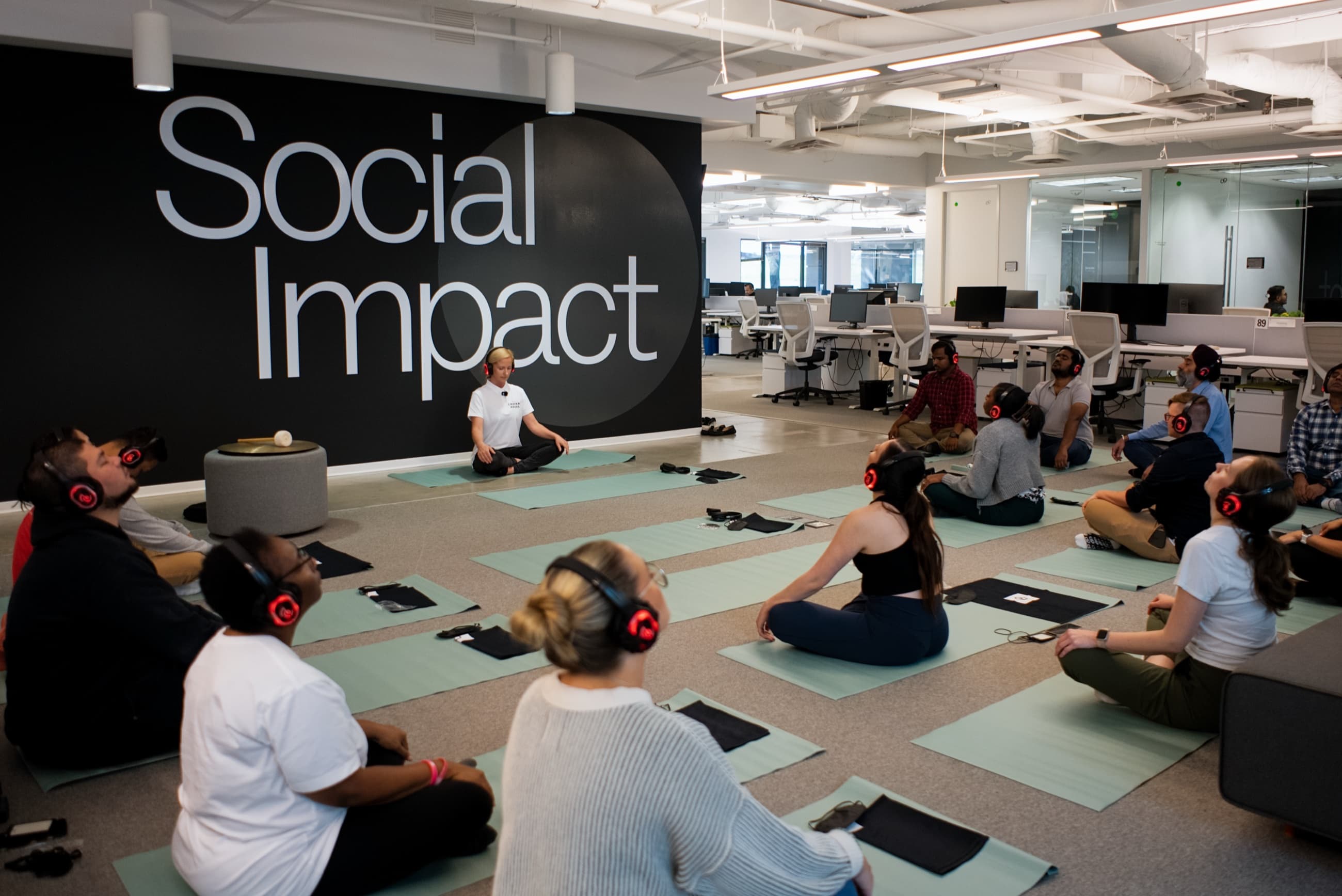
- Offer one calm, shared pause. A single guided breathwork or sound session before the break gives the whole team a real moment to slow down together. Building these on The Workday Reset Method™ keeps the focus on recovery rather than performance. Our live corporate wellbeing sessions run on-site in Dallas-Fort Worth or virtually nationwide, so a distributed team can pause together no matter where people are logging in from.
For deeper, lasting support, our guide to building resilience through meditation explains how small, repeatable practices compound over time, which is exactly the kind of skill that helps people through a high-pressure stretch like year-end.
Use December to set up the year ahead
A quieter calendar is also a planning gift. While things are slower, you can line up the busier months so the next round of observances is ready rather than rushed.
- Look back to look forward. December naturally pairs with October awareness days for HR, where mental health programming peaks, so you can compare what landed and carry the best ideas forward.
- Plan a quarter ahead. Block the key Q1 dates now, so January and February are calm to execute.
- Decide on a steady rhythm. Teams that benefit most from awareness months are the ones that connect them into a recurring cadence rather than a scramble. A short monthly touchpoint gives every observance a ready-made home.
Many People teams use the slower week between the holidays to sketch a simple annual plan. Our month-by-month HR wellness calendar is built exactly for that, and it makes light work of slotting in next year's dates. If you are using the quiet stretch to think bigger than a calendar, our ultimate guide to building a workplace wellness program lays out how those dates fit into a year-round plan rather than a series of one-offs.
A quick December checklist for HR
- Schedule a brief, respectful World AIDS Day note for December 1 with links to confidential benefits.
- Recognize volunteers and share your volunteer-time-off benefit around December 5.
- Re-share EAP and mental health benefit details, with a calm note acknowledging that winter can be harder.
- Protect time off and clarify what can wait until January.
- Offer one optional, quiet shared pause before the break.
- Use the slow week to plan Q1 dates from your annual calendar.
Bring a calm, recurring touchpoint to your team
December rewards restraint. The steadiest way to support people through short days and a busy close is to give them a reliable place to pause rather than another packed agenda. If you would like help building that rhythm, whether it is a single end-of-year reset session or a recurring monthly touchpoint, we would love to put together a simple plan for your team. Request a quote or get in touch, and we will tailor something to your calendar, your headcount, and your budget.