Mental Health Awareness Month runs every May, and it is the one observance almost every HR team is expected to do something with. The trap is treating it as a poster campaign. More than one in five U.S. adults lives with a mental illness, and in the UKG Workforce Institute's global study, 60% of employees said their job is the single biggest factor in their mental health. May is your annual permission slip to act on that at work, where the factor actually lives.
Below are 25 ideas, grouped the way you will actually use them: setup, daily micro-moments, live sessions, manager moves, and closing the loop. Pick one from each group and you have a better month than most companies run. If you would rather skip the assembly and run a dated four-week program, our May Mental Health Awareness Month plan is the done-for-you version.
In this guide, you'll learn:
- 25 Mental Health Awareness Month ideas, from free to fully facilitated
- How to sequence them across four weeks without overwhelming anyone
- The manager moves that matter more than any single event
- How to close the month so next year's budget conversation is easy
Set the month up (ideas 1-5)
1. Open with resources in writing. Before any activity, send one calm email listing your EAP access steps, health-plan mental health benefits, and the 988 Suicide and Crisis Lifeline. People save these emails; the highest-value idea of the month costs nothing.
2. Publish the May calendar in week one. One page, four weeks, every session with a date and a one-line description. Mystery kills attendance.
3. Give the month a theme your company can say out loud. "Take the break" beats a generic awareness banner. Name the behavior you want repeated.
4. Recruit two leader sponsors. One executive and one respected team lead who commit to visibly attending. Their calendars are your real comms plan.
5. Use ready-made comms instead of writing from scratch. Announcement emails, Slack posts, and manager talking points are already written in our Employee Wellbeing Toolkit.
Daily and micro ideas (6-12)
6. A one-minute breathing open to standing meetings. Box breathing or the physiological sigh, two short nasal inhales and one long exhale. Sixty seconds, every meeting, all month.
7. Print micro-break cards for every desk. Our free Desk Reset card gives people six short resets that fit between calls, no app required.
8. Walking one-to-ones for the month. Movement is the most evidence-backed mood lever there is; even 1,000 extra daily steps is linked to a 9% lower risk of depression.
9. A meeting-free lunch hour, honored by leadership.
10. A gratitude thread on Fridays. Opt-in, one thing that went right this week.
11. Quiet hours twice a week. Two afternoon hours with no internal meetings, so recovery is structural instead of aspirational.
12. Open a quiet room for May. One small room, a comfortable chair, no calls allowed. If it gets used, make it permanent; here is how to set up a wellness room at work.
Live session ideas (13-18)
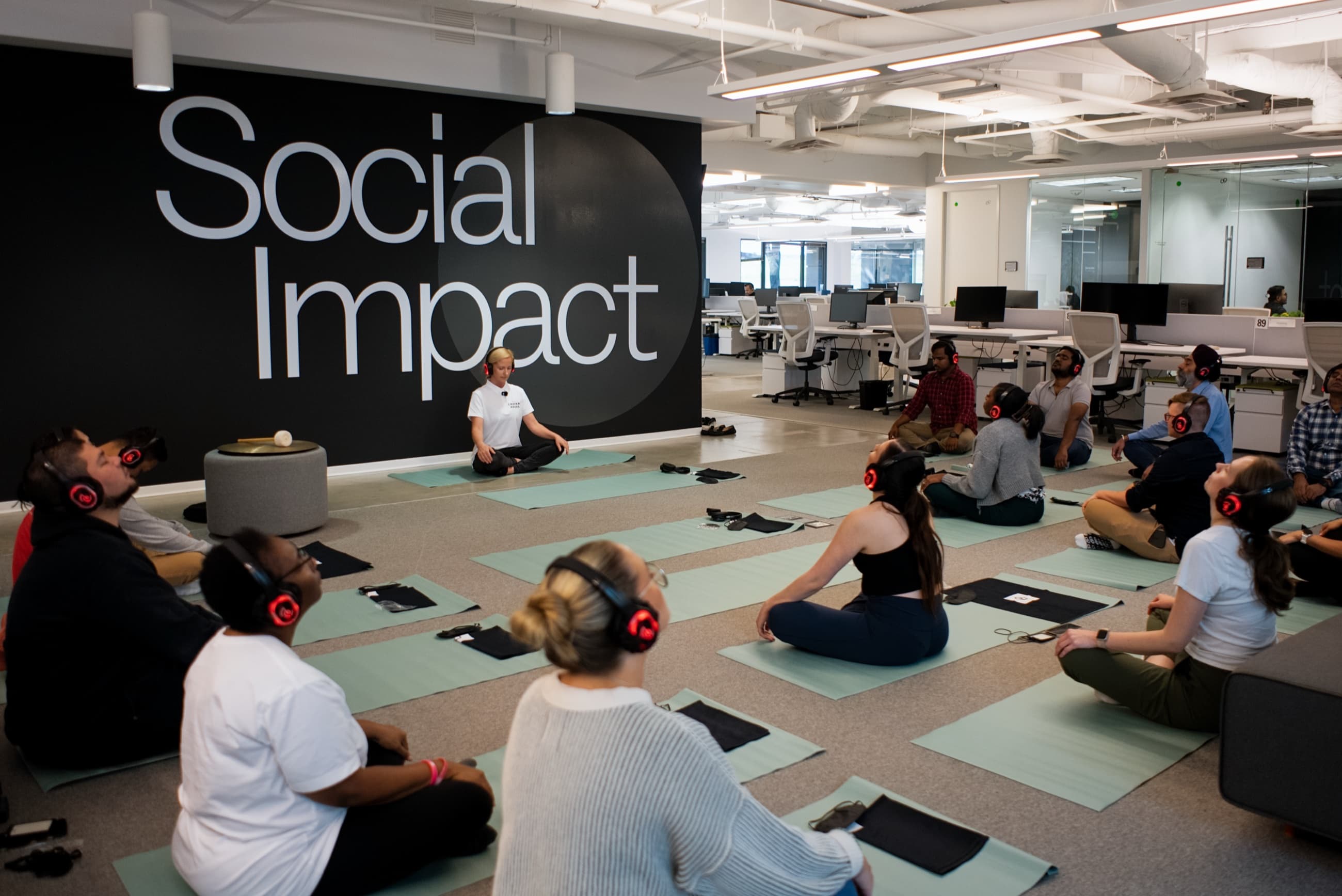
Live, facilitated sessions are what people remember from May, and the format carries the evidence: workplace mindfulness programs reliably reduce stress and burnout across 56 randomized controlled trials.
13. A guided meditation session on Zoom or Teams. Thirty minutes, facilitator-led, cameras optional. The easiest first booking; see how live corporate wellness sessions run.
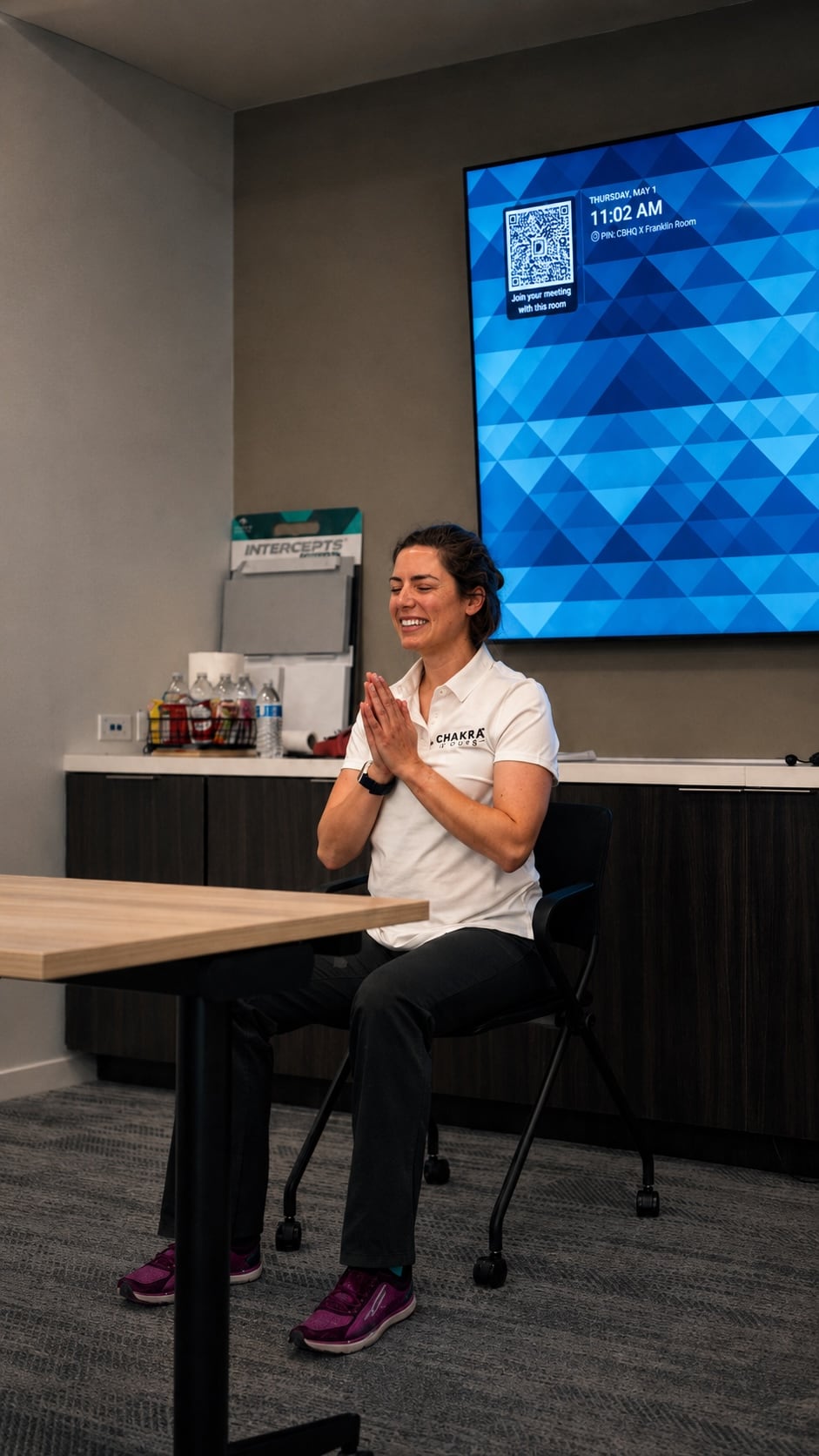
14. Chair yoga at the desks. No clothes change, no mats, genuinely beginner-proof.
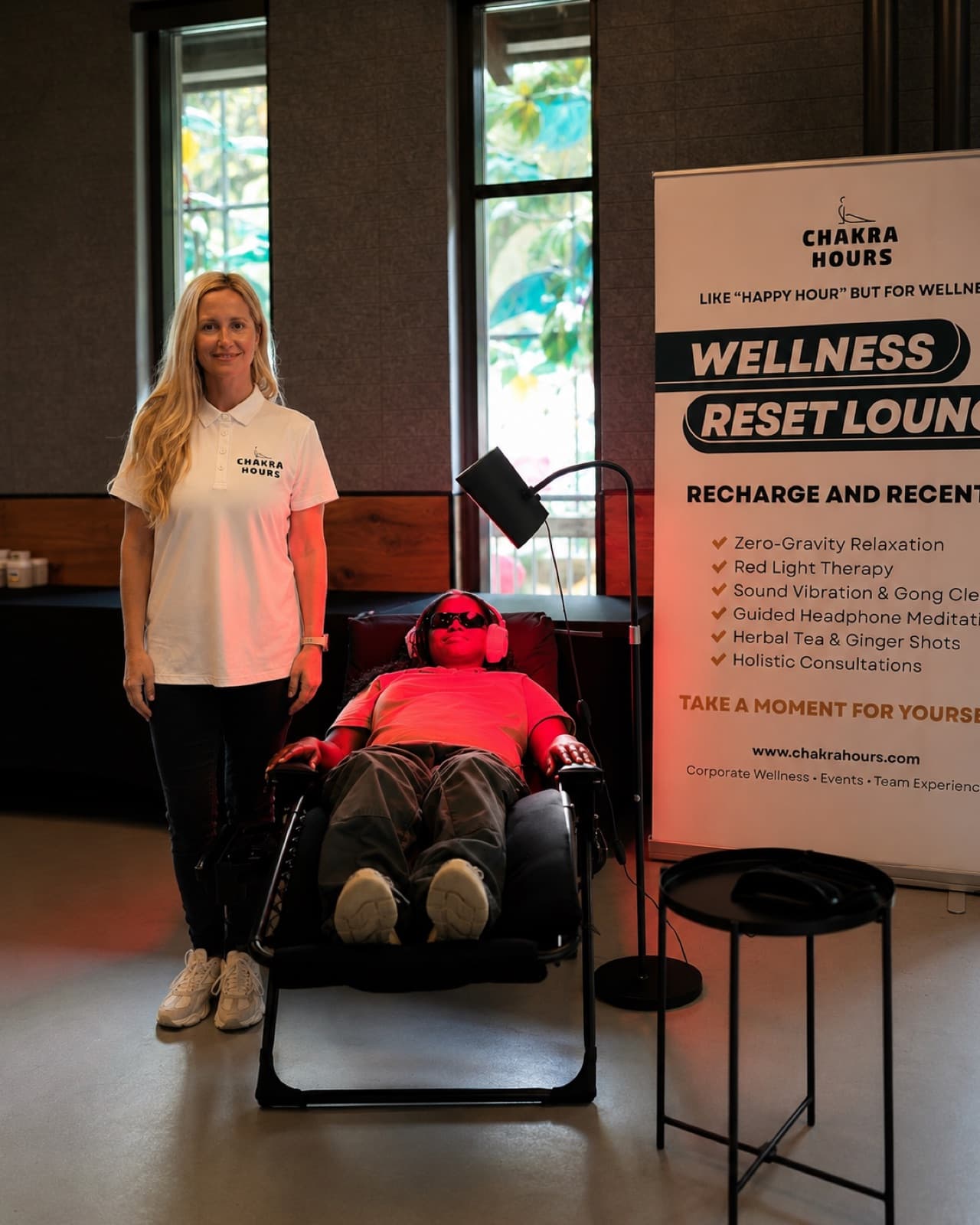
15. A sound bath. Our most requested session of every May: employees lie back while live crystal bowls and gongs do the work. Onsite across Dallas-Fort Worth as a corporate sound bath.
16. A breathwork class that teaches take-home skills.
17. A stress-skills lunch and learn. Practical workload triage and reset techniques; pair it with our guide to managing stress at work.
18. A walking meditation for teams. Headphone-guided, indoors or out, movement plus mindfulness in one session.
Manager and culture ideas (19-23)
19. Brief your managers before the month starts. Managers affect employee mental health more than doctors or therapists, level with spouses, per UKG's 3,400-person study. A one-page brief on listening and referral beats any poster budget.
20. Give managers real check-in questions. Not "how are you?" on autopilot. Start from our mental health check-in questions for managers.
21. Have managers bless attendance out loud. "Please go, during work hours" is the sentence that fills sessions.
22. Leaders share one honest habit. A director saying "I block Friday afternoons to recover" normalizes more than any campaign.
23. Re-introduce the EAP by name in a team meeting. Say what it costs (nothing), what it covers, and that using it is invisible to managers.
Close the loop (ideas 24-25)
24. Run a two-question pulse after each session. Worth attending? Want it again? That is all you need.
25. Send leadership a one-page recap in early June. Attendance, pulse scores, two quotes, and what you would repeat. This is what turns May from an event into a budget line; our wellness ROI calculator helps translate it for finance.
The three mistakes that waste May
First, awareness without action: posters and pledges with nothing to attend. Second, one big event and silence, when four small weekly moments build more habit than one large one. Third, ignoring managers, who shape more of an employee's week than any program. If you want the full year-round menu these ideas come from, it is here: 20 mental health activities for employees.
Frequently asked questions
When is Mental Health Awareness Month?
May, every year, observed in the United States since 1949, an initiative started by Mental Health America. World Mental Health Day on October 10 is its global autumn counterpart; we keep a separate October plan for that.
What are good low-budget Mental Health Awareness Month ideas?
The resource email, a published calendar, walking one-to-ones, a quiet room, manager check-in questions, and a Friday gratitude thread cost nothing. Add one facilitated session if budget allows; live 30-minute sessions start at $400 a session in the Full Curriculum.
How do we get people to actually join?
Run everything opt-in and on the clock, name sessions specifically, and have managers explicitly encourage attendance. Specific beats generic: "20-minute guided sound bath at 2pm Thursday" outperforms "wellness event."
Should remote teams do anything different?
Only the delivery changes. Guided meditation, breathwork, chair stretches, and the resource comms all run on Zoom or Teams; our live sessions are built for exactly that.
Want May handled for you?
We program Mental Health Awareness Month end to end: a dated four-week schedule of live sessions, manager prompts, and copy-paste comms, onsite in Dallas-Fort Worth or online everywhere. Start with the May plan, or get a quote and we will map your month within one business day.
This article is for informational purposes only and is not a substitute for professional medical advice, diagnosis, or treatment.