The best mental health activities for employees are the ones people actually join: short, optional, on the clock, and repeated on a rhythm instead of announced once a year. Most lists give you forty ideas and no way to choose. This one gives you twenty, organized into four layers by effort, so you can start with the five-minute versions this week and build toward a program that runs itself.
The stakes are not soft. The World Health Organization estimates 12 billion working days are lost every year to depression and anxiety, at a cost of about US$1 trillion in productivity. Closer to the ground, SHRM's 2025 research finds roughly 1 in 3 U.S. workers say their job makes them stressed always or often. And here is the strange part: 9 in 10 employers now offer mental health coverage, yet only about 1 in 5 employees receive any mental health training or programming at work. The benefits exist. What is missing is visible, repeated practice, and that is exactly the job these activities do.
This is the menu we draw from when HR and People teams ask us to program mental health support, onsite across Dallas-Fort Worth and live on Zoom for teams everywhere. Costs and logistics included, because an idea you cannot budget is not an idea you can run.
In this guide, you'll learn:
- Twenty mental health activities, layered from five-minute habits to program-level moves
- What the research actually supports, with the studies linked
- What each layer costs, from free to a per-session price you can put in a budget request
- How to get real attendance instead of the same four people every time
What counts as a mental health activity at work?
A mental health activity at work is any structured, voluntary practice that helps employees manage stress, recover attention, or connect with support, on company time. That covers a one-minute breathing reset before a meeting, a facilitated group session, an awareness month plan, and the manager training that makes all of it credible.
One boundary to draw early: activities are not therapy, and they are not a substitute for your Employee Assistance Program or health plan. They sit in front of those resources and make them easier to reach, because a team that practices talking about stress in small, low-pressure ways is a team that actually uses the serious support when it matters. (This article is informational, not medical advice; for clinical concerns, point people to your EAP or a licensed professional.)
Layer 1: five-minute activities employees can do daily
Start here. These cost nothing, need no signup sheet, and build the habit of taking micro-recovery seriously.
1. A guided minute of breathing before heavy meetings. Open your longest recurring meeting with sixty seconds of slow breathing: box breathing (in for four, hold four, out four, hold four) or the physiological sigh, two short inhales through the nose followed by one long exhale. It sounds small; run it for a month and watch it become the part of the meeting nobody wants to cut.
2. Walking one-to-ones. Take the standing check-in out of the conference room. The evidence on movement and mood is unusually strong: a meta-analysis of step-count studies found each extra 1,000 daily steps was linked to a 9% lower risk of depression, and people above 7,500 steps a day showed over 40% fewer depressive symptoms. A 2024 analysis in The BMJ found exercise, including plain walking, reduced depression on par with established treatments.
3. Micro-breaks between meetings. Give people a repeatable menu instead of telling them to "take breaks." Our free Desk Reset card puts six desk-friendly resets on one printable page: no app, no equipment, and short enough to fit between back-to-back calls.
4. A three-good-things thread on Fridays. One Slack or Teams thread, opt-in, where people post one thing that went right this week. Gratitude practices are consistently linked to better mood and optimism, and this version takes ninety seconds and zero budget.
5. A meeting-free lunch hour. Workload and lack of recovery time sit at the top of every survey of workplace stressors. Blocking a company-wide lunch hour is a mental health activity disguised as a calendar setting, and it benefits the people who would never attend a wellbeing session.
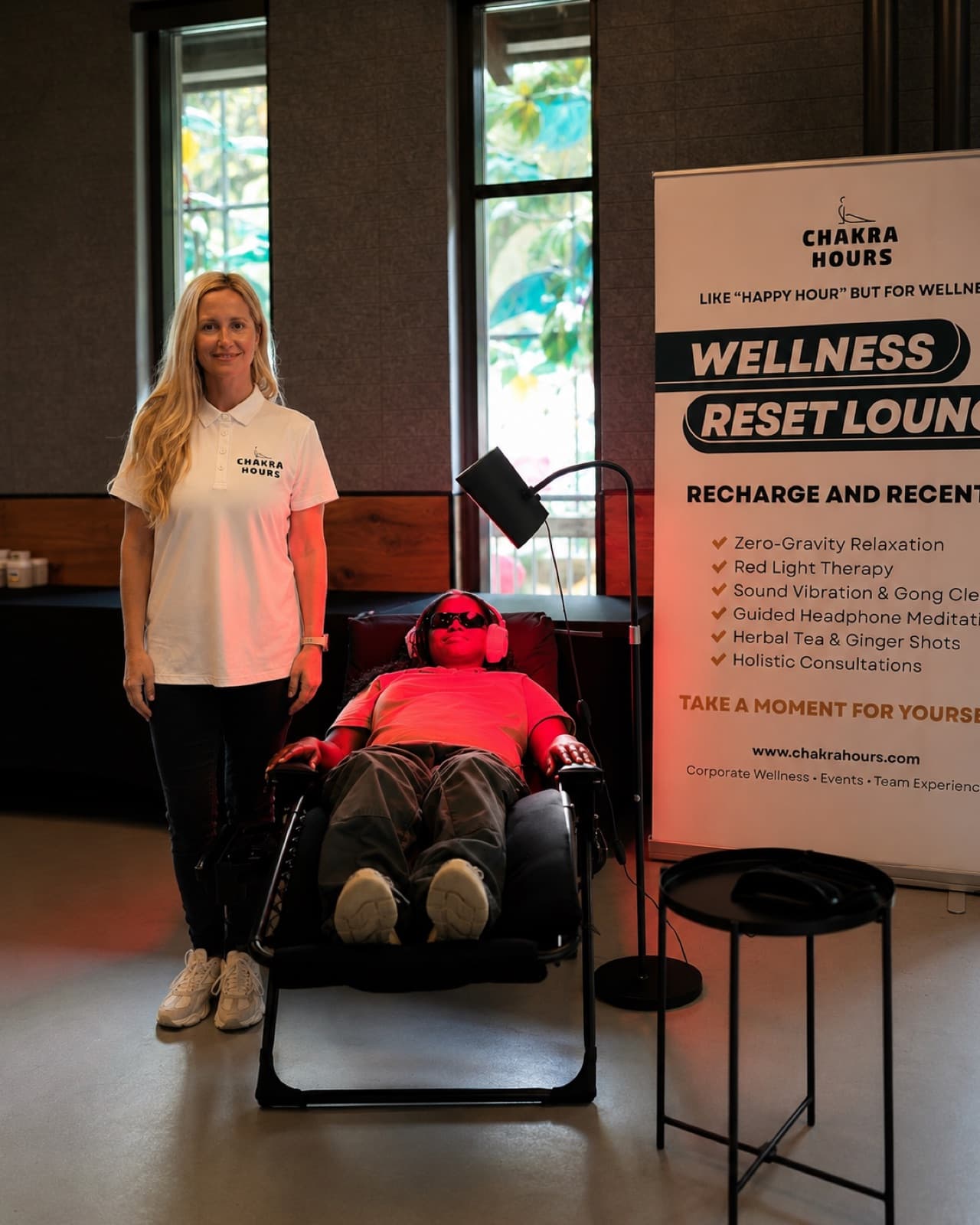
6. A quiet room. One small room, no bookings for calls, dim light, a comfortable chair. The room itself matters less than the permission it signals: recovering for ten minutes is allowed here. Here is how to set up a wellness room at work.
Layer 2: live team sessions, once or twice a month
This is the layer where culture visibly changes, because people experience support together instead of reading about it. It is also the layer with the deepest evidence base: a meta-analysis of 56 randomized controlled trials found workplace mindfulness programs reliably reduce stress, burnout, and distress, and a randomized clinical trial of 1,458 employees found meditation practice cut perceived stress significantly within eight weeks, with as little as five to ten minutes a day.
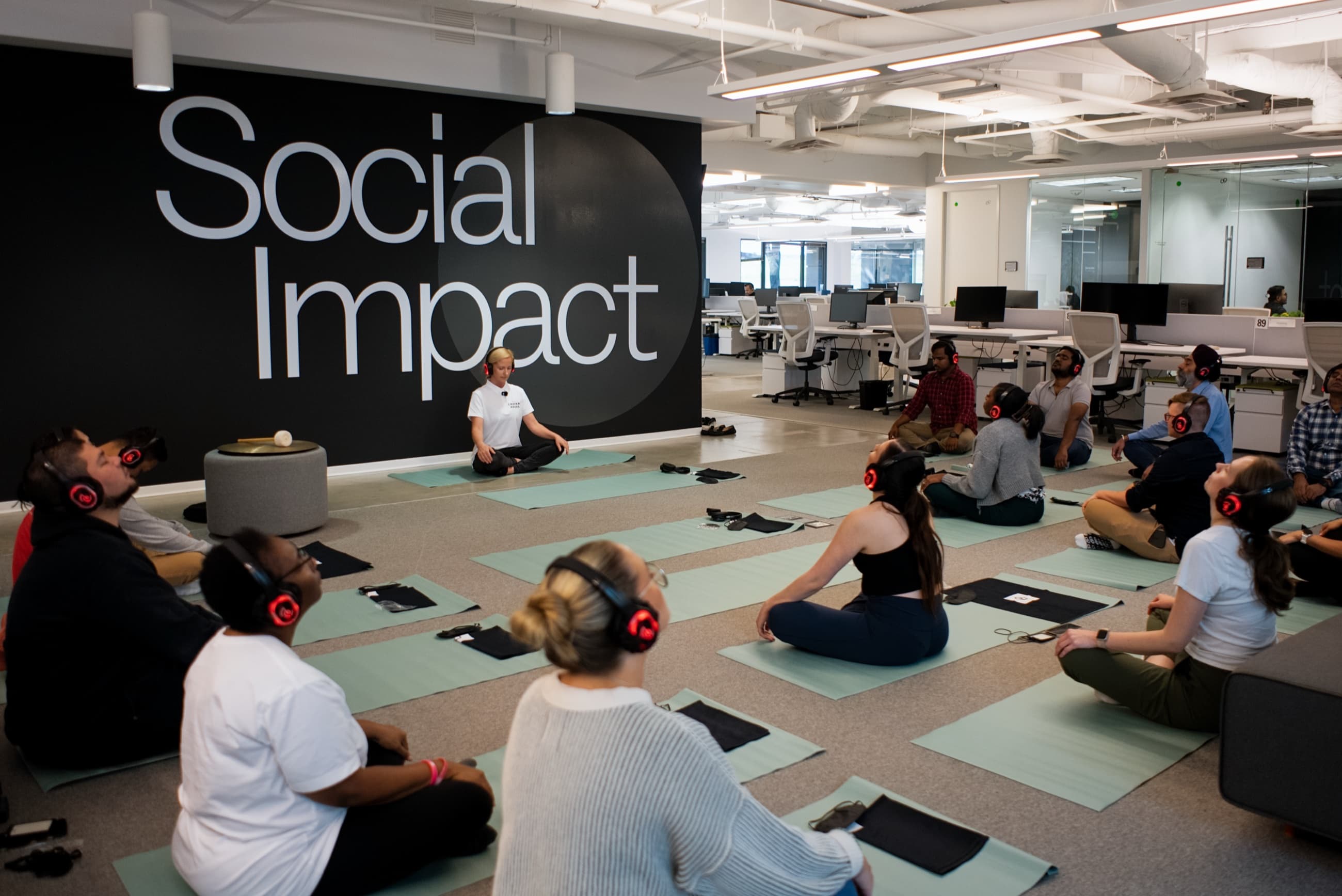
7. A guided meditation session. Thirty minutes, live on Zoom or Teams, led by a facilitator so nobody has to be the expert. Works equally well onsite; see how we run live corporate wellness sessions.
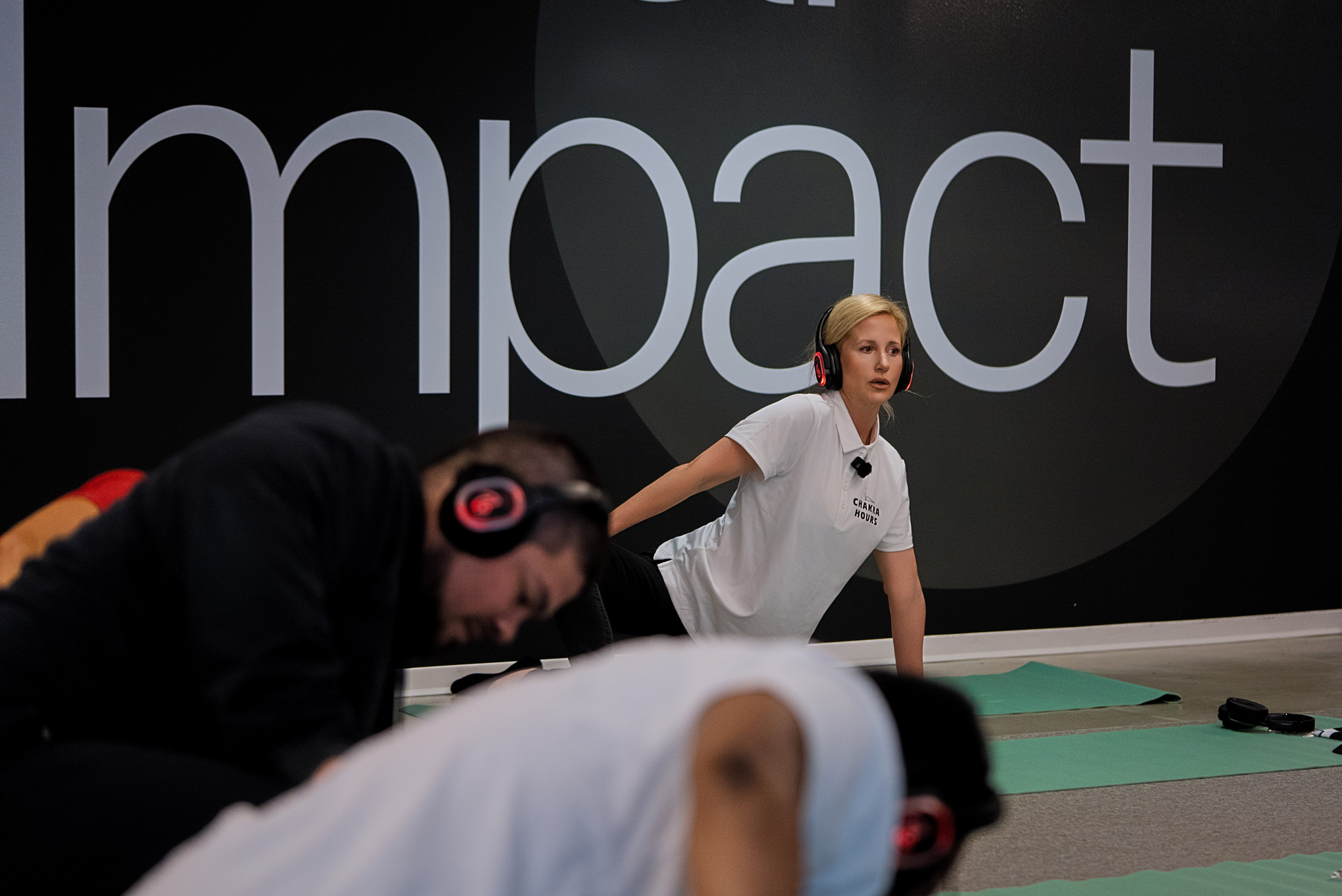
8. Chair yoga. No clothes change, no mats, no poses anyone dreads. Twenty to forty-five minutes of stretch and breath at or near the desk, which is why it is the easiest first session to get approved and attended.
9. A sound bath. A sound bath is a lying-down or seated group session where a facilitator plays crystal bowls, gongs, and voice while the nervous system downshifts. In our experience it is the single most requested workplace session we run, because it asks nothing of participants except showing up. Here is what an onsite corporate sound bath looks like.
10. A breathwork session. A facilitated class that teaches two or three techniques people keep using at their desks, which turns Layer 1's breathing minute from a nice idea into a shared skill.
11. A group walking meditation. A facilitator leads the group on a slow, guided walk, one calm voice in everyone's headphones, indoors or out. Movement plus mindfulness in one session; this is our Walking Reset.
12. A stress-skills lunch and learn. One hour on workload triage, boundaries, and reset techniques, taught practically rather than preached. Pair it with our guide to managing stress at work as the follow-up handout.
On budget: live 30-minute sessions run $400 a session in the Full Curriculum and $600 in a four-session Quarterly Reset, and onsite sessions in Dallas-Fort Worth start around $900. That is the whole procurement conversation: a per-session price, NET-30, no platform contract.
Layer 3: anchor the calendar
Ad-hoc wellbeing dies quietly. Tie activities to dates that already exist and the program promotes itself.
13. Program Mental Health Awareness Month in May. One themed week is fine; a four-week arc is better. Our May Mental Health Awareness Month plan lays out the sessions, manager prompts, and copy-paste comms week by week. Prefer to assemble your own? Browse 25 Mental Health Awareness Month ideas for work.
14. Mark World Mental Health Day on October 10. A single well-run day in October keeps the May momentum from evaporating. Start from the October plan, or borrow formats from our World Mental Health Day activities guide.
15. Map the whole year once. Put the observances on one page, pick four to program properly, and skip the rest guilt-free. The HR Wellness Calendar maps every major health observance to a session your team will actually attend.
16. Promote each activity like it matters. A calendar entry is not comms. Manager talking points raise attendance more than posters do, and naming the activity specifically ("20-minute guided sound bath at 2pm") outsells "wellness session" every time. Our Employee Wellbeing Toolkit has the announcement emails, Slack posts, and manager scripts ready to paste.
Layer 4: the structural moves that make activities believable
Skeptical employees are not wrong to ask whether a meditation session means anything if the workload is impossible. These four moves are what make the first three layers land as genuine rather than decorative.
17. Train managers to notice and refer. Managers shape more of an employee's week than any program does, yet only about one in five workers report receiving any mental health training at work. Managers do not need to become counselors: a one-page guide on listening without judgment, asking how someone is really doing, and knowing exactly where to refer is enough. Our mental health check-in questions for managers are the ready-made version.
18. Make the EAP impossible to miss. Most EAPs are rediscovered during crises, which is the worst possible time to learn a phone number. Re-announce it quarterly with the access steps spelled out, and put it in writing where people can find it privately later.
19. Have leaders model the behavior. One director who visibly attends the chair yoga session, takes real PTO, and does not send midnight messages moves participation more than any incentive. Culture follows what leadership does, not what the poster says.
20. Measure it and report it. Track three things: attendance per session, a two-question pulse (worth attending? want it again?), and EAP utilization trend over time. Then report the numbers to leadership annually; our wellness ROI calculator turns them into a finance-ready estimate.
The mistakes that turn this into wellness theater
The fastest way to lose a team is to run activities as a substitute for fixing real problems. Do not schedule a resilience workshop the same week as a layoff announcement. Do not make anything mandatory; forced fun reads as surveillance. Do not run one May event and go silent for eleven months. And do not let pizza stand in for a workload conversation, because employees can tell the difference between support and distraction. Activities work as practice and as a signal; they amplify a decent culture and they cannot mask a bad one.
How do you get employees to actually participate?
Attendance is designed, not hoped for. Five rules from the sessions we run:
- On the clock, always. Lunch-hour-only wellbeing tells people their recovery is their problem.
- Opt-in, always. Voluntary sessions with great word of mouth beat mandatory ones within a quarter.
- Name it specifically. "Guided sound bath, 20 minutes, lie down or stay seated" fills a room; "wellness hour" does not.
- Put it at the energy dip. Mid-afternoon slots outperform mornings; the 2pm reset is a habit for a reason.
- Get managers to bless it out loud. "Please go, during work hours" from a direct manager is the single highest-leverage sentence in workplace wellbeing.
Frequently asked questions
What are the best mental health activities for employees?
The best activities are short, voluntary, facilitated, and repeated: guided breathing minutes, walking one-to-ones, monthly chair yoga or meditation sessions, a sound bath, and an annual awareness-month arc in May and October. Pick one activity from each layer rather than ten from one.
What can we do for Mental Health Awareness Month at work?
Run a four-week arc in May: one live session per week, one manager prompt per week, and resources communicated in writing at the start. A dated, ready-to-run version is in our May plan for HR.
How much do mental health activities cost?
Layer 1 is free. Facilitated live sessions run $400 a session in the Full Curriculum and $600 in a four-session Quarterly Reset, onsite sessions start at $900, and a programmed awareness month typically uses four sessions. Most teams fund this from an existing wellbeing budget or carrier wellness dollars.
Do these activities replace therapy or an EAP?
No. Activities are practice and prevention, not treatment. They make clinical resources more likely to be used by keeping mental health speakable at work, and every program should point clearly to the EAP and health-plan options for anything beyond everyday stress.
How do we know if it is working?
Watch attendance across repeat sessions, run a two-question pulse after each one, and track EAP utilization and absenteeism over quarters, not weeks. Rising voluntary attendance is the earliest honest signal.
Bring the live layer to your team
The five-minute layer you can start tomorrow. For the live layer, that is what we do: facilitated 30-minute sessions built on The Workday Reset Method™, on Zoom and Teams nationwide or onsite across Dallas-Fort Worth, priced per session so approval is one email. See the live programs, or ask us to map your first quarter around May and October; we reply within one business day.
For a whole team at once, an employee wellness day runs short rotations of sound bath and chair yoga in one or two rooms, with a schedule, the capacity it actually serves, and a quote within one business day.
This article is for informational purposes only and is not a substitute for professional medical advice, diagnosis, or treatment.