The workplace wellbeing trends of 2026 all point in one direction: away from perks nobody uses and toward programs people actually attend, measure, and feel. After several years of app stipends, unused meditation licenses, and one-off webinars, HR and People teams are being asked a sharper question by their CFOs: what did the wellbeing budget actually change?
This piece maps the seven employee wellbeing trends we believe will define 2026 planning, what is driving each one, and the practical move an HR team can make this quarter. It is written for the person who owns the budget line, not the person scrolling for inspiration. For the foundational playbook that sits underneath all of this, start with our ultimate guide to workplace wellness.
In this guide, you will learn:
- Why live, human-led programming is replacing the app stipend
- How wellbeing measurement is maturing from satisfaction scores to baselines
- Why managers, not programs, are becoming the front line of workplace wellbeing
- What "wellbeing washing" means and how teams are being called on it
Why 2026 is a reset year for workplace wellbeing
Three forces are converging on the 2026 planning cycle. First, budget scrutiny: wellbeing spend grew fast in the early 2020s, and finance teams now expect the same evidence of impact they ask of any other line item. Second, app fatigue: most employees have now been offered at least one meditation or therapy app by an employer, and engagement numbers rarely survive the first quarter. Third, a quiet regulatory shift, as psychological health at work moves from an aspiration to a documented standard.
None of this means companies are spending less on employee wellbeing. It means they are spending differently: fewer scattered perks, more structured programs with a baseline, a cadence, and a report at the end. The seven trends below are what that shift looks like in practice.
1. Live, human-led programming replaces the app stipend
The most consistent pattern we see going into 2026 is the correction away from individual-level digital perks. A widely discussed 2024 study by Oxford researcher William Fleming, published in the Industrial Relations Journal, examined wellbeing interventions across hundreds of UK organisations and found that individual-level offerings such as apps and one-off resilience training showed little measurable benefit for the employees who used them. Organisational and group-level approaches fared better.
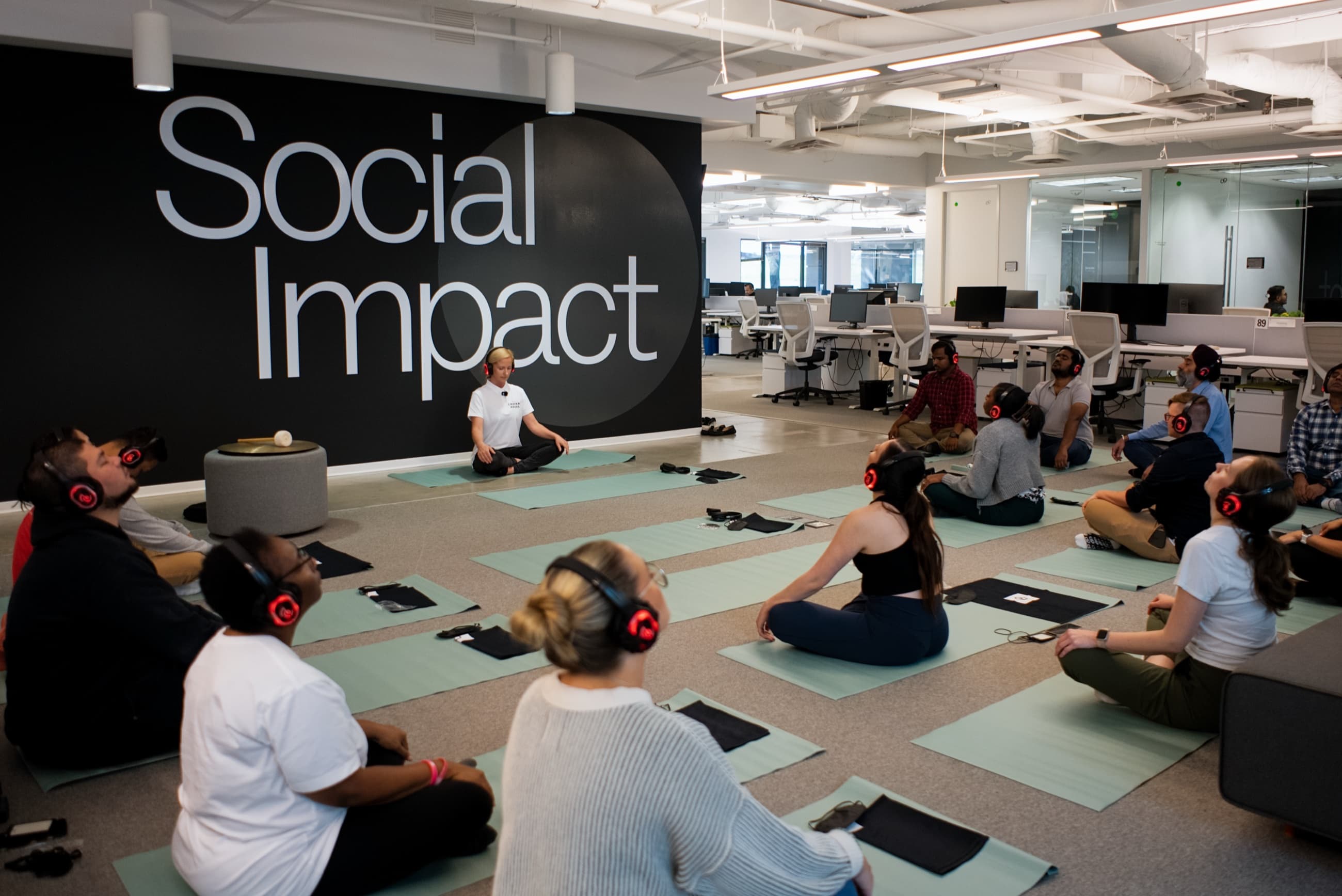
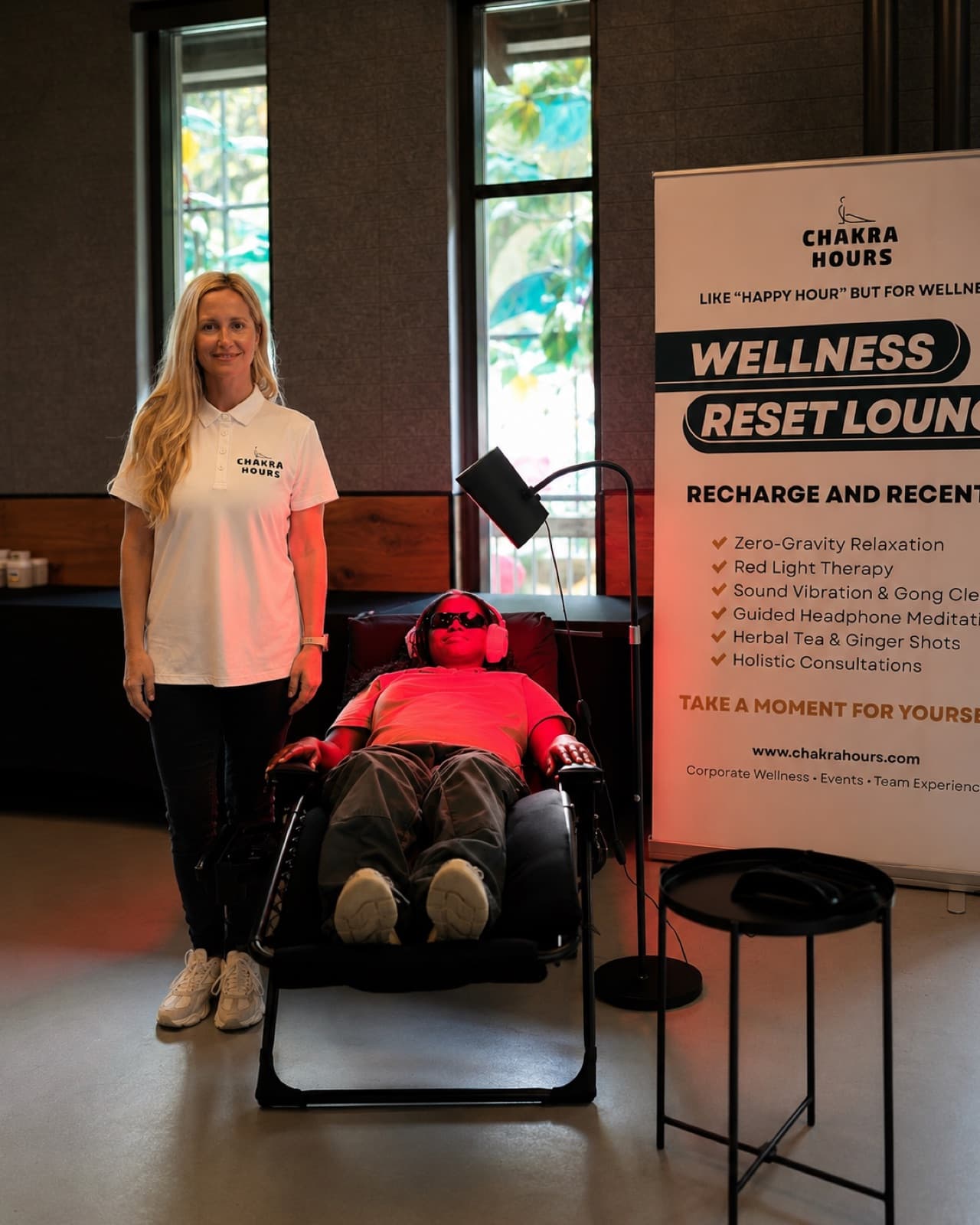
That finding matched what many HR teams already suspected from their own usage dashboards. An app reaches the employee who was already motivated, on a good day, alone. A live session reaches the whole room, including the skeptic who would never open the app, and it does so as a shared experience the team talks about afterward. That is why the live format, online for distributed teams and onsite for moments that matter, anchors the 2026 programming mix. It is the model behind our own live corporate wellbeing programs, and the demand shift toward it is the single clearest trend on this list.
The practical move: before renewing an app contract, pull its real activation and repeat-usage numbers, then price what a monthly live session for the same population would cost. Many teams find the live option cheaper per engaged employee.
2. Wellbeing gets a baseline, a checkpoint, and a report
The second trend is measurement growing up. Satisfaction surveys ("did you enjoy the session?") are giving way to baseline-and-movement designs: a short self-assessment before the program starts, repeated at a checkpoint, with anonymous aggregate results packaged for leadership. The question changes from "did people like it" to "did anything move."
In our own programs this takes the form of a ten-question Workday Wellbeing Audit that runs before a program begins, again mid-year, and again at the end, always anonymous and reported only in aggregate. Whatever instrument a team uses, the 2026 standard is the same: HR walks into the budget review with three data points and a one-page story, not a stack of smile sheets. If you are building this from scratch, our Full Curriculum was designed around exactly this pre, mid, and post rhythm.
3. Managers become the front line, and they get tooling
Workplace wellbeing keeps decentralizing. The 2022 U.S. Surgeon General's Framework for Workplace Mental Health and Well-Being put structural workplace factors, including how managers lead, at the center of employee mental health, and that framing has steadily reshaped how programs are built. The insight is simple: no vendor sees your people on a Tuesday afternoon. Their manager does.
So the 2026 version of a wellbeing program ships manager enablement as a first-class deliverable: short, practical guidance on the language to use and the language to avoid, prompts that open a check-in without putting anyone on the spot, and clear referral guidance for the moment something is bigger than workday stress. Managers are not being asked to become counselors. They are being given a one-pager so they can be confident humans. Every Chakra Hours session ships with a Manager Toolkit for precisely this reason, and we expect manager-facing material to become a standard procurement question in 2026.
4. Psychological safety moves from value to standard
For years, psychological safety lived on culture slides. It is now becoming a documented management topic. ISO 45003, the international guidance standard for managing psychosocial risk at work, gives organisations a shared vocabulary for hazards like chronic overload, poor change management, and always-on expectations, and a growing number of jurisdictions treat psychosocial risk the way they treat physical risk: something an employer is expected to assess and manage.
HR teams do not need to become standards experts to act on this. The 2026 move is to treat workload design, meeting hygiene, and recovery time as part of the wellbeing program rather than adjacent to it. A breathing session cannot offset a calendar with no breaks in it, and the teams getting results in 2026 are addressing both sides.
5. The calendar becomes the strategy
The strongest wellbeing programs of 2026 are not a list of perks, they are a year with a shape. Awareness moments like Stress Awareness Month in April, Mental Health Awareness Month in May, and World Mental Health Day in October give a program natural anchors that employees already recognize, and planning around them turns scattered events into a narrative the whole company can follow.
The trend here is planning earlier and programming deeper: a four-week arc for the flagship months instead of a single all-staff email, with comms, sessions, and manager notes prepared in advance. If your 2026 calendar is still a blank page, our free HR wellness calendar maps the whole year, and our awareness month playbooks show what a fully programmed month looks like.
6. Micro-practices beat marathon interventions
The science of short breaks keeps strengthening, and 2026 programming reflects it. A 2022 meta-analysis of micro-break research published in PLOS ONE found that even breaks of a few minutes reliably improved vigor and reduced fatigue. The implication for workplace wellbeing is direct: the unit that changes a workday is not the annual retreat, it is the 90-second practice an employee can run between meetings.
This is the premise of The Workday Reset Method™, the framework behind our curriculum: teach practices small enough to survive a real calendar, then repeat them until they become reflexes. Expect 2026 vendor conversations to ask less "what happens in the session" and more "what can my people still do a month later." The honest answer should fit on one card.
7. Wellbeing washing gets named in the room
"Wellbeing washing" is the gap between what a company signals about employee wellbeing and what its everyday practices support, the yoga session announced in the same week as a return of back-to-back meeting culture. The term has moved from commentary into everyday HR vocabulary, and in 2026 employees use it freely. That scrutiny is healthy, and it changes the brief.
The fix is structural and surprisingly unglamorous: protect the half hour you booked, let leaders attend visibly, keep the program running in months with no awareness branding, and never track who shows up to a wellbeing session as if it were a performance metric. Teams that pair visible programming with these quiet practices are the ones whose programs survive the skeptics.
How to put the 2026 trends to work
You do not need to act on all seven at once. The sequence we recommend to HR teams: run a baseline this quarter, put the flagship awareness months on the calendar for the year, book live programming at a monthly cadence, and ship your managers a one-pager with every session. That is a complete, defensible 2026 strategy on one page.
If you want a partner for it, this is exactly the shape of our Full Curriculum: twelve live sessions, the audit rhythm, manager toolkits, and an outcome summary written for the leadership review. And if you are starting smaller, a single live session in an awareness month is the easiest first yes in corporate wellbeing.
Frequently asked questions
What are the biggest workplace wellbeing trends in 2026?
The defining 2026 trends are the shift from app stipends to live, human-led programming, measurement built on baselines rather than satisfaction surveys, manager enablement as a standard deliverable, psychosocial risk treated as a managed standard, calendar-led program design, micro-practices over one-off events, and open scrutiny of wellbeing washing.
Are wellness apps still worth offering in 2026?
Apps still serve the self-directed minority well, so few teams cut them entirely. The change is positioning: apps as a supporting benefit rather than the program itself, with live group programming carrying engagement. Check your app's real repeat-usage data before renewal and size the spend accordingly.
How do we measure wellbeing ROI without endless surveys?
Use one short instrument, repeated. A ten-question baseline before the program, the same questions at a checkpoint and at year-end, anonymous and aggregated, gives leadership a movement story with three data points. Pair it with attendance and one qualitative question, and resist adding more.
Is any of this realistic for a small or mid-size company?
Yes, and arguably easier. A 50-person company can run a baseline, a monthly live session, and manager one-pagers with a few hours of HR time a month. The trends above are about structure, not headcount, and smaller teams typically see participation rates large enterprises envy.
Final thoughts
The thread through every 2026 trend is credibility: programs that can show their work, to employees and to finance alike. Pick a baseline, give the year a shape, and put a human at the front of the room. The rest follows.
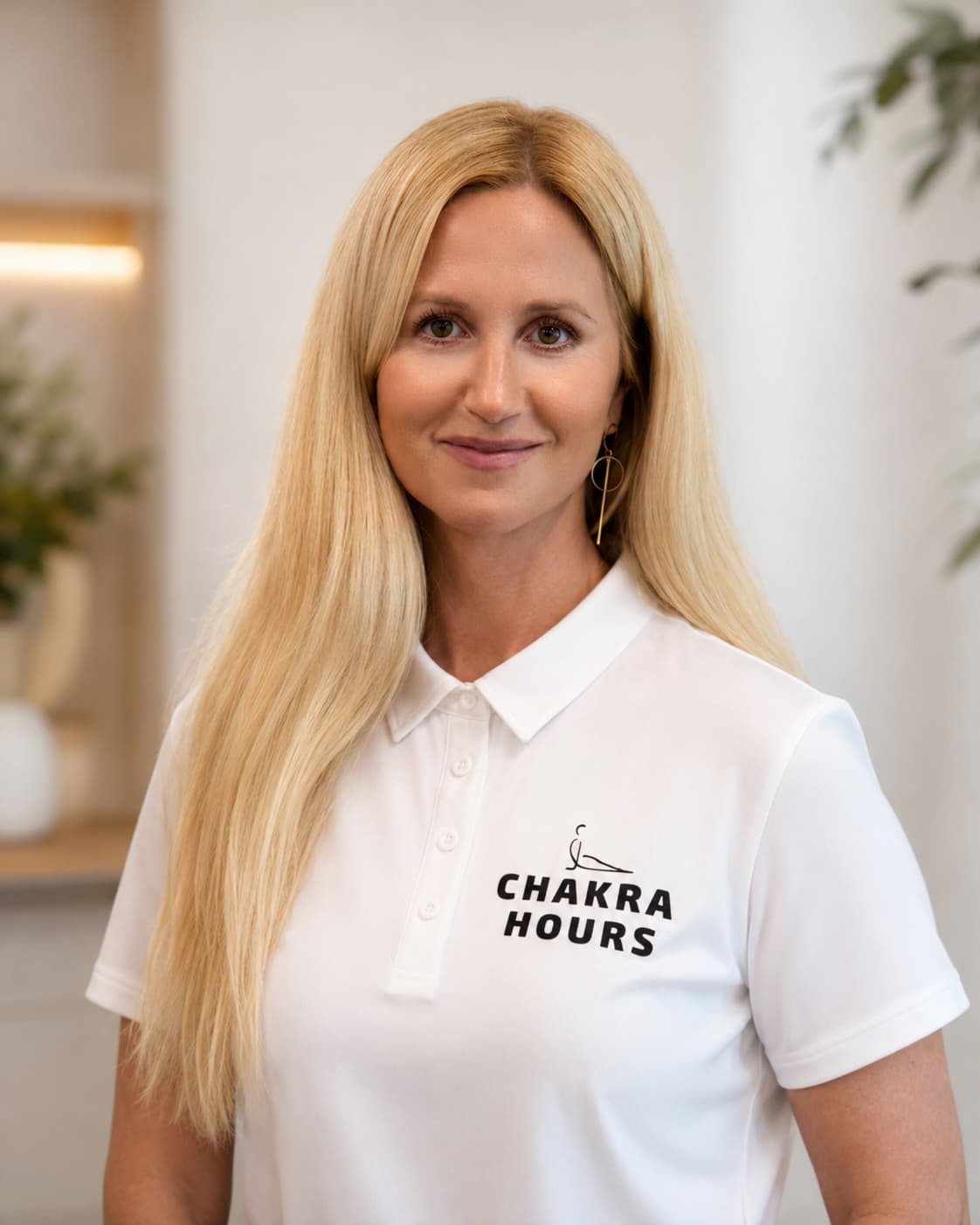
Written by Nina Mua, founder of Chakra Hours and creator of The Workday Reset Method™. Chakra Hours delivers live, science-informed wellbeing sessions to workplaces nationally online and onsite across Dallas-Fort Worth.
This content is for informational purposes only and is not a substitute for professional medical advice.
Last updated: June 10, 2026