Introduction: Why Engaging Remote Teams Matters More Than Ever
Engaging remote teams is now one of the defining challenges on every HR and People team's desk. This guide is written for the HR leaders, People managers, and team leads who own engagement, retention, and culture for a distributed workforce, and it walks through the protocols, tools, and wellbeing programs that actually move those numbers. Remote and hybrid work has shifted from a temporary pandemic response into a permanent cornerstone of modern business, with a large and growing share of the workforce operating remotely at least part of the week. Yet despite this widespread adoption, many organizations still struggle with a critical question: how do you create genuine engagement when your team is scattered across cities, countries, or even continents? If you are exploring structured wellbeing support for a distributed team, our live virtual corporate wellbeing sessions are built for exactly this.
The answer isn't found in simply replicating office culture online. Virtual team engagement requires its own unique approach, one that leverages technology thoughtfully, prioritizes clear communication, and builds authentic human connections despite physical distance. When done right, engaged virtual teams don't just match the productivity of traditional office workers; they often surpass it.
This comprehensive guide will walk you through everything you need to know about building highly engaged virtual teams. Whether you're managing a fully remote company, leading a hybrid workforce, or overseeing distributed teams across multiple time zones, you'll find actionable strategies that deliver real results. We'll explore the psychology behind virtual team engagement, share proven communication frameworks, recommend the right tools for your needs, and provide leadership techniques that foster trust and productivity in remote environments.
Chapter 1: Understanding Virtual Team Engagement
What Is Virtual Team Engagement?
Virtual team engagement transcends the simple completion of tasks or attendance at video meetings. At its core, it represents the emotional and psychological commitment team members feel toward their work, their colleagues, and the broader organizational mission, all while working from different locations and often across different time zones.
Think of engagement as the difference between someone who simply logs in to complete their assigned tasks and someone who actively contributes ideas, supports teammates, and takes ownership of outcomes. An engaged virtual team member doesn't just show up; they lean in. They participate in discussions, offer help without being asked, and maintain enthusiasm for the team's goals despite not sharing a physical workspace.
True virtual team engagement manifests in several key ways. Team members feel an emotional connection to shared goals and celebrate collective wins. They actively participate in both formal meetings and informal team activities, contributing their unique perspectives and expertise. There's a palpable sense of belonging and psychological safety, people feel comfortable sharing ideas, asking questions, and even admitting mistakes. Engaged team members are motivated to go beyond minimum requirements, often volunteering for challenges and supporting colleagues. Finally, they demonstrate clear alignment with company values and mission, understanding how their individual contributions support the bigger picture.
The Unique Challenges of Virtual Teams
Virtual teams face obstacles that their office-based counterparts never encounter. Understanding these challenges is the first step toward overcoming them.
Communication becomes significantly more complex in virtual environments. Without the benefit of face-to-face interaction, subtle cues disappear. A brief pause in conversation might be interpreted as disagreement when it's simply a video lag. An email meant to be helpful could come across as curt or critical. The spontaneous hallway conversations and quick desk visits that often solve problems in minutes now require scheduled meetings or carefully crafted messages. This friction slows decision-making and can lead to misunderstandings that fester.
Isolation represents another significant hurdle. Remote workers consistently report feelings of disconnection from their teams. Working alone from home offices or coffee shops, they miss the energy of a shared workspace, the casual interactions that build camaraderie, and the informal mentorship that happens naturally when experienced and junior team members work side by side. This isolation doesn't just affect morale, it directly impacts productivity and innovation. Research shows that isolated workers are less likely to share creative ideas or seek help when stuck.
For global teams, time zone differences create their own set of complications. Finding a meeting time that works for team members in San Francisco, London, and Singapore proves nearly impossible without someone joining at an inconvenient hour. This challenge extends beyond meetings to everyday collaboration. When a developer in India finishes their workday and hands off a project to a designer in New York, twelve hours of potential progress time disappears while questions and clarifications wait for the next overlap.
Technology fatigue has emerged as an unexpected consequence of virtual work. The constant stream of video calls, instant messages, and digital notifications creates a form of exhaustion unique to remote work. After a full day of back-to-back Zoom meetings, team members report feeling more drained than after comparable in-person days. The cognitive load of processing faces on screens, managing audio issues, and maintaining engagement without physical presence takes its toll.
Finally, the visibility problem affects career growth and recognition. The old adage "out of sight, out of mind" rings particularly true in virtual environments. Remote workers may struggle to showcase their contributions, build relationships with leadership, or position themselves for advancement opportunities. Their wins might go unnoticed, their efforts undervalued, simply because they're not physically present to remind colleagues of their value.
The ROI of Engaged Virtual Teams
The business case for virtual team engagement isn't theoretical, it's supported by compelling data. Organizations that successfully engage their remote workforce see measurable improvements across every key business metric.
Research from Gallup and other leading workplace studies consistently shows that highly engaged teams, regardless of location, deliver meaningfully higher profitability and productivity than disengaged ones. Engaged teams also tend to see lower absenteeism and substantially lower voluntary turnover, a critical advantage in today's competitive talent market where replacing a skilled employee can cost a large multiple of their salary in recruiting, onboarding, and lost productivity. Perhaps most importantly for long-term success, engaged teams report stronger wellbeing, which helps reduce burnout and sustain performance over time.
Virtual teams specifically gain additional advantages when properly engaged. Studies tracking remote team performance generally point to faster project completion, attributed to clearer communication protocols and better documentation practices. Employee satisfaction tends to run higher in well-managed virtual teams compared to poorly managed ones, directly supporting retention. And communication-related delays, those frustrating bottlenecks where work stalls waiting for clarification or approval, drop noticeably when engagement practices prioritize clarity and responsiveness.
These numbers translate to real competitive advantage. A mid-sized company with 100 employees could save hundreds of thousands in turnover costs alone. The productivity gains compound over time, allowing teams to accomplish more with existing resources or take on additional projects without expanding headcount. For organizations competing on innovation, engaged virtual teams contribute more ideas, collaborate more effectively, and bring products to market faster.
Chapter 2: Building a Strong Foundation
Establish Clear Communication Protocols
The foundation of every successful virtual team is a clear, well-documented communication protocol. Without the natural structures that emerge in physical offices, knowing when someone is available because their door is open, understanding urgency by someone's tone of voice, virtual teams must create explicit agreements about how they'll communicate.
A comprehensive communication charter serves as your team's rulebook. It answers the questions that come up dozens of times per week: Which tool should I use for this type of message? How quickly should I expect a response? When is it appropriate to interrupt someone's focus time? How do we signal urgency without crying wolf?
Consider how different communication channels serve different purposes. Instant messaging platforms like Slack or Microsoft Teams excel at quick questions and time-sensitive updates. They create a sense of presence and enable rapid back-and-forth when needed. However, they're also interruptive by nature. Your protocol might specify that instant messages require responses within two hours during work hours, with the understanding that team members can mute notifications during deep work sessions.
Email serves a different function entirely. It's ideal for detailed information, formal communication, and non-urgent matters that require thoughtful responses. A 24-hour response time expectation gives recipients the space to craft considered replies. Project management tools like Asana or Monday.com become the single source of truth for task status and project updates, eliminating the need to ask "what's the status on that project?" in multiple channels.
Video calls should be reserved for complex discussions, team meetings, one-on-one conversations, and relationship building. The key is being intentional, every video call should have a clear purpose and scheduled time. Defaulting to video for everything leads to meeting fatigue; avoiding it completely undermines team cohesion.
Set Clear Expectations and Goals
Ambiguity kills virtual team engagement. When team members aren't certain what's expected of them, they hesitate to act independently. They interrupt teammates with clarifying questions. They duplicate efforts or, worse, assume someone else is handling critical tasks. Clear expectations eliminate this friction.
The SMART framework, Specific, Measurable, Achievable, Relevant, and Time-bound, provides a proven structure for goal setting. Instead of "improve customer service," a SMART goal reads "reduce average customer response time from 4 hours to under 2 hours by end of Q2." The difference is actionability. Team members know exactly what success looks like and can track their progress objectively.
Beyond project goals, clarify the softer expectations that often go unstated in physical offices. What does "good" collaboration look like on your team? Is it expected that people will proactively offer help, or should everyone focus on their assigned tasks? How do you want people to handle disagreements? Should team members flag potential problems early, even if they're not certain, or wait until issues are confirmed?
Individual performance indicators should align clearly with team deliverables, which in turn support organizational goals. Each person should understand not just what they're responsible for, but why it matters. This connection between individual effort and collective impact fuels engagement, people want to contribute to something meaningful.
Create Documentation Standards
Documentation transforms from a nice-to-have into a necessity for virtual teams. It serves as institutional memory, onboarding resource, and reference guide all in one. More importantly, good documentation enables asynchronous work, team members can find answers and make progress without waiting for someone in another time zone to wake up.
Your documentation system should include several key components. A team handbook outlines processes, policies, and cultural norms, everything a new team member needs to know about how your team operates. Decision logs record why important choices were made, preventing teams from relitigating settled questions months later. Project wikis capture product requirements, technical specifications, and lessons learned. Meeting notes with clear action items ensure everyone stays aligned on what was decided and who's doing what.
The secret to useful documentation isn't creating mountains of text, it's making information easily findable. Use a centralized knowledge management system like Notion, Confluence, or even a well-organized Google Drive. Implement a consistent structure and naming convention. Make documents searchable with relevant tags and keywords. Most importantly, assign documentation owners who keep information current. Outdated documentation is worse than no documentation because it breeds confusion and erodes trust in your systems.

Chapter 3: Communication Strategies That Work
Mastering Synchronous vs. Asynchronous Communication
One of the most critical skills for virtual team success is knowing when to communicate in real-time and when to embrace asynchronous methods. Get this balance wrong, and you'll either suffer from meeting fatigue or watch productivity crater as team members wait hours for simple answers.
Synchronous communication, real-time interaction through video calls or live chat, excels in specific situations. Complex problem-solving benefits enormously from the rapid back-and-forth of conversation. When brainstorming new features or debugging a tricky technical issue, the ability to build on each other's ideas in real-time often leads to breakthroughs. These moments also serve important social functions, building the relationships and trust that make everything else work smoothly.
Conflict resolution almost always requires synchronous communication. The nuance of tone, the ability to clarify immediately, and the human connection of seeing someone's face help de-escalate tensions and find common ground. Similarly, quick decision-making, when you need to choose between options and move forward, benefits from real-time discussion that would take days over email.
However, synchronous communication comes with significant costs. It interrupts deep work, requires everyone to be available simultaneously, and favors extroverts who think out loud over those who prefer time to process. This is where asynchronous communication becomes your secret weapon. Status updates, documentation sharing, non-urgent questions, and routine check-ins all work better asynchronously. Team members can respond when it makes sense for their schedule and working style, rather than dropping everything for a meeting.
The magic happens when you become intentional about this choice. Before scheduling a meeting, ask: could this be an email? Could we discuss this in a shared document with comments? Would a quick Loom video capture my explanation better than text? This doesn't mean eliminating meetings, it means ensuring every meeting is worth the collective time investment.
The Video Call Balance
Video calls represent both the lifeline and the bane of virtual teams. Use them well, and they build connection and drive alignment. Overuse them, and you'll watch engagement plummet as team members burn out on Zoom fatigue.
The research on video call fatigue reveals why back-to-back meetings drain us so thoroughly. Our brains work overtime processing facial expressions on screens, which requires more cognitive effort than in-person interaction. The lack of nonverbal feedback, when we speak in person, we unconsciously read hundreds of small cues; on video, most disappear, leaves us working harder to gauge reactions. Add technical glitches, the unnatural feeling of seeing our own face, and the reduced mobility of sitting for hours, and you have a recipe for exhaustion.
Combat this by building in breaks. Schedule meetings for 25 or 50 minutes instead of 30 or 60, giving people time to stretch, grab water, or simply rest their eyes. Implement meeting-free blocks, many successful virtual teams protect Tuesday and Thursday mornings as focus time, period. Consider camera-optional policies for non-critical meetings where the visual component isn't essential. Some teams even embrace walking calls for one-on-ones, using audio-only to combine discussion with movement.
Making meetings matter starts before anyone joins the call. Send agendas 24 hours in advance, this isn't bureaucracy, it's respect for people's time and preparation. Define clear objectives for each meeting. What decision needs to be made? What problem are we solving? What should be different after this meeting ends? Assign roles: someone facilitates, someone takes notes, someone keeps time. This structure prevents meetings from devolving into unfocused conversations that accomplish little.
Perhaps most critically, honor the schedule. Start on time, even if not everyone has joined, this trains the team that punctuality matters. End on time, even if you haven't covered everything; this respects other commitments and forces prioritization. Send action items within two hours of meeting conclusion while everything is fresh, clearly noting who's responsible for what and when it's due.
The Art of Strategic Overcommunication
Here's a paradox of virtual team management: what feels like overcommunication to you as a leader is probably just right for your team. Without the constant ambient awareness that comes from sharing an office, remote team members need more explicit, more frequent communication to stay informed and aligned.
In a physical office, information spreads through osmosis. You overhear a conversation about a client issue and understand the context. You see colleagues gathered around a whiteboard and know something important is being discussed. You notice your manager looks stressed and adjust your approach accordingly. None of these information channels exist virtually.
Strategic overcommunication fills this gap. It means sharing important messages in multiple formats, maybe you discuss a new initiative in a team meeting, send a follow-up email with details, post a summary in your team chat, and add it to the next newsletter. Repetition isn't redundancy; it's ensuring the message actually lands.
It also means providing context liberally. Don't just announce a decision; explain the reasoning behind it. Share both the good news and the challenges you're navigating. When project timelines shift, communicate the change immediately rather than hoping people will notice the updated deadline. Celebrate wins publicly and promptly, that big client renewal or successful product launch deserves visibility, and recognizing it reinforces what success looks like.
Transparency matters especially for remote teams. When people don't have casual interactions to build trust, they need explicit signals that leadership is sharing the full picture. This doesn't mean overwhelming everyone with every detail, it means being thoughtful about what information helps people do their jobs better and feel connected to the bigger story.

Chapter 4: Technology and Tools for Virtual Team Engagement
Building Your Essential Technology Stack
The right tools can make virtual collaboration feel seamless; the wrong ones turn every task into a frustrating obstacle course. The key isn't adopting every new platform that promises to revolutionize remote work, it's thoughtfully selecting tools that integrate well, serve distinct purposes, and actually get used by your team.
Your technology stack should start with the fundamentals. Communication platforms form the backbone of daily interaction. Whether you choose Slack, Microsoft Teams, or another alternative, you need a robust instant messaging solution that supports channels, direct messages, file sharing, and integrations. Video conferencing through Zoom, Google Meet, or Teams enables face-to-face connection. Email remains essential for formal communication and external contacts.
Project management tools transform chaos into clarity. Platforms like Asana, Monday.com, or Jira give everyone visibility into what needs to be done, who's responsible, and what's blocking progress. They replace the constant status-check meetings and "just checking in" messages that plague poorly organized virtual teams. For documentation, tools like Confluence or Notion create searchable knowledge bases that serve as your team's shared brain.
Don't overlook tools specifically designed for engagement and culture. Random pairing tools like Donut facilitate informal connections by matching team members for virtual coffee chats. Recognition platforms like Bonusly or Kudos make it easy for team members to appreciate each other publicly. Pulse survey tools like Officevibe or Culture Amp help you continuously monitor team health and identify issues before they become crises.
For global teams, time management tools become crucial. World Time Buddy helps coordinate across time zones without the mental math. Calendly or similar scheduling tools eliminate the back-and-forth of finding meeting times that work for everyone. If you track time for billing or productivity analysis, tools like Toggl or Harvest integrate smoothly without creating surveillance-state feelings.
Choosing the Right Tools Without Overload
Tool proliferation represents one of the sneakier threats to virtual team engagement. It starts innocently, someone discovers a great app for brainstorming, another team adopts a new analytics dashboard, marketing needs their specialized tools. Before long, team members are juggling a dozen different platforms, none of which talk to each other, creating more friction than they eliminate.
Aim for five to seven core tools maximum. This forces discipline in tool selection and ensures each platform serves a truly distinct purpose. Before adding any new tool, ask rigorous questions: Does this solve a real problem or just offer a marginally better experience? Can existing tools handle this need with minor adjustments? Will the team actually adopt this, or will it become another abandoned account?
Integration capabilities should rank high in your selection criteria. Tools that connect to each other, updating your project management system automatically when a file is shared, posting notifications in your chat when a form is submitted, eliminate manual work and reduce context switching. User-friendliness determines adoption rates; the most powerful tool in the world is worthless if people won't use it. Consider mobile accessibility too, since remote workers increasingly use phones and tablets. Security and compliance requirements aren't optional, especially for teams handling sensitive data. Finally, think about scalability, will this tool still work when your team doubles in size?
Conduct regular tool audits, perhaps quarterly. Which platforms are people actually using? Which ones have become ghost towns? Where are there redundancies? Sometimes consolidation matters more than acquisition. Maybe you can eliminate three tools by fully utilizing features in your existing platforms.
Chapter 5: Wellness as the Foundation of Virtual Team Engagement
The shift to virtual work has fundamentally changed not just where we work, but how our work affects our bodies and minds. Remote team members spend an average of eight to twelve hours per day sitting, often in less-than-ideal home office setups. They transition from bed to desk to couch without the natural movement that comes from commuting or walking to meetings. Video calls create unique postural strain as people lean toward screens. The boundaries between work and personal life blur, making it harder to truly disconnect. All of this takes a cumulative toll on physical health, mental wellbeing, and ultimately, engagement.
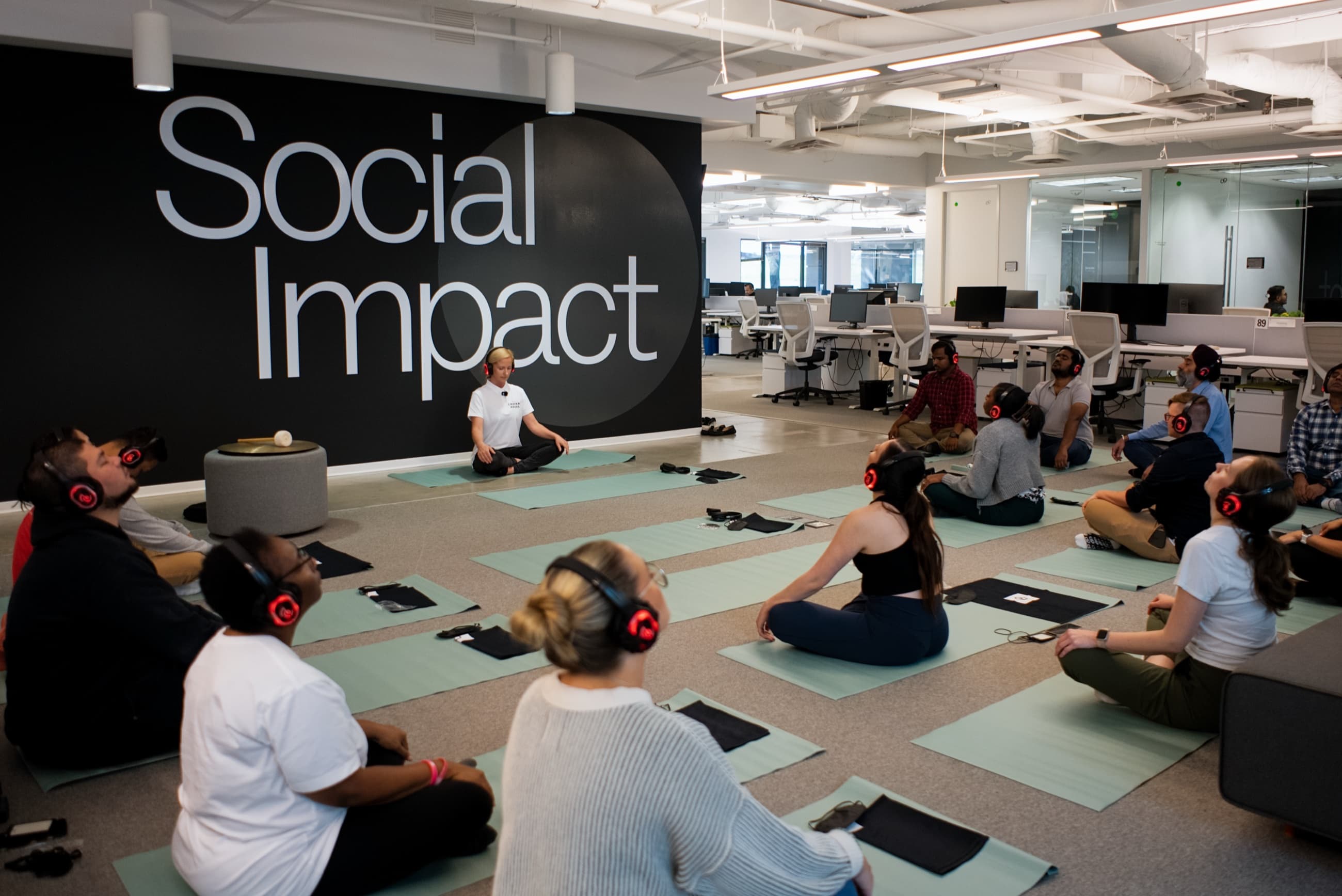
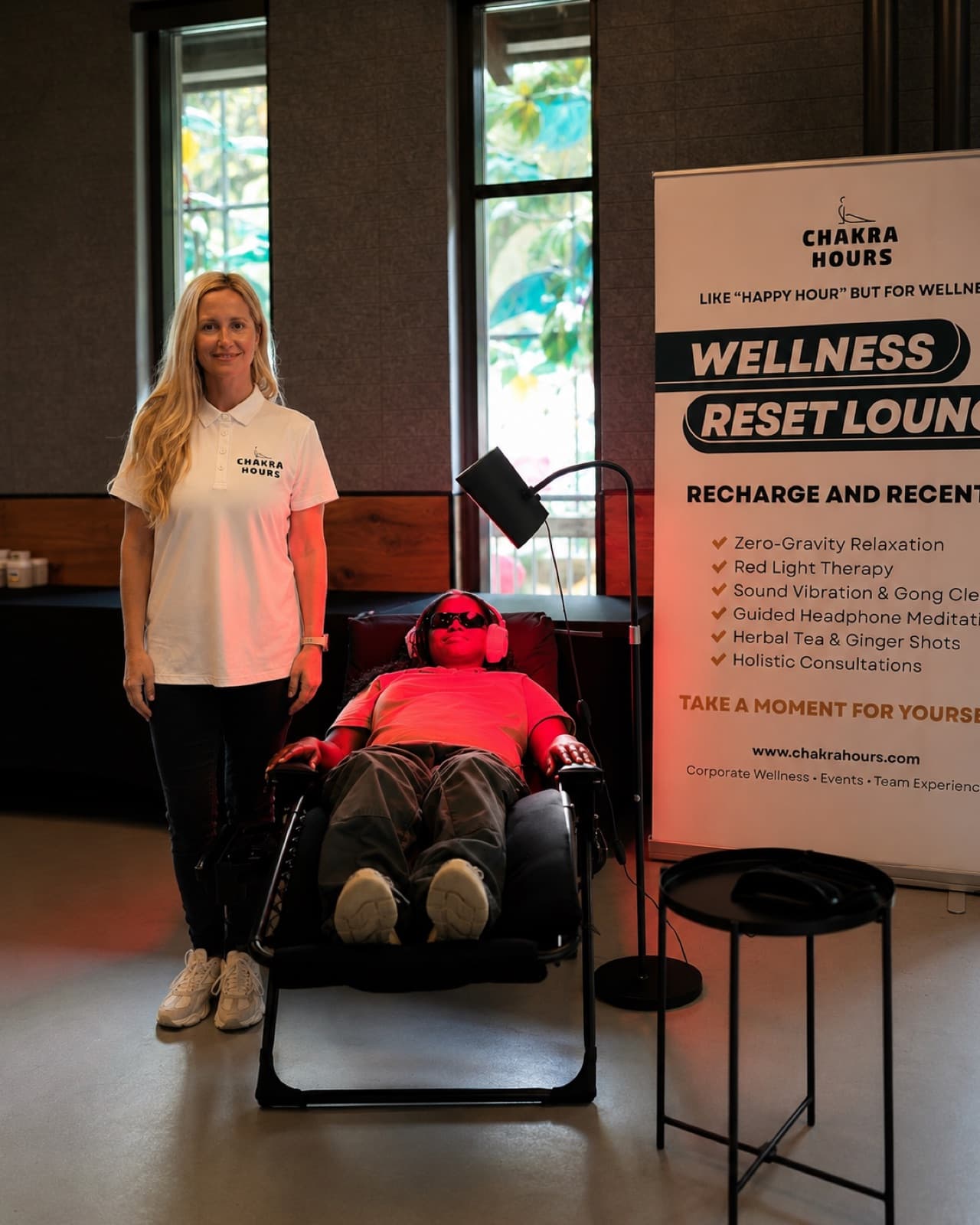
This is where wellness programs transform from nice-to-have perks into essential infrastructure for virtual team engagement. Organizations that integrate wellness activities, particularly yoga, movement, breathwork, and mindfulness practices, into their remote work culture see measurable improvements in team engagement, productivity, and retention. These aren't superficial benefits; they address the root causes of virtual work burnout and disconnection.
The Science Behind Wellness and Engagement
The connection between physical wellness and work engagement runs deeper than most leaders realize. When we sit for extended periods, blood flow decreases, reducing oxygen delivery to the brain. This directly impairs cognitive function, decision-making, and creativity, the very capabilities that drive knowledge work. Chronic sitting also triggers a cascade of metabolic changes that increase fatigue, reduce energy levels, and contribute to the afternoon slump that derails productivity.
Movement interrupts this decline. Even brief periods of physical activity increase cerebral blood flow, enhance neuroplasticity, and trigger the release of brain-derived neurotrophic factor (BDNF), which supports learning and memory. Research on exercise and cognition has repeatedly found that even short bouts of moderate movement can improve attention and working memory for a stretch of time afterward. For virtual teams juggling complex projects and constant context-switching, these cognitive benefits translate directly to better performance.
Breathwork and mindfulness practices offer complementary benefits by regulating the nervous system. Remote work often keeps us in a state of low-grade stress, the ping of notifications, back-to-back meetings, the pressure to prove we're working when not visible in an office. This chronic activation of the sympathetic nervous system leads to exhaustion and disengagement. Controlled breathing techniques, particularly practices like box breathing or alternate nostril breathing, activate the parasympathetic nervous system, triggering the relaxation response. This physiological shift reduces cortisol levels, lowers blood pressure, and creates the mental clarity necessary for focused work and genuine engagement.
Yoga uniquely combines these benefits, integrating movement, breath control, and mindfulness into a single practice. Workplace studies on yoga and movement programs consistently find that employees who take part report higher job satisfaction, lower stress, and a better sense of work-life balance than those who do not. For virtual teams, these improvements tend to track closely with stronger engagement.
Wellness Activities That Drive Virtual Team Engagement
Virtual Yoga Sessions
Yoga has emerged as the gold standard wellness offering for remote teams, and for good reason. It requires minimal equipment, accommodates all fitness levels, addresses the specific physical challenges of desk work, and provides both physical and mental benefits in a single session. The accessibility of virtual yoga means team members can participate from anywhere, whether working from home, traveling, or in a co-working space.
The most effective virtual yoga programs offer varied class formats to meet different needs and preferences. Morning energizing flows, typically 20-30 minutes of dynamic movement and sun salutations, help team members start the day with focus and vitality. These sessions increase energy levels and improve mood, setting a positive tone that carries through the workday. Midday desk yoga sessions, designed for 15-minute breaks, focus on counteracting the physical strain of prolonged sitting, opening the chest and shoulders, releasing hip tension, stretching the spine. Evening restorative classes help team members transition out of work mode, using gentle poses and deep breathing to release accumulated stress and prepare for quality rest.
Beyond the individual benefits, virtual yoga creates powerful team-building opportunities. When colleagues practice together, even through screens, they share a vulnerable experience, everyone wobbles in tree pose, everyone struggles to quiet their mind in meditation. This shared vulnerability builds psychological safety and connection. Many teams report that their yoga sessions become some of their most engaged and participatory team activities, with attendance rates often exceeding traditional team meetings.
Movement Breaks and Micro-Exercises
While structured yoga sessions provide significant benefits, shorter movement breaks throughout the day compound these effects and prevent the accumulation of physical strain. The concept is simple but powerful: every 60-90 minutes, team members take five minutes to move their bodies intentionally.
These micro-movement sessions might include simple stretching sequences targeting areas that hold tension during desk work, neck rolls, shoulder shrugs, spinal twists, and hip openers. Standing exercises like squats, lunges, or calf raises get blood flowing to the legs and counteract the effects of sitting. Even just standing and walking in place for a few minutes breaks up the sedentary pattern and re-energizes both body and mind.
Progressive companies are building movement breaks directly into their virtual work culture. Some teams start every video meeting with a one-minute standing stretch. Others set automated reminders encouraging movement breaks. The most innovative organizations create friendly movement challenges, step competitions, plank challenges, or flexibility progress trackers, that add an element of fun and social connection to physical wellness.
The engagement impact extends beyond the immediate physical benefits. When organizations explicitly encourage and facilitate movement breaks, they send a powerful message that employee wellbeing matters more than performative presenteeism. This cultural statement builds trust and loyalty, key drivers of engagement.
Implementing Wellness Programs in Virtual Teams
The success of virtual wellness programs hinges on accessibility and inclusivity. The goal is participation from across the team, not just those already inclined toward wellness activities. This requires thoughtful design that removes barriers and accommodates diverse needs, abilities, and circumstances.
Timing represents the first critical consideration. Offering wellness sessions at varied times accommodates different schedules and time zones. Morning sessions serve early risers and those in certain geographic locations. Lunch-hour options work for people who want to break up their day. Evening sessions help team members wind down after work. Recording all live sessions ensures those who can't attend synchronously still benefit. This flexibility signals that wellness is truly valued, not just a box-checking exercise.
Accessibility also means meeting people at their current fitness and experience levels. Not everyone can or wants to do advanced yoga poses. Providing modifications, offering chair yoga alternatives, and creating beginner-friendly sessions ensure everyone can participate meaningfully. Clear communication that all fitness levels are welcome, backed up by actual inclusive teaching, breaks down the intimidation factor that keeps some people away.
Privacy and choice matter tremendously. Making cameras optional for wellness sessions removes the self-consciousness some people feel about exercising on camera. Offering both live group sessions and on-demand videos lets individuals choose their preferred format. Some people thrive in group settings; others prefer practicing alone. Both preferences are valid and should be accommodated.
Finally, consider financial accessibility. While some organizations budget for high-end wellness platforms, others achieve excellent results with more modest investments. Free YouTube yoga videos, simple movement reminders, and peer-led meditation sessions can deliver meaningful benefits. What matters most isn't the budget, it's the genuine commitment to supporting team wellbeing.
Related from Chakra Hours
If you want to turn the wellbeing ideas above into a repeatable program for your distributed team, these resources go deeper:
Our Quarterly Reset program delivers recurring live virtual sessions so engagement does not depend on one-off events.
The complete guide to building a workplace wellness program covers the strategy, budgeting, and rollout that sit underneath any remote engagement plan.
Use the HR wellbeing calendar to anchor remote engagement to awareness days and seasonal moments your whole team can rally around.
For hybrid teams who gather in person, our wellness team building activities give distributed teams a shared, screen-free reset when they do meet.
Conclusion: Your Remote Team Engagement Action Plan
Building an engaged virtual team isn't a one-time project with a clear finish line. It's an ongoing practice that requires intention, consistency, and willingness to adapt. The organizations that succeed don't have secret formulas or unlimited budgets, they simply commit to the fundamentals and execute them well.
Throughout this guide, we've explored the essential elements of virtual team engagement: understanding the unique psychology and challenges of remote work, establishing clear communication protocols and expectations, balancing synchronous and asynchronous communication, selecting the right technology stack, developing leadership practices that build trust and recognition, creating intentional opportunities for connection, measuring engagement systematically, and addressing the inevitable challenges that arise.
The key is starting strategically rather than trying to implement everything at once. Begin by honestly assessing your current state. Survey your team to understand existing engagement levels and identify the biggest pain points. What's working well that you should preserve and amplify? What's causing the most friction or disconnection? This baseline gives you a clear starting point and provides metrics for measuring improvement.
Next, define what success looks like for your specific team. An engaged virtual team at a fast-paced startup might look different from one at an established enterprise. Consider your team's size, geographic distribution, work style, and culture. What behaviors do you want to see more of? What would indicate that people feel connected and committed? Create a vision that's concrete enough to recognize when you've achieved it.
From all the strategies in this guide, choose three to five priority actions that will deliver the highest impact for your team right now. Maybe you desperately need better communication protocols because messages are falling through the cracks. Perhaps the most pressing issue is recognition, great work is happening but going unnoticed. You might identify one-on-one meetings as the missing ingredient for building individual connections. Focus your energy on these high-leverage areas rather than spreading efforts thin across everything.
Whatever you choose, create real accountability. Assign specific owners to each initiative. Set deadlines and milestones. Schedule check-ins to review progress and troubleshoot obstacles. Without this structure, even the best intentions fade as daily urgencies take over.
Finally, commit to measuring and iterating. Track your chosen metrics consistently. Gather feedback from the team on what's working and what needs adjustment. Be willing to modify your approach based on what you learn. Virtual team engagement isn't a problem you solve once; it's a capability you build over time through continuous learning and refinement.
Quick Wins to Implement This Week
Want to see immediate improvement? Here are five actions you can take in the next seven days that will start shifting engagement:
Schedule one-on-one meetings with every team member if you don't already have a regular cadence. Use this time to listen more than talk, understand their challenges, and identify ways you can support them better.
Create or update your communication charter. Document which tools to use for which purposes and what response times are expected. Share it with the team and refine based on their feedback.
Set up a dedicated recognition channel in your team chat. Start by sharing one specific appreciation for someone's contribution. Model the behavior you want to see.
Plan one virtual social activity for the next two weeks. Keep it optional, time-limited (60 minutes max), and focused on connection rather than work.
Audit your current tool stack for redundancy. Identify tools that serve overlapping purposes or that no one actually uses anymore. Eliminate or consolidate where possible.
Remember that the most engaged virtual teams share common characteristics regardless of their industry, size, or geographic distribution. They have leaders who trust and empower rather than micromanage. They maintain exceptionally clear communication and expectations so everyone knows where they stand. They cultivate a strong sense of shared purpose and belonging despite physical distance. They recognize and appreciate contributions regularly and meaningfully. Most importantly, they invest deliberately in relationships and culture rather than hoping these will develop naturally.
Your virtual team possesses incredible potential. Remote work eliminates geographic boundaries in hiring, enables flexible schedules that boost productivity, reduces overhead costs, and can create better work-life integration for team members. But realizing this potential requires more than just sending everyone home with laptops. It demands intentional leadership, thoughtful systems, and consistent execution of engagement practices.
The strategies in this guide have been proven across thousands of virtual teams in every industry imaginable. They work for teams of five and teams of five hundred. They apply whether your team is fully remote, hybrid, or temporarily distributed. The principles remain constant even as tools and technologies evolve.
Start where you are. Use what you have. Do what you can. Your team is waiting for the leadership that will help them not just work remotely, but thrive in a virtual environment. The path forward begins with a single step, choose yours and take it today.