Why an Employee Wellbeing Strategy Matters More Than Ever
An effective employee wellbeing strategy is the difference between a workplace where people merely cope and one where they genuinely thrive. This guide is written for HR and People leaders who want the culture and leadership side of the equation: how to build psychological safety, prevent burnout, and lead in a way that lets your team do its best work. It is the leadership companion to our guide to building a workplace wellness program, which covers the program mechanics in detail.
Imagine treating burnout as seriously as we treat any other serious health risk. What if happiness came before success, not after? And what if your team's ability to innovate depended entirely on whether people felt safe enough to speak up?
These aren't just nice ideas, they're grounded in research and real-world results. The sections below distill what leading workplace wellbeing experts have found into practical steps you can take today to shape a healthier culture across your organization.
The Foundation: Understanding What Really Matters
Human Sustainability Over Quick Fixes
Workplace wellbeing isn't about ping-pong tables or free snacks. It's about something far more fundamental: human sustainability, the long-term wellbeing of individuals, organizations, society, and even our planet.
Think about it this way: We've become experts at environmental sustainability, tracking carbon footprints and renewable resources. But what about the humans powering our organizations? When was the last time you measured whether your workplace systems are sustainable for the people within them?
The harsh truth: Burnout is often invisible, yet it can be more debilitating than physical illness. Unlike cancer, which gives you permission to rest, burnout tells you to keep pushing. We've normalized exhaustion as the price of success.
The reality check: If you have an employee struggling with burnout, you cannot expect them to take a week off and return to the same toxic environment with different results. The system itself needs to change.
The Happiness Advantage: Flipping the Success Formula
We've Been Doing It Backwards
For decades, we've operated under a broken formula: Work hard → Achieve success → Feel happy
Here's the problem: Every time you achieve success, your brain moves the goalpost. You get good grades, now you need better grades. You hit your sales target, now you need a higher target. If happiness always lives on the other side of success, you'll never reach it.
The Scientific Truth
Research shows the formula actually works in reverse: Feel happy → Brain works better → Achieve greater success
When you're in a positive state of mind, something remarkable happens: Your brain releases dopamine, which doesn't just make you happier, it activates your learning centers. As positive-psychology researcher Shawn Achor argues in The Happiness Advantage, a positive brain measurably outperforms a neutral, negative, or stressed one. People in this state tend to be more:
Intelligent (measurably more productive)
Creative (solving problems they couldn't solve before)
Resilient (bouncing back from setbacks faster)
Energized (sustaining performance longer)
The 90/10 Principle That Changes Everything
Here's a game-changer that Achor's research popularized: only a small share of your long-term happiness is predicted by your external circumstances (your job, salary, success). The larger share comes from how your brain processes the world around you.
This means your people, and your culture, have far more control over wellbeing than the perks budget alone would suggest.
Practical Strategies: Rewiring Your Brain for Success
The 21-Day Challenge
Scientific research proves you can actually rewire your brain to operate more optimistically and successfully. Here's how:
Choose ONE practice and commit to it for 21 days:
Three Gratitudes
Write down three NEW things you're grateful for each day
Don't repeat items, this trains your brain to scan for positives
Takes 2 minutes
Journaling Positive Experiences
Write about one positive experience from the past 24 hours
Include details, this allows your brain to relive it
Takes 2 minutes
Exercise
Just 10 minutes of physical activity
Teaches your brain that behavior matters
Takes 10 minutes
Meditation
Two minutes of focused breathing
Helps overcome cultural ADHD and multitasking
Takes 2 minutes
Random Acts of Kindness
Send one positive email or message each morning
Strengthens social connections
Takes 2 minutes
The science: In just two minutes a day for 21 consecutive days, you can create lasting changes in how your brain processes the world.
Mental Health in the Workplace: From Stigma to Strategy
The Business Case for Mental Health
Organizations that prioritize mental health and emotional intelligence experience:
Higher productivity (happier employees work more efficiently)
Better retention (people stay where they feel supported)
Increased innovation (psychological safety unlocks creativity)
Stronger engagement (employees bring their full selves to work)
Emotional Intelligence as a Core Leadership Skill
The most effective leaders understand that emotional intelligence isn't a "soft skill", it's a critical business competency. This means:
For individuals:
Recognize your emotions as they arise
Understand what triggers stress, burnout, or disengagement
Practice self-care without guilt
For organizations:
Create cultures where vulnerability is strength, not weakness
Build systems that support mental health proactively, not reactively
Train managers to recognize signs of burnout and respond with compassion
The Connection Between Support and Performance
Research consistently shows that supportive workplace cultures create a virtuous cycle:
Employees feel valued and safe
They engage more fully in their work
Performance and innovation increase
The organization becomes more successful
This success enables more support for employees
It's not about choosing between wellbeing and performance, they fuel each other.
Why Most Wellness Programs Fail (And What to Do Instead)
The Superficial Wellness Trap
Here's an uncomfortable truth: Most corporate wellness programs are performative theater. They're:
Surface-level (yoga classes that don't address systemic issues)
One-size-fits-all (ignoring diverse needs and experiences)
Disconnected from reality (offering meditation while piling on unrealistic deadlines)
Think of it this way: A wellness program that offers stress management workshops while maintaining a culture of overwork and fear is like giving someone a life jacket while drilling holes in their boat.
What Real Wellbeing Looks Like
Human-centered wellbeing goes beyond physical health to include:
Emotional Wellbeing:
Feeling safe to express concerns without repercussions
Having supportive relationships at work
Experiencing purpose and meaning in your role
Social Wellbeing:
Strong connections with colleagues
Sense of belonging and inclusion
Community and collaboration over competition
Systemic Wellbeing:
Fair workloads and realistic expectations
Clear boundaries and respect for time off
Leaders who model healthy behaviors
Policies that support work-life integration
Making Wellbeing Inclusive
Ask yourself:
Does your wellness program assume everyone has the same resources?
Does it cater only to certain lifestyles or family structures?
Are the offerings accessible to all employees, regardless of role or location?
Do you measure participation or actual improvement in wellbeing?
The shift: Move from asking "What wellness perks can we offer?" to "What systemic changes need to happen so people can actually be well here?"
Psychological Safety: The Foundation of Innovation
What Is Psychological Safety?
Psychological safety means team members feel they can:
Speak up with ideas without fear of ridicule
Ask questions without appearing incompetent
Make mistakes without punishment
Challenge the status quo without career consequences
It's not about being nice or lowering standards. It's about creating conditions where truth can surface, problems get solved early, and innovation thrives.
Why It Matters: The Google Finding
Google's Project Aristotle studied 180 teams over two years to identify what makes teams successful. Their conclusion? Psychological safety was the #1 factor, more important than:
Individual talent
Team composition
Resources
Experience levels
The Innovation Connection
Here's the reality: Innovation requires risk-taking. You can't innovate if people are afraid to:
Share half-formed ideas
Challenge existing processes
Admit when something isn't working
Try approaches that might fail
The equation:
Low psychological safety = People bite their tongues = Innovation dies
High psychological safety = Ideas fly freely = Innovation thrives
Building Psychological Safety: The Inside-Out Approach
Start with yourself:
Before you can create safety for others, you must create it within yourself. Notice your inner critic. When brainstorming, do you hear thoughts like:
"That's a stupid idea"
"Don't say that out loud"
"They'll think I'm incompetent"
"I'm not creative enough"
These internal voices kill your ideas before they ever reach the world. Address this first.
Create safety for your team:
Frame work as learning, not performing
"We're figuring this out together" not "Don't mess this up"
Emphasize that mistakes are expected and valuable
Model vulnerability
Admit what you don't know
Share your mistakes and learnings
Ask for help
Respond to input with curiosity, not judgment
When someone shares a problem: "Thank you for bringing this up. Tell me more."
When someone shares an idea: "That's interesting. What led you to think of that?"
When someone makes a mistake: "What did we learn? How can we prevent this next time?"
Ask questions that invite contribution
"What am I missing here?"
"What concerns do you have?"
"What would you do differently?"
Create structures that support diverse voices
Rotate who leads meetings
Use anonymous feedback channels
Ensure everyone has clear opportunities to contribute
The Fear-to-Flourishing Transformation
When you reduce interpersonal fear:
Bold ideas emerge that would have stayed hidden
Problems get identified and solved early
Innovation accelerates because experimentation is safe
Engagement increases as people bring their full creativity to work
Performance improves across the board
Think of psychological safety as the soil. Without healthy soil, nothing grows. With it, innovation and excellence flourish naturally.
Social Connection: The Missing Ingredient
Why We Need Each Other
Humans are wired for connection. Yet modern work culture often treats relationships as distractions from "real work." This is backwards.
The research shows:
Social connection is essential for mental health
Isolation increases burnout risk
Strong workplace relationships boost resilience
Collaboration beats competition for long-term success
Building Communities of Care
At the team level:
Regular check-ins that go beyond project updates
Celebrating wins together, big and small
Creating rituals that build connection
Making space for authentic conversation
At the organizational level:
Design work that requires collaboration
Create opportunities for cross-team interaction
Recognize and reward collaborative behavior
Build systems that support relationships, not just transactions
Implementation: Your Action Plan
For Individuals
Start tomorrow:
Choose ONE 21-day practice (gratitude, journaling, exercise, meditation, or kindness)
Set a specific time each day (link it to an existing habit)
Track your progress (checkmarks work!)
Notice changes in how you experience your day
This month:
Have an honest conversation with yourself about your boundaries
Identify what you need to be well at work
Communicate one clear boundary to your team or manager
Pay attention to your body's signals, fatigue, tension, enthusiasm
This quarter:
Evaluate if your current work is sustainable long-term
Identify systemic issues affecting your wellbeing
Propose one concrete change to your manager or team
Build stronger connections with 2-3 colleagues
For Managers and Team Leaders
This week:
Ask your team: "How confident are you that you can speak up with concerns or ideas?"
Share one vulnerability or mistake you've made recently
Thank someone who brought you a problem or concern
Stop and listen, truly listen, to at least one person without planning your response
This month:
Frame an upcoming project as a learning opportunity, not a performance test
Establish one clear practice that normalizes mistakes (retrospectives, "failure of the month" sharing)
Audit your team's workload for sustainability
Have one-on-ones focused on wellbeing, not just deliverables
This quarter:
Train yourself and your team on psychological safety
Implement one structural change that improves wellbeing (meeting-free days, realistic deadlines, clearer boundaries)
Measure wellbeing alongside performance metrics
Model the behavior you want to see (take breaks, set boundaries, admit mistakes)
For Organizations and HR Leaders
This quarter:
Audit current wellness offerings for substance vs. theater
Survey employees on what actually impacts their wellbeing (don't assume)
Identify systemic barriers to wellbeing (unrealistic expectations, poor workload distribution, lack of clarity)
Pilot one human-centered intervention in one team
This year:
Train all managers on psychological safety and emotional intelligence
Redesign policies with equity and inclusion in mind
Make wellbeing a metric that matters in performance reviews and promotions
Challenge the barriers, bureaucracy, and behaviors that undermine human sustainability
Create feedback loops that let you know if things are actually improving
Measuring What Matters
Beyond Surface Metrics
Don't just measure:
Wellness program participation rates
Number of meditation sessions offered
Gym membership subsidies used
Instead, track:
Employee engagement scores
Retention rates (especially among high performers)
Innovation metrics (ideas shared, experiments run)
Psychological safety scores (survey regularly)
Absenteeism and burnout indicators
Team performance and collaboration quality
The Ultimate Question
Regularly ask your people:
"Do you feel safe speaking up here?"
"Can you sustain your current pace indefinitely?"
"Do you feel your wellbeing is a priority?"
"What one change would most improve your experience?"
Listen to the answers. Then act on them.
Related From Chakra Hours
A wellbeing strategy lands when leadership commitment is paired with practices people can actually feel in their week. A few resources to take this further:
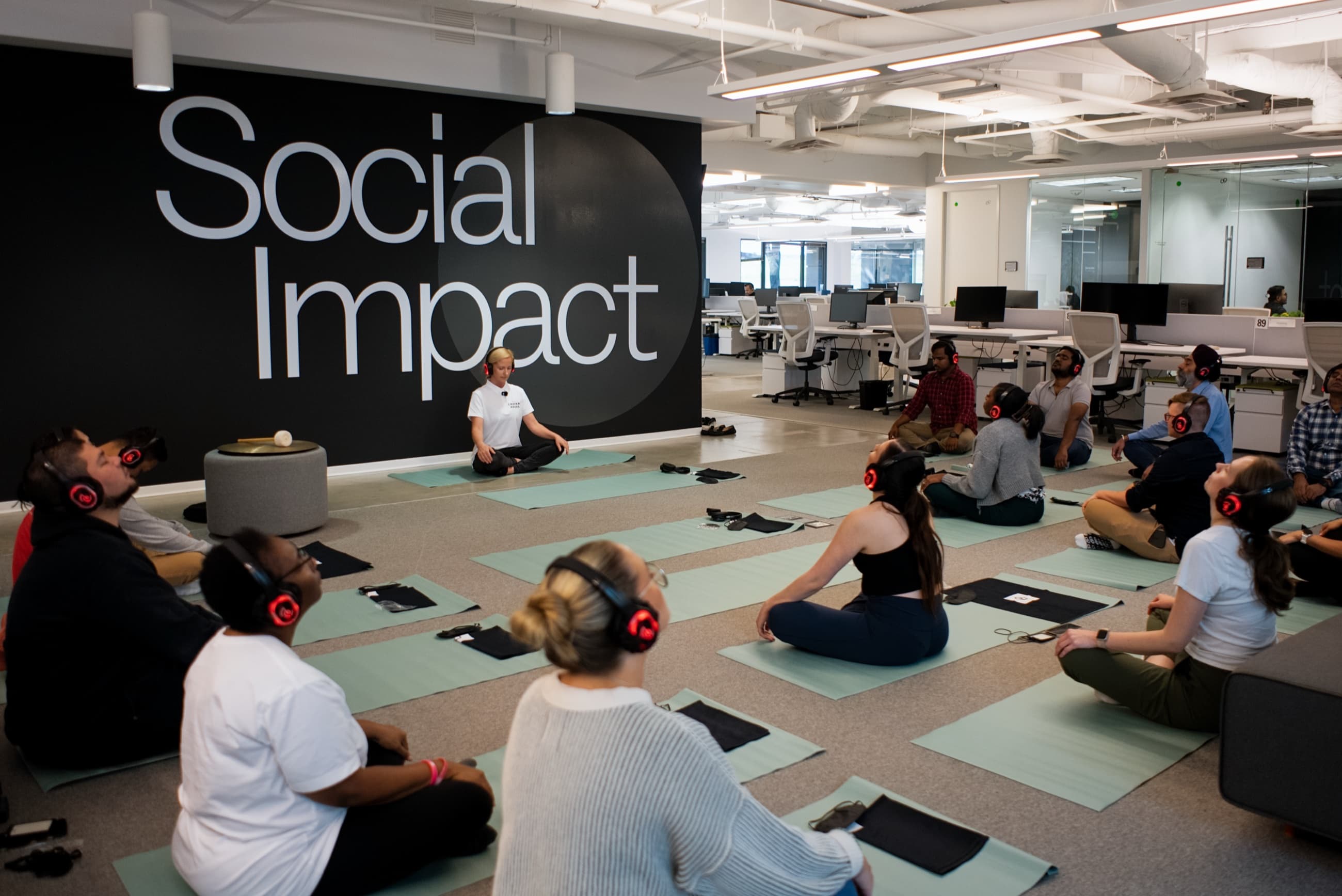
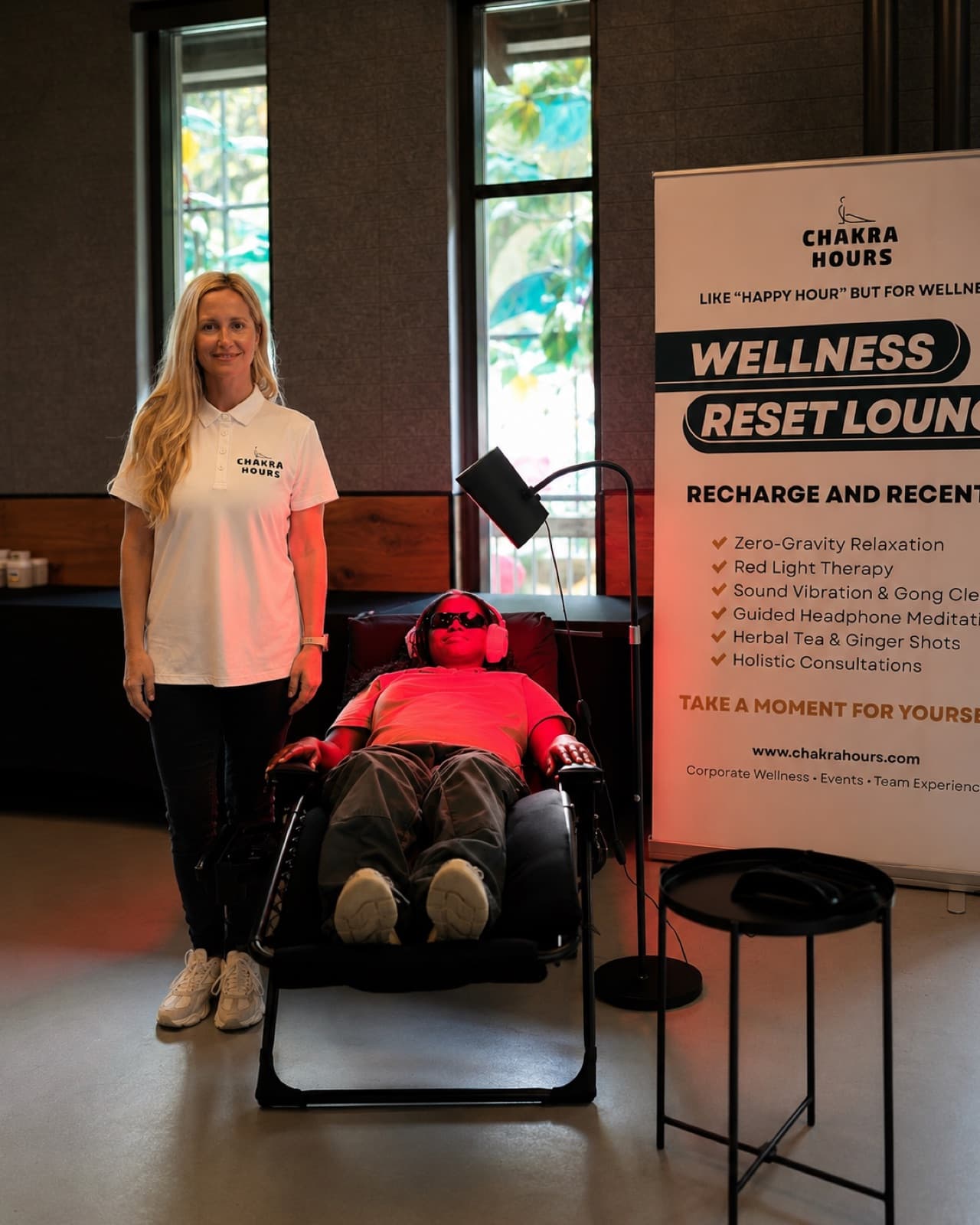
See how a structured, facilitator-led practice supports a thriving culture in our live corporate wellbeing sessions for teams.
Understand the framework behind our sessions, built around The Workday Reset Method™, on our methodology page.
Give managers and employees practical tools with these strategies to manage stress at work.
Conclusion: The Future Is Human
The future of work must be sustainable for humans. Not just productive, not just profitable, but genuinely sustainable in a way that allows people to flourish, not fizzle out.
This isn't about choosing between success and wellbeing. When you get wellbeing right, success follows. When people feel safe, valued, and happy, they do their best work. They innovate, they collaborate, they stay, they grow.
The transformation starts with you:
Commit to your own wellbeing practice
Create safety for yourself and others
Challenge systems that harm human sustainability
Measure what matters
Lead with humanity, not just metrics
Remember: Happy people do great things. When we prioritize human sustainability, we don't just build better workplaces, we build a better world.
Resources and Next Steps
Want to go deeper?
Watch all five TED talks mentioned in this guide for powerful stories and deeper insights
Start your 21-day brain rewiring practice tomorrow
Assess your team's psychological safety using simple surveys
Share one idea from this guide with your team this week
The most important step: Don't just read this. Pick ONE thing and implement it today. Small actions, done consistently, create transformational change.
Your wellbeing matters. Your team's wellbeing matters. The future of work depends on taking this seriously.
What will you do differently starting now?